Wild Toads as Pets: Legal Considerations, Housing, and Care
Sam Bailey
Legal Considerations for Keeping Wild Toads
Before you bring a wild toad home, confirm that local regulations permit it. Laws differ widely by country and state, so there is no universal answer. Still, in most places you should be able to find species that can be legally collected and kept. Even in Massachusetts, known for stringent wildlife laws, residents may keep American toads and Fowler’s toads, with a limit of two individuals.
Which Species Are Permitted?
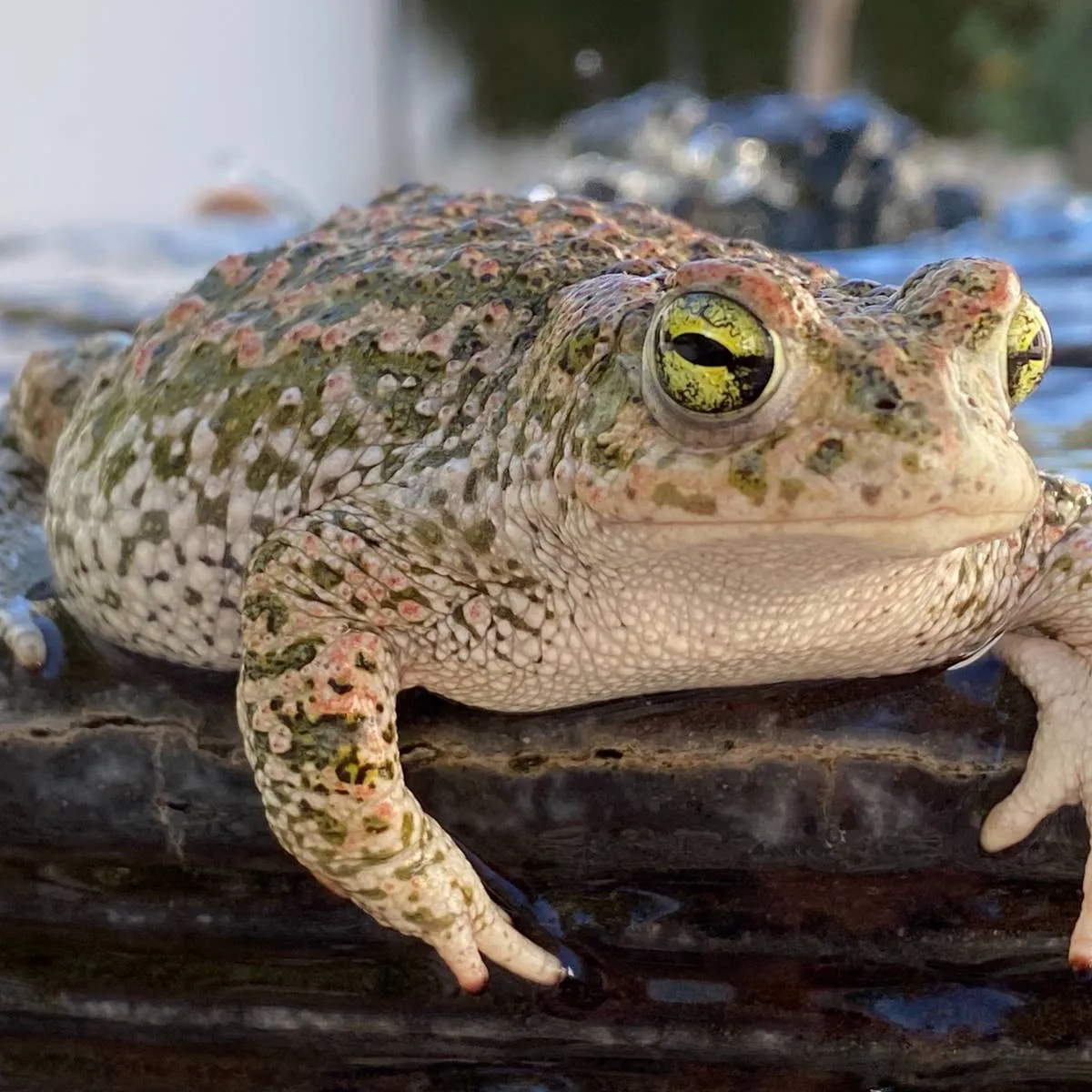
Identifying the toad’s species is essential before you decide to keep it. Some states, for instance, prohibit possession of the Colorado River toad (Incilius alvarius) because it produces psychoactive compounds. In the United Kingdom, the common toad (Bufo bufo) is acceptable as a pet, whereas the natterjack toad (Epidalea calamita) is strictly protected—and so rare that encountering one in a garden is highly unlikely.
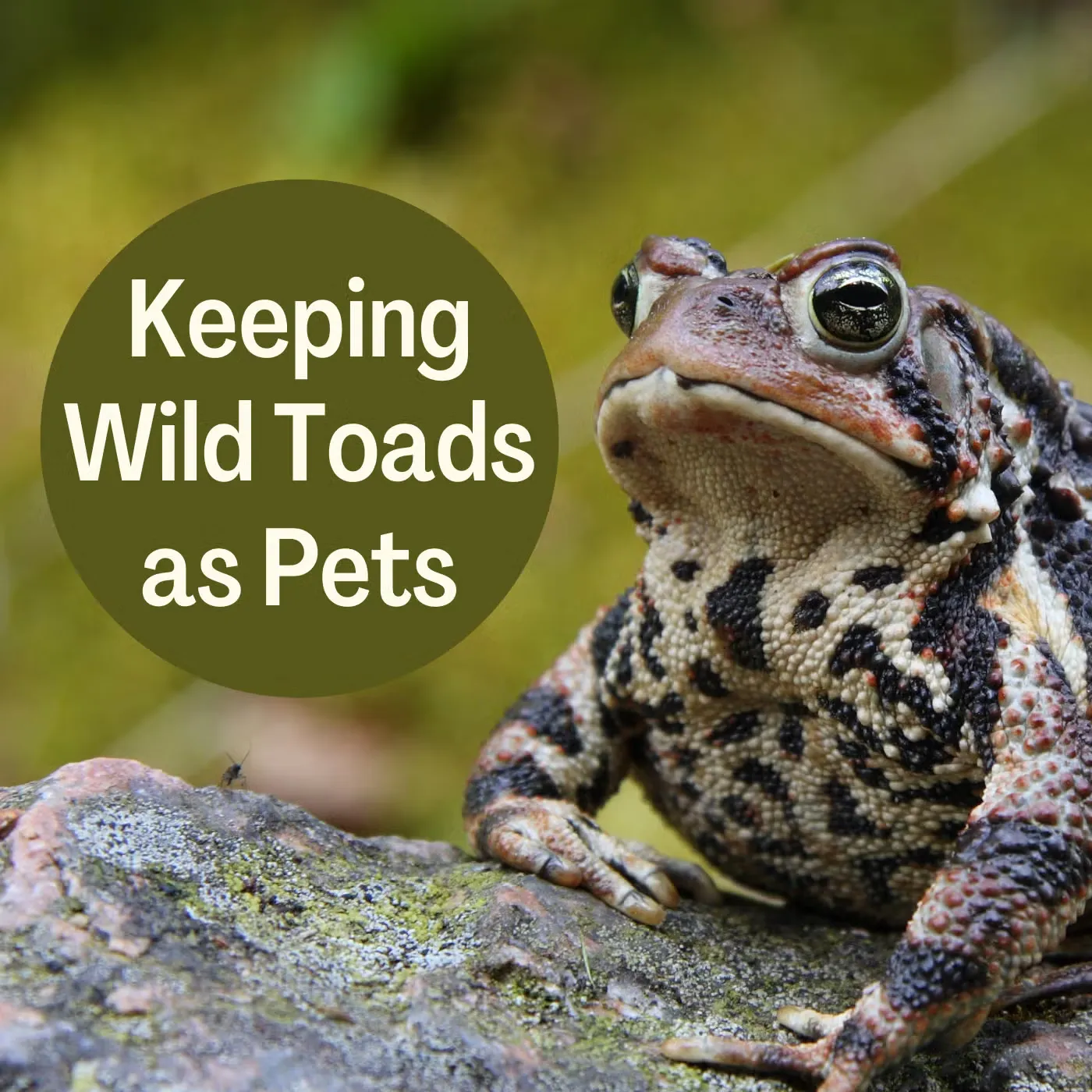
Do you know how to set up an ideal enclosure for a wild toad?
Image by Cephas, CC BY-SA 3.0 Unported, via Wikimedia Commons
Locating Wild Toads
Toads are amphibians, yet they are less tied to water than frogs and typically approach water only to breed. That makes backyards and parks common places to find them. In the United States, the most frequently encountered species is the American toad (Bufo americanus); in Europe, it is the common toad (Bufo bufo).
Murphy’s law suggests that once you start searching, the toads you used to see daily may become elusive. Like most amphibians, they hide, so you may need to check under stones or leaf litter. With patience, you should be able to find one. A juvenile is often a better choice than an adult because it tends to adjust to captivity more quickly.
Timing Your Search
Spring, after heavy rain, is the best time to look for toads, though summer and fall can also work. Toads hibernate in winter, so when the ground freezes and temperatures drop, your chances are slim.
If you come across toad eggs, you may want to read Caring for Tadpoles From Egg to Froglet.
Feeding Your Toad
Toads are insectivores with hearty appetites and will eat any invertebrate small enough to swallow. Although it might be tempting to gather slugs and worms from outdoors, doing so risks introducing diseases or pesticides. Commercially bred crickets and other feeder insects are often the more convenient option.
The same feeding principles that apply to frogs generally apply to toads: crickets will likely make up most of the diet. Gut-load the crickets with carrots and other fruits and vegetables before placing them in the terrarium. Also use a calcium and vitamin D supplement to meet the toad’s mineral needs.
Diet Options
- Live crickets (ideally gut-loaded and dusted with calcium and vitamins). Most pet stores carry them.
- Live mealworms or wax worms (also available at pet stores).
- Some toads may accept fruits and vegetables cut into small pieces, depending on the species, but all toads prefer live insects.
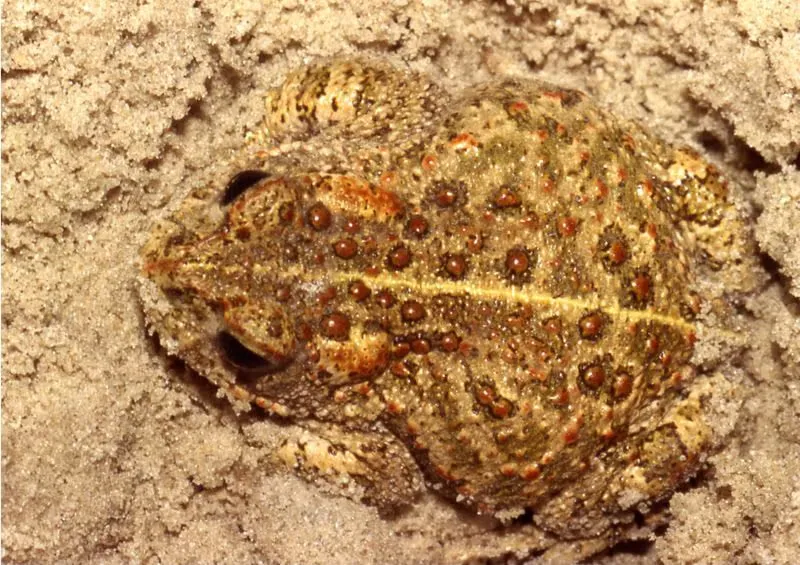
It is illegal to collect the highly endangered natterjack toad in the UK.
Christian Fischer, wikimedia commons
Creating the Right Habitat
Once you have a toad, you must provide suitable housing.
Space Requirements
Most toads are sedentary, spending much of their time burrowed in soil or hidden under a stone. They do not need a large enclosure. For one of the common Bufo species, a tank measuring 24″x12″x12″ is adequate for one individual or a pair.
Choosing an Enclosure
A terrarium that maintains moisture while allowing good ventilation works well. A small fish tank can serve, provided it has a tightly fitted screen top to prevent escape.
Furnishings
Most of the furnishings resemble those used for small to medium terrestrial frogs. Since toads like to burrow in soil or leaf litter, provide a substrate they can dig into.
Substrate Choices
- Using soil from the toad’s original location is debated; some keepers prefer commercial amphibian substrates, such as coconut-husk-based eco earth.
- Soil collected outdoors may contain harmful pesticides or fertilisers. However, if your backyard or park supports a healthy toad population, the soil there is likely safe.
- Commercially produced substrates are the safest option and are not expensive.
- Avoid gravel or similar substrates that the toad might swallow while hunting, which could cause intestinal impaction.
Hiding Places
Provide hiding spots using pieces of bark, branches, or rocks. You can collect these from the spot where you caught the toad or purchase commercially made reptile hides and caves.
Water Needs
All amphibians require constant access to fresh water. Like frogs, toads do not drink; they absorb water through their skin.
- Ensure the toad can easily enter and exit the water bowl.
- Change the water daily to prevent bacterial contamination that could make your pet ill.
- The water must be dechlorinated—tap water could poison them.
- Either let water stand for 24 hours, preferably with an airstone bubbling through it, or use a water dechlorinator (the same type used for aquarium fish).
Swimming
Toads do not need to swim, though they may enjoy a soak. A shallow bowl is all they require; they are not strong swimmers.
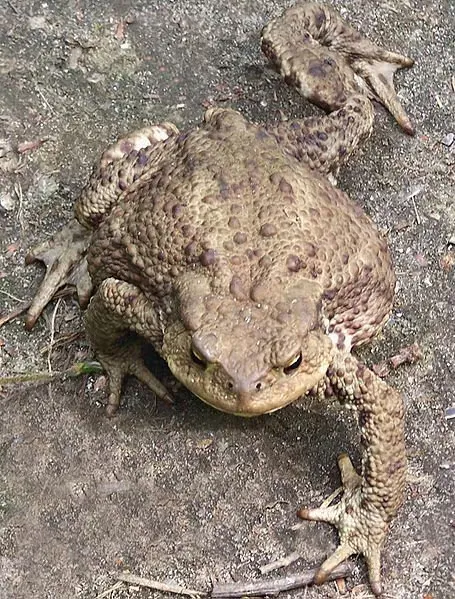
This is the common European toad Bufo bufo.
under creative commons
Temperature and Humidity
- Most true toads native to Europe and the United States prefer cooler temperatures.
- They generally spend days burrowed in soil or leaf litter and emerge at night when temperatures are cooler.
- A daytime temperature between 60–70°F usually suits them.
- Because of their warty skins, toads need lower ambient humidity than frogs and will get enough moisture from soaking in their water bowls at night. However, if your house is particularly dry, such as with central heating in winter, you might want to increase the humidity in the enclosure by spraying it with clean, dechlorinated water a few times a week.
Heating
In general, no special heating or lighting equipment is needed unless the enclosure is kept in an unheated room in winter where temperatures fall very low.
Maintaining Humidity
If your house is particularly dry, you might want to increase the humidity in the enclosure by spraying it with clean, dechlorinated water a few times a week.
This article is accurate and true to the best of the author’s knowledge. It is not meant to substitute for diagnosis, prognosis, treatment, prescription, or formal and individualized advice from a veterinary medical professional. Animals exhibiting signs and symptoms of distress should be seen by a veterinarian immediately.