Cultivating Infusoria for Newly Hatched Fry
Jamie Walker
Understanding Infusoria
Raising the fry of small fish species presents an immediate hurdle: providing food so tiny that it is essentially invisible to the naked eye. The initial food source required by the fry of many small species is known as infusoria.
The term “infusoria” describes microscopic organisms, including protozoa, that naturally inhabit fish tanks. However, their numbers in a standard aquarium are usually far too low to support hundreds of growing fry.
The Importance of Infusoria for Small Fry
For fry of species such as bettas and guppies, infusoria is a critical first food because newly free-swimming fry are not capable of consuming other live foods. Even newly hatched brine shrimp and micro worms can be too large for the smallest fry. A reliable supply of infusoria helps fry through their first crucial days and keeps their stomachs full.
Make this nutritious food for your fish fry.
How to Culture Infusoria
A responsible breeder will need to culture infusoria for their fry. Start the culture 3–4 days before the expected hatch date, as it takes that long for the culture to become productive.
- Begin with some tank water. Using water from an established tank is beneficial because it likely already contains a variety of microscopic life forms.
- Add an organic food source to the tank water, such as cut grass, a rabbit pellet, or blended lettuce.
- Ensure the culture has access to oxygen and place the jar in a sunny location.
- Over the next three to four days, the water should first turn cloudy and then clear again. Wait for the water to clear, as this indicates a successful and “clean” culture.
- Once the water is clear, add a small amount to your fry tank to feed the fry.
Adding the Culture to the Tank
The method you use to introduce infusoria to the tank is largely a matter of personal preference and what works best for you.
- Some breeders recommend a slow siphon method that delivers a continuous supply of fresh infusoria into the tank.
- Others suggest simply pouring half of the culture into the tank, though this approach carries slightly more risk.
In either case, it is important to prevent organic matter from getting into the tank. Otherwise, rotting organic material will accumulate in the fry tank and can cause various problems.
Liquifry: What It Is
Liquifry is a product that feeds the infusoria already present in the tank and encourages the growth of the small organisms that fry eat. Many breeders rely on liquifry, but buyers should understand that it is not exactly fish food; rather, it is food for the fish food.
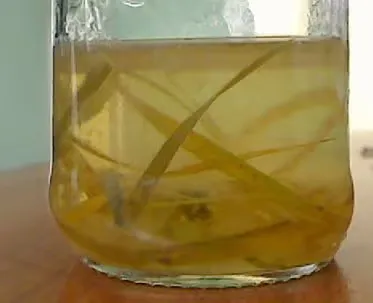
An infusoria culture
Weighing the Risks
It is possible to introduce undesirable organisms into your tank if you culture infusoria carelessly. Bacteria and certain unfriendly biological organisms, such as dragonfly larvae, can become a problem.
However, in my experience, when the culture is managed properly, the risk of problems is far outweighed by the benefit of well-fed fry in their first days. Raising stunted fry is frustrating and demoralizing, and they may never thrive as well as their better-fed counterparts.
This article is accurate and true to the best of the author’s knowledge. It is not meant to substitute for diagnosis, prognosis, treatment, prescription, or formal and individualized advice from a veterinary medical professional. Animals exhibiting signs and symptoms of distress should be seen by a veterinarian immediately.