Scaly-Breasted Lorikeets: What to Expect as a Pet and in the Wild
Toby Howard
My Life with Artie, a Scaly-Breasted Lorikeet
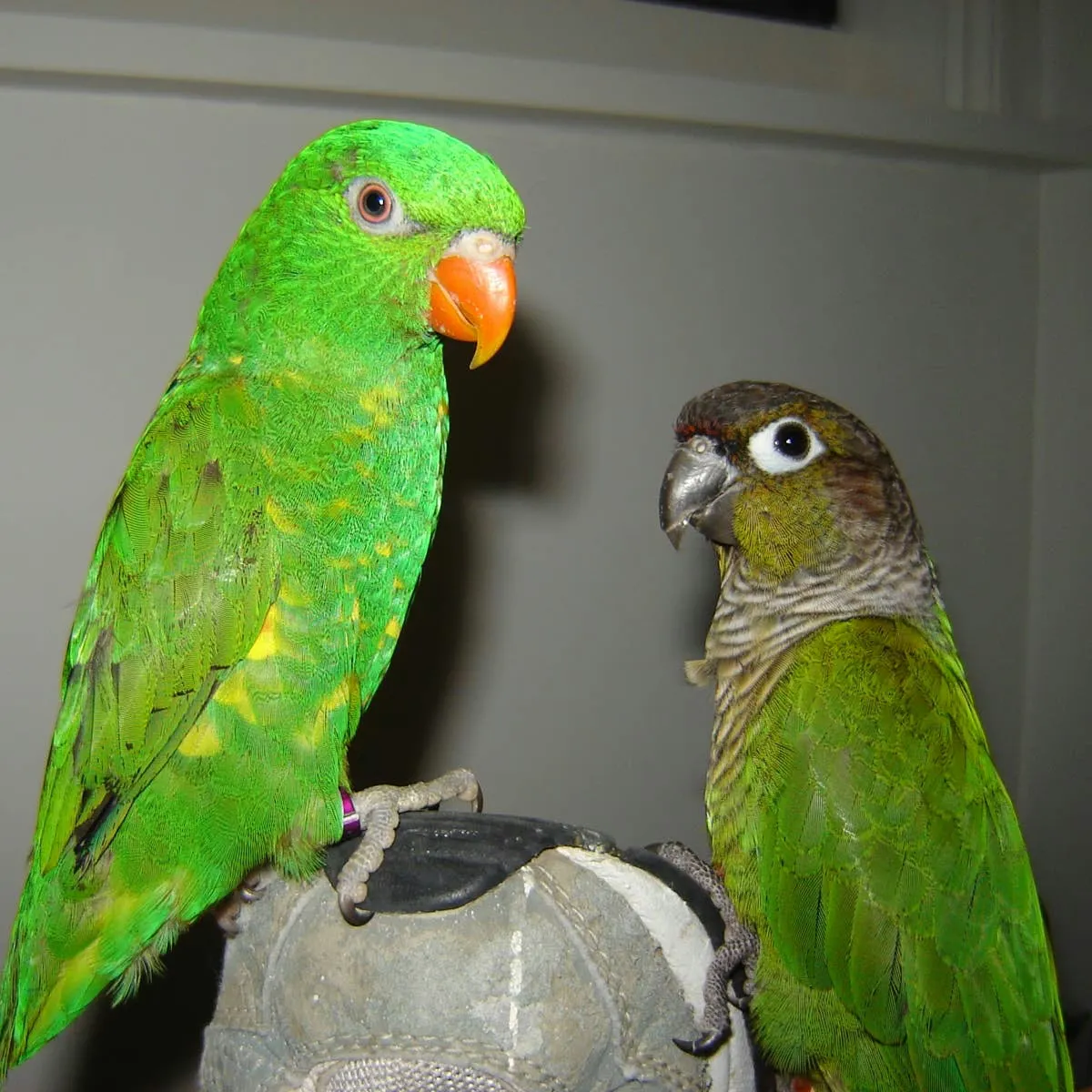
Artie, my scaly-breasted lorikeet, is four years old. He is almost constantly vocalizing—whether muttering, screeching, whistling, or singing, depending on his mood. He whistles at the dog, calls to wild birds, and chats with his companion, a green-cheeked conure, when he is not busy screeching.
Artie knows my name and greets me when I return from work. I am told he asks where I am when I am away. He also talks to himself, frequently saying “Good boy, Artie” and, when he spots something he likes, “Look, Artie.”
Beyond recognizing people and other animals, Artie understands specific words for food and activities. He is a talented mimic, copying the calls of wild birds. It is common to hear him produce magpie, minor, cockatoo, and corella sounds. Lorikeets are certainly not quiet birds!
Key Facts About Scaly-Breasted Lorikeets
- Their scientific name is Trichoglossus haematodus chlorolepidotus. They measure about 23 cm and weigh around 86 grams on average.
- Typically smaller than rainbow lorikeets.
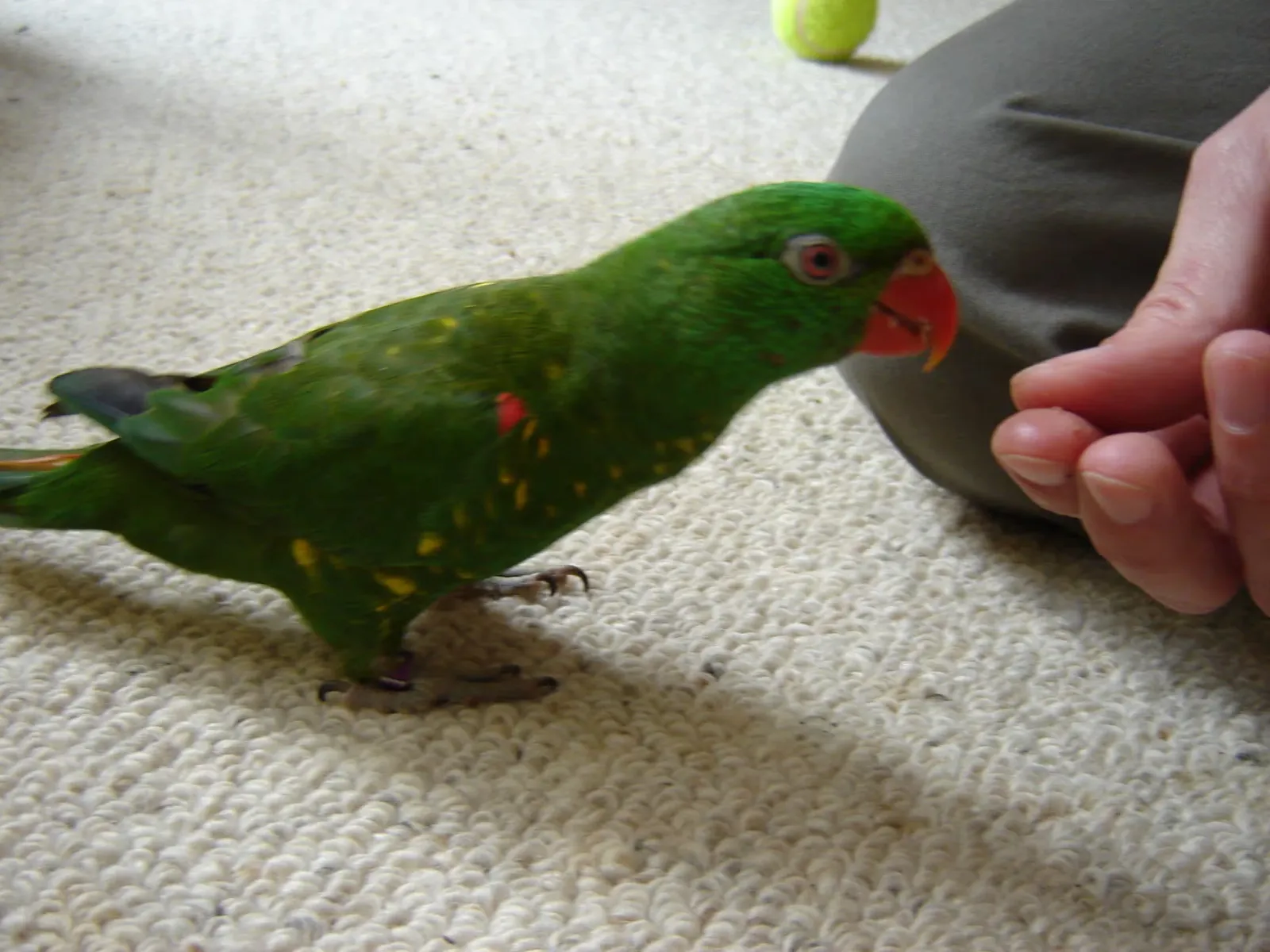
- Mostly green, making them easy to distinguish from the more colorful rainbow lorikeets.
- They have small red “epaulettes” and varying amounts of tiny yellow flecks on the chest and neck.
- Their beaks are red.
- Unusual mutations can make them yellow or blue instead of green.
- Even rarer mutations produce cinnamon and jade colorations.

Scaly-breasted lorikeets come from the shaded region of the map.
Natural History and Diet
Scaly-breasted lorikeets belong to the parrot family. They are native to Australia and inhabit urban and rural areas along the eastern coast, from Cape York down to around Wollongong in New South Wales.
They are not currently at risk of extinction, though I understand their numbers in Sydney are decreasing as they struggle against rainbow lorikeets for food. They are available in many pet stores globally and are relatively easy to acquire, unless your country restricts the sale of certain birds.
Their diet consists of nectar and fruits. They can often be seen squawking and feeding in groups in trees such as grevillea, acacia, eucalyptus, banksia, melaleuca, and any fruit-bearing or pollen-producing tree or shrub. They sometimes eat grains and seeds, but they primarily prefer sweet things.
Baby Artie
Author
Keeping a Scaly-Breasted Lorikeet
From my experience with Artie, here is some guidance on caring for your lorikeet.
Expect a Mess
Lorikeets are very messy birds. Their droppings are wet, sometimes almost entirely liquid, and they tend to “squirt” everywhere.
This makes them more susceptible to diseases and conditions than many other birds, even though they seem robust to me. (Perhaps Artie has never been sick because his cage is cleaned daily.) Contamination can occur if they squirt into their food container and then eat from it later.
The most important thing is to keep their cages and aviaries clean. A helpful tip is to place food containers higher on the sides of the aviary to reduce the chance of contamination.
Feeding
It is also important to provide fresh fruit and vegetables daily, along with special lorikeet food. I chop up small pieces of fruit and veggies for the birds every morning, and they also get fresh water.
Artie loves apples, oranges, pears, grapes, lettuce, carrots, spinach, pineapple, watermelon, paw-paw, strawberries, plums, apricots, and any other fruits. He hates bananas.
Schedule and Activities
They sleep in cages indoors at night. In the morning, they go out to their aviaries for the day, where they can see wild birds and get fresh air. In the afternoon or evening, when I get home from work, they come inside to be with each other and the family for a few hours before bedtime.
Lorikeets need entertainment and can become destructive if bored. I built a bird gym for them, and they play on it in the family room. This keeps the mess contained to that area.
Artie loves music and will sing along; he also pays attention to the TV. Sometimes he gets really mad if he dislikes a particular show or movie. He really hated Vampires Suck. He screeched so badly every time the music got loud that I had to put him to bed. It was a pretty awful flick, so he was right about that! One time he got really scared while we were watching a horror movie and screamed and screamed as the killer chased the girl to do away with her.
Like all lorikeets, Artie needs regular playtime, or he will not stay tame. A good game is tug-of-war with a piece of string (it must be large enough for him to hold with his beak).
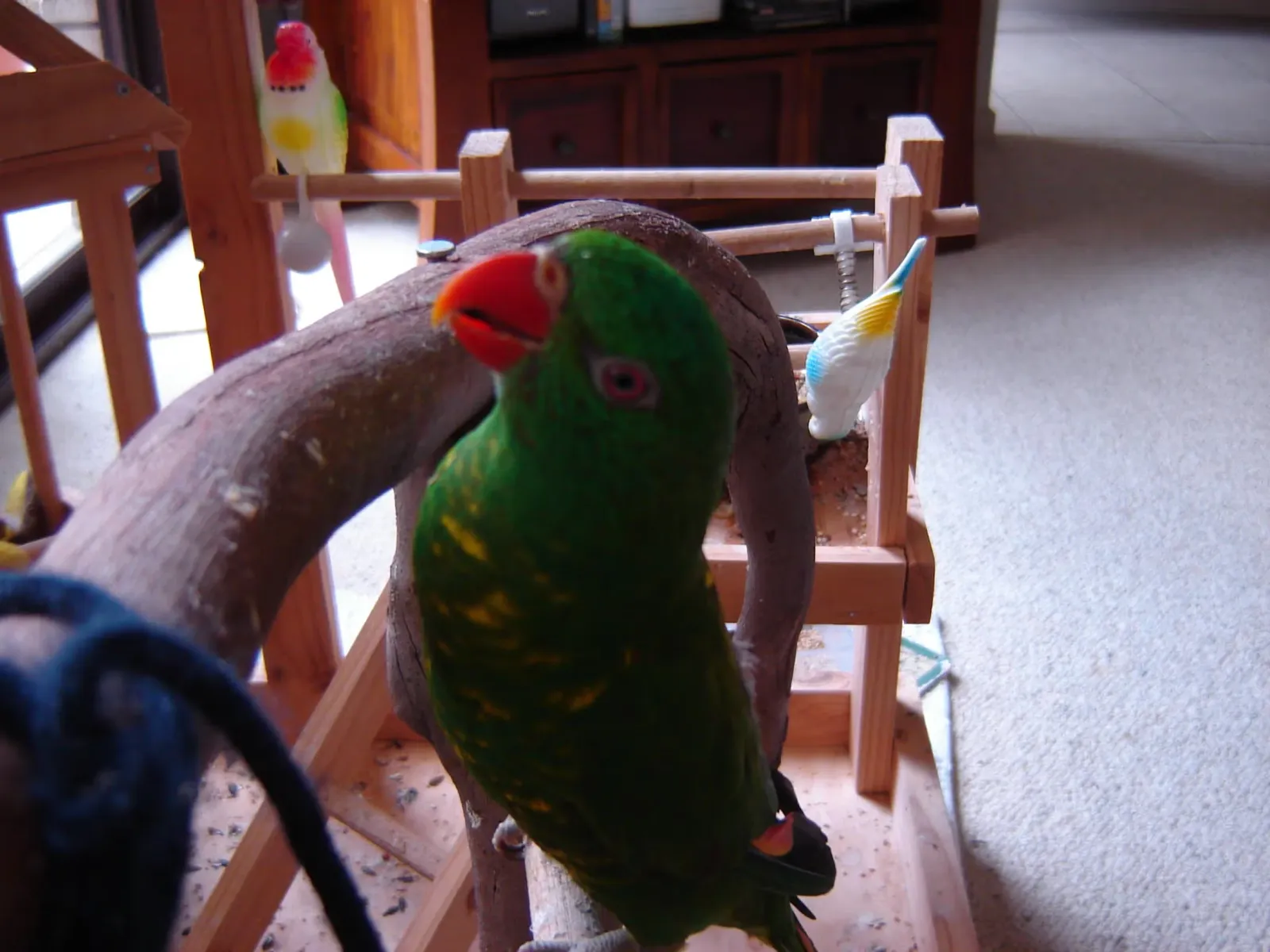
Artie on the bird gym
Author
Lorikeet Behavior: Quirky Things Artie Does
Artie is naughty by nature. One of his favorite games is to tip over his water bowl and then laugh hysterically. He laughs his head off when I tell him off and refill it. Then he just does it again.
He loves playing with a tennis ball. He laughs as he rolls it around and pushes it with his feet and beak. He likes all sorts of toys—ropes, balls, and things to chew. If I do not give him enough toys, he will destroy the furniture. He adores teasing the dog and especially likes to bite his ears, as you can see in the video below.
Like other lorikeets, Artie is domineering. He can get very territorial and does not like it when some people reach into his aviary or try to play with our other bird, whom he regards as “his.” He doesn’t mind me, but he often will not let others enter his domain. He dominates the other bird, so now I have a “split” aviary. This really works as they are together but separated, and the other bird can get enough food.
If you had to sum Artie up in two words, it would be adorable ratbag!
Should You Get One?
Lorikeets are not for the faint-hearted! If you want a gentle, sweet-natured bird who will cuddle up, do not get a lorikeet.
Lorikeets are rough and tumble birds. Sometimes they get agitated and will bite. On the other hand, they are incredibly funny, intelligent and interesting. They are the larrikins of the bird world.
Artie is more like a little green dog than a bird at times! I really enjoy him, but others might not.
This article is accurate and true to the best of the author’s knowledge. It is not meant to substitute for diagnosis, prognosis, treatment, prescription, or formal and individualized advice from a veterinary medical professional. Animals exhibiting signs and symptoms of distress should be seen by a veterinarian immediately.