Why Ignoring a Dog's Bad Habit Can Make It Worse Before It Gets Better
Harper Campbell

Owners often find it baffling when a dog's unwanted habit intensifies right after they stop rewarding it. The logic seems obvious enough—remove the payoff, and the behavior should fade. But reinforcement is what keeps behavior going, and for many dogs food, play, and human attention (negative or positive) all count as payoffs.
So if barking for attention, pawing for a bite of food, or whining at the door has always worked, shouldn't it stop once you ignore it? Not quite. The brain is reluctant to abandon a strategy with a long track record of success.
That reluctance produces a phenomenon worth understanding—one that can feel like a paradox but becomes far less confusing once the whole picture is clear.
When a Good Dog Seems to Get "Bad-der"
Three cases illustrate what happens with dogs that have long practiced an undesirable behavior.
Case 1: King, the Nipping Setter
King, a young English Setter, nipped so much that his owners urgently sought help, particularly with a baby at home who would soon be crawling.
During the assessment, it emerged that when King nipped, the owners responded in various ways: saying "stop," pushing him away, or grabbing his collar to lead him outside. Having read that many dogs nip to seek attention or interaction, they decided to ignore the nipping—but reported that his behavior had grown considerably worse after they tried it.
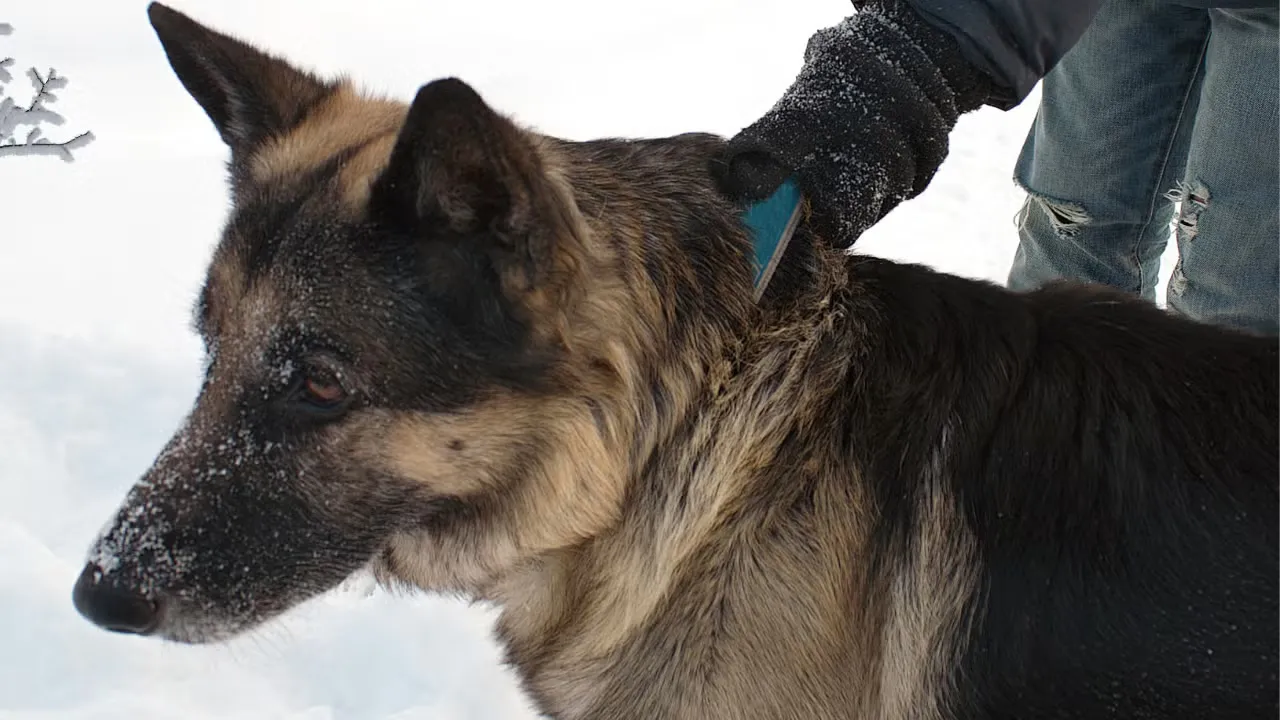
Physical interventions such as grabbing a collar may escalate arousal, inadvertently increasing anxious or reactive behaviors.
Case 2: Chanel, the Begging Pomeranian
Chanel, a cute Pomeranian, had been spoiled with occasional table scraps, and the children eating at the table often dropped food, whether by accident or on purpose.
The owners chose to ignore her and stop the scraps, but Chanel persisted—escalating from simple pawing to barking and jumping. When the owners went on vacation, I pet-sat and assessed her behavior firsthand. As my husband and I sat at the table, Chanel kept pawing, then began barking and jumping in hopes of a morsel. Enjoying a meal while she begged from one side of the table to the other was difficult.
Case 3: Panga, the Jumping Great Pyrenees
Panga, an 8-month-old Great Pyrenees, had been allowed to jump as a puppy but was now too big to greet people that way, so her owner sought solutions. The owner had tried yelling "no" and turning her back to ignore her. When she turned around, Panga would still jump on her back and sometimes try to hump her leg—which, unsurprisingly, upset the owner further.
Meet the Extinction Burst
What's going on here? Why did all three dogs get worse rather than better once the owners began ignoring the problem behavior?
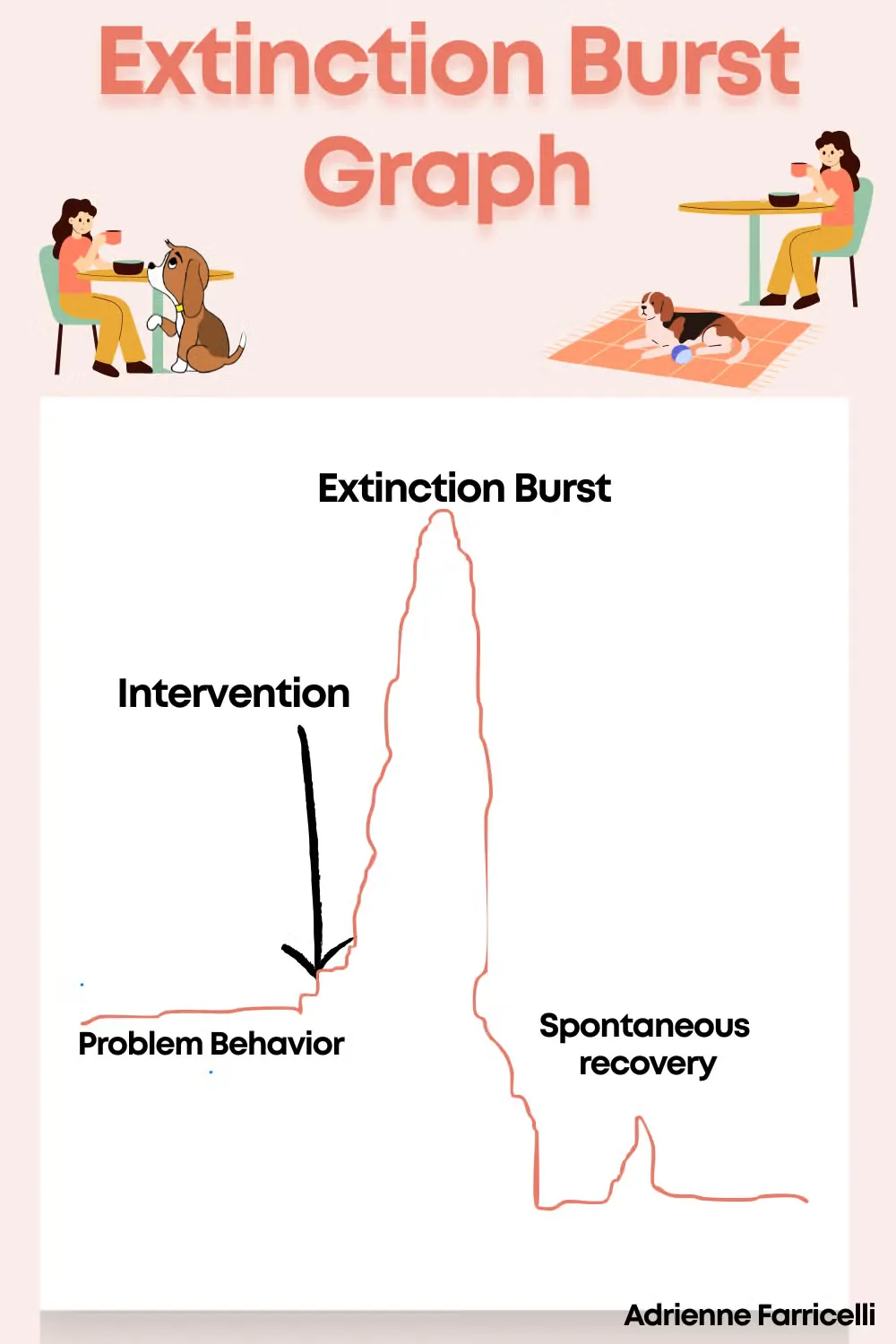
What's happening is a behavioral last stand—an escalation response. It's as if the dog's brain says, "Hold on—this has always worked. Maybe I should try harder." The dog nips harder, paws more, and jumps or barks with more vigor than before. He may even add a new behavior (extinction-induced variability). This rise in intensity, frequency, variability, and duration when reinforcement is removed is technically called an extinction burst.
In operant conditioning—the scientific term for how dogs learn from consequences—"extinction" means a behavior weakens and declines because the reward that previously reinforced it has been removed.
The governing principle, in short: "If doing something no longer works, eventually the dog stops doing it." Still, the process involves struggle, since the brain is slow to give up a winning strategy.
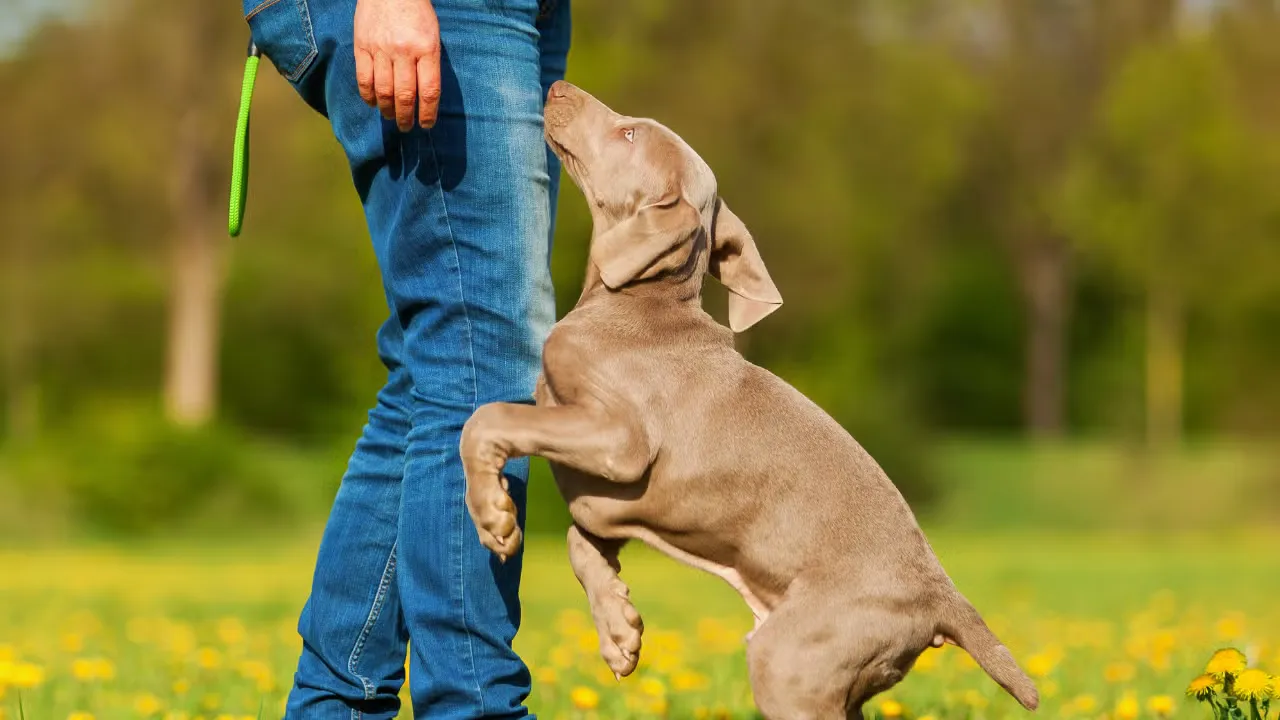
Just when you think ignoring your dog's jumping is working, your dog jumps higher and maybe throws in a bonus spin. Consider that this is not regression; it's progress in disguise.
It's Not Just for Dogs
The extinction burst isn't unique to dogs—humans experience it too. Have you ever pressed an elevator button a dozen times when it didn't light up? Kicked a vending machine that failed to deliver your favorite snack?
These are extinction bursts in action. Because the elevator button usually lights up as soon as it's pressed, and the vending machine normally delivers once you insert a dollar bill, the moment these machines betray you, you feel driven to intensify your behavior.
"Think no coke is coming out of the coke machine after putting your money in!" points out board-certified veterinary behaviorist Dr. Jeannine Berger. That can certainly lead to frustration.
How to Handle an Extinction Burst
There are two ways to respond to an extinction burst: the correct way and the well-known incorrect way.
The Correct Way
- Does your dog nip when he wants play, attention, or some kind of interaction? Withdraw gracefully, walk away, and give no engagement.
- Does your dog bark while you eat at the table? No food falls from the table, no matter what.
- Does your dog jump on you hoping for engagement? Turn around and leave the room.
Your dog may initially nip harder, bark louder, and jump more, so staying calm and consistent matters. Stick to your plan and the behavior will eventually go extinct. Yes, it will flare up before it fizzles out, but your main goal is to outlast the tantrum. At some point your dog will realize, "Well, that no longer works," and the nipping, barking, or jumping should soon decrease in that context.
What's striking about an extinction burst is that it doesn't signal training failure—it signals that training is working, just not immediately. As you hold to your plan of withholding reinforcement, the problem behavior may occasionally resurface along the way. This is known as spontaneous recovery, and it too will eventually subside as long as you stay the course.
The Incorrect Way
Your dog nips, jumps, or begs at the table, so you decide to ignore it. The behavior intensifies. At some point you may conclude that ignoring doesn't work and try something else—or tell yourself, "Just one treat to quiet him before the neighbors complain." Now you've taught your dog, "So I need to bark louder and longer to get what I want." You've just reinforced his persistence. The next time you try ignoring the behavior, expect an upgrade that will be harder and harder to address—and potentially more upsetting to your neighbors.
My Preferred Way
Ignoring a behavior that has earned interaction and engagement in the past comes with some frustration, an emotional state that can feel somewhat aversive to the dog. I'd rather not put a dog in that position, or at least keep the frustration to a minimum. So let's step back and talk about prevention—how to avoid triggering a full canine meltdown while still working to change the unwanted behavior.
6 Force-Free Ways to Prevent or Soften Extinction Bursts
An extinction burst can bring frustration and emotional distress. "It may be time to consider the extinction of extinction in dog training," points out Linda Case in the book Beware the Straw Man: The Science Dog Explores Dog Training Fact & Fiction. Fortunately, effective, less stressful, and friendlier approaches are available.
1. Manage the Environment
A key first step with any problem behavior is preventing the dog from rehearsing it repeatedly. Just as actors improve with each rehearsal for a play, dogs get "good" at practicing problem behaviors, which risk becoming habit-forming. Carefully managing the environment keeps your dog from repeatedly engaging in the problem behavior.
- Does your dog beg at the table? Keep him out of the dining room or kitchen.
- Is your dog particularly nippy in the evening? Let him out in the yard to burn off pent-up energy, or give him something to chew in his own area.
- Does your dog jump on you when you get home from work? Set up a baby gate that prevents the jumping.
These are temporary measures that stop your dog from practicing the problem behavior while you address its root cause and teach better behaviors.
2. Address Unmet Needs
Many dogs who engage in undesirable behaviors are bored out of their minds and benefit from more exercise, training, and mental stimulation such as brain games. Meeting your dog's needs paves the way for a happier dog who is less likely to engage in problem behaviors.
3. Provide Outlets for Natural Behaviors
Dogs also benefit from outlets for species-specific behaviors—things dogs naturally do, such as digging, chewing, sniffing, exploring, and chasing. Providing these outlets helps meet their needs and improves emotional well-being.
4. Train Another Behavior
Rather than simply ignoring the behavior, teach your dog what you'd like him to do instead—technically called response substitution.
- To address King's nipping, I trained him to sit in front of me or nose-target my hand in exchange for my attention, followed by a tossed kibble.
- Chanel's begging? She learned to go to her mat and enjoy a long-lasting treat during mealtime.
- Panga's jumping? She quickly learned to sit instead of jump and was rewarded generously for making good choices. Why jump when keeping her bottom glued to the floor unleashed such wonderful delicacies?
5. Gradually Build Frustration Tolerance
We can teach dogs to handle and cope with moments of disappointment. Better frustration tolerance builds behavioral flexibility, making dogs more adaptable and less likely to escalate. Impulse-control games can accomplish this, teaching dogs that rewards sometimes take time and that waiting a little longer may be worth it.
6. Work With a Professional
If a behavior problem is hard to address, consulting a dog behavior professional is always wise. Extinction can create frustration and can even be dangerous if misapplied to behaviors tied to fear or anxiety, such as growling. Ignoring a dog who is growling or trying to escape restraint may lead to biting. Fear- or anxiety-related behaviors need a different plan.
Moreover, effectively extinguishing a behavior requires identifying every source of reinforcement maintaining it, since some behaviors are maintained by more than one type. If any source remains available, even occasionally, the behavior is likely to persist. A functional analysis to determine exactly what reinforces the behavior and its function is a critical first step. Please consult a trainer or behavior professional who understands the behavior-change process well and is committed to gentle behavior modification methods.
The Drama Before the Curtain Falls
A dog's extinction burst is the canine version of a toddler's grocery-store meltdown when mom refuses to buy a bag of candy. Once you remove the payoff—your attention, food, engagement—your dog will stage a last-ditch drama in hopes that persistence pays off. The longer the dog rehearsed the problem behavior and received intermittent reinforcement (rewards delivered unpredictably), the more persistent and intense that final drama will be.
Still, an extinction burst isn't a sign of regression. You're not failing—you're essentially rewiring. It's a textbook example of how a behavior packs its bags and leaves for good if you stick to the plan. So don't cave during the burst. Doing so would teach your dog that louder and longer gets the goods, since you'd have just reinforced the stronger, more persistent behaviors.
Even better, skip the extinction problem altogether and equip your dog with the skills to develop better emotional regulation. That will help your dog keep his cool when things don't go his way.