Toys My Cats Enjoy Without Me: A Household Guide
Jamie Walker
Two Older Cats Who Still Play
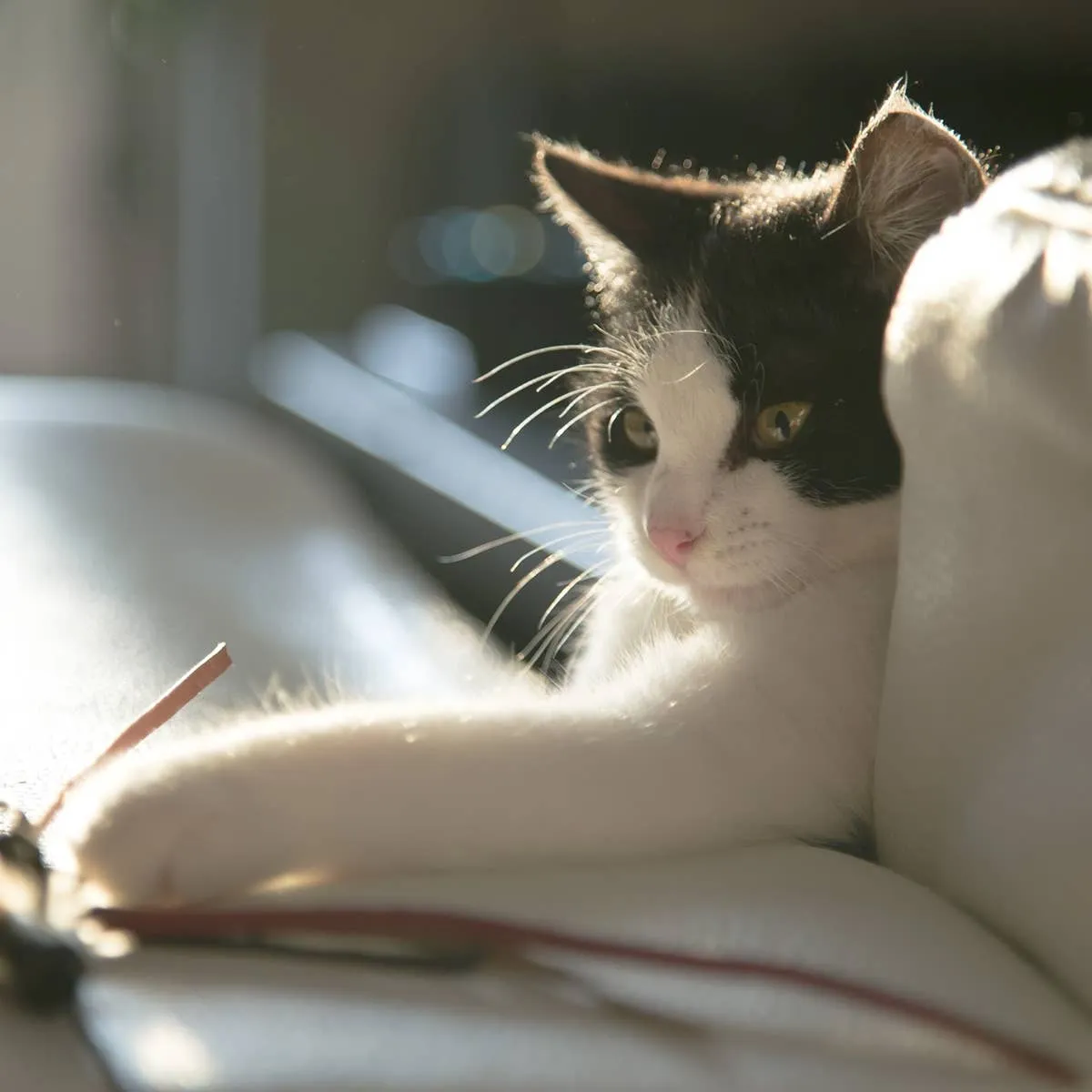
At the moment, our household includes a pair of neutered cats, both twelve years old. They remain fairly active—one more so than the other—and neither seems to behave as though they have reached their senior years. My wife engages them in play every day, but we also notice them amusing themselves with toys meant for solo play.
Below are some of their favorites—items my cats would presumably name as the best if they could speak. A few of these products are not marketed as cat toys at all, yet our cats play with them regardless.
Catnip Carrot, Organic Version
Catnip carrots are widely available. Why this particular shape became common for cat toys is unclear to me. Cats do not eat carrots—none of the cats I have lived with have ever nibbled on that vegetable. Even so, fabric carrots stuffed with catnip remain popular.
You can find them from various brands, as well as from independent makers on sites like Etsy and at in-person craft fairs. Cutting and sewing orange fabric, then filling it with catnip, is presumably a straightforward project.
When possible, we choose organic options. Over the years, we have purchased and received as gifts several catnip carrots made by Ratherbee's. In our experience, they hold up well, and we like to have cat toys in every room so our cats can play whenever they encounter one.
Phineas, our smaller and faster cat, will play alone with a catnip carrot for several minutes at a stretch. He has taught himself to sit on his hind legs and toss the carrot into the air with his front paws, then jump and catch it in his mouth. It is quite a sight.
We keep dozens of cat toys collected over the years in a basket. Occasionally, Phineas digs out his oldest catnip carrot and carries it in his mouth as though it were prey. That toy is more than ten years old, worn out, and we are not even sure which brand made it. He loves it anyway.
We have also received other fabric gifts packed with catnip. Some are shaped like cigars; others are harder to describe. One was a toy eggplant that came packaged with a toy carrot. The carrot has received far more attention. In our home, catnip is popular, but it draws the most interest when it is inside something resembling Bugs Bunny's favorite food.
Naturally, play sessions with these toys always leave our cats very relaxed.
Plastic Springs
Quentin, our other cat, is fond of plastic springs. They are sold under several brand names. If you have never watched a cat chase one of these small, colorful springs across a hard floor, you are missing something. Quentin—Q for short—is a solidly built cat, but he moves with surprising speed. He takes after me, I think. At least once a day, he goes completely wild with one of these toys.
If you buy a bag of these springs, be prepared to replace them after a few months, or to search thoroughly for the places your cat has hidden or batted them.
A Plain Bootlace
Q also happens to love a bootlace. Strictly speaking, the lace works best as a guided toy: my wife sits on the floor and gets Q running in circles around her. Even so, he will also play with his bootlace on his own.
He pounces on it and drags it around in his mouth. When he brings it to us, drops it, and starts vocalizing as if presenting it, he is asking us to thank him and begin a play session.
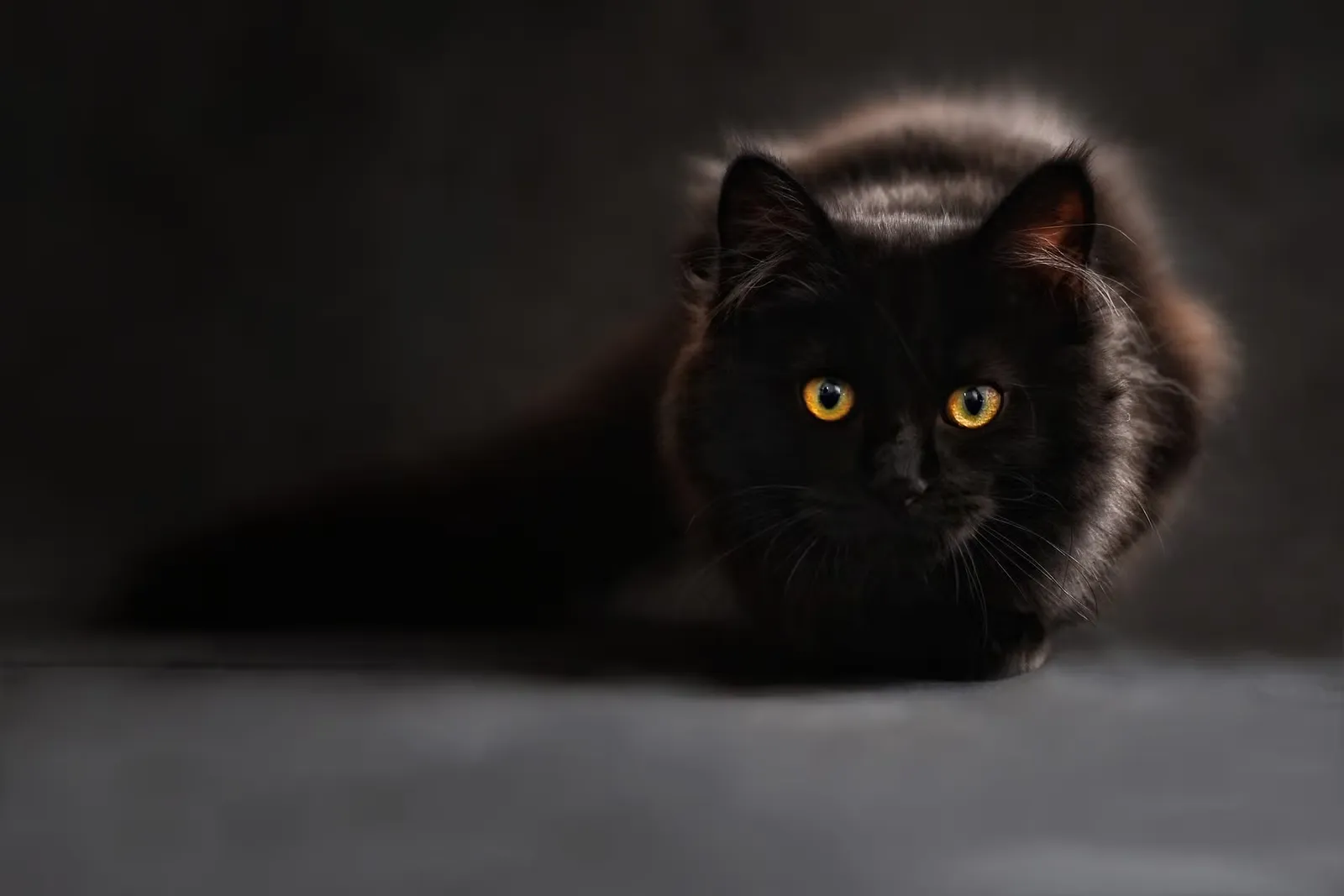
Find toys that allow cats to use their animal instincts.
CC0 Creative Commons via Pixabay
The Feeder Ball
At feeding time, we put Q's food into a green feeder ball made by PetSafe. We like it because it can be adjusted to release just one piece of dry food at a time. Q gets the food he enjoys and the exercise he needs, and he no longer eats too quickly, which is what he did before we found this hybrid of a cat toy and a rolling food dispenser.
The Food Puzzle
While Q is busy with the feeder ball, we place Phineas's food into a SmartCat Peek-a-Prize toy, which we call "The Food Puzzle." It is a hollow wooden box with holes on every side except the bottom, and it comes with two balls. We add a handful of other small cat toys inside, then pour cat food into several of the holes. This way, Phineas gets important activity for an aging cat while he eats.
Any Box
Cat owners know that cats, much like toddlers, are just as likely to play with a cardboard box as with whatever came inside it. Unlike toddlers, cats do this because of an instinct to seek enclosed spaces for safety and cover. If you want your cat to play while you do something else, I suggest leaving a few boxes around your home. Phineas and Q love them.
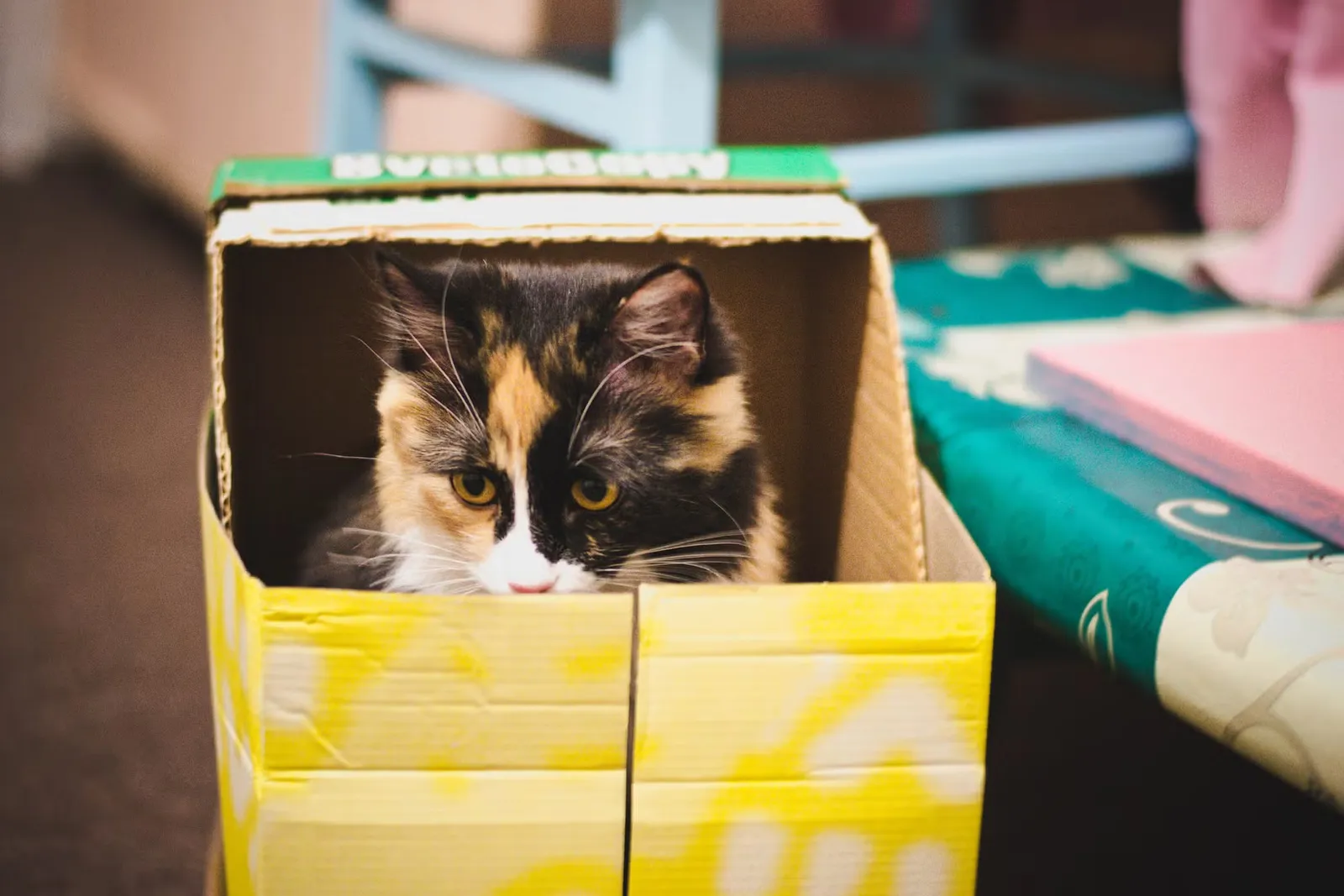
Cats love playing in boxes.
CC0 Creative Commons via Pixabay
The Humble Paper Bag
My two companions also enjoy paper bags. Like a box, a paper bag satisfies a cat's need for a confined space. In our house, boxes lead to calm play, with some hopping in and out. Paper bags lead to periods of waiting mixed with sudden ambushes. Delightful!
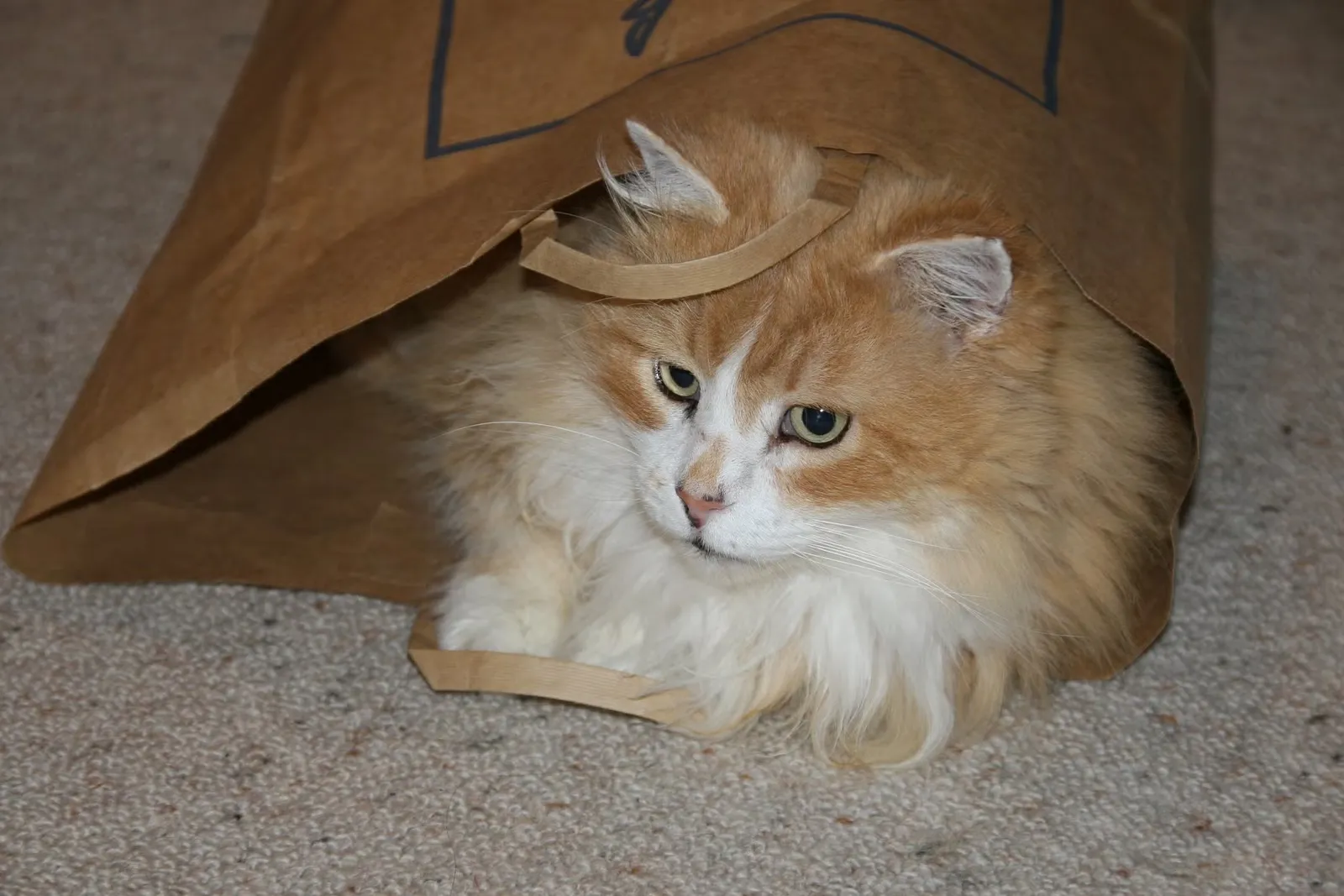
Paper bags are also another great cat play toy.
CC0 Creative Commons via Pixabay
Feedback Welcome!
I hope these observations about the best cat toys—as judged by my cats—have been useful. Please leave a comment about the cat-approved toys in your own home.
This article is accurate and true to the best of the author's knowledge. It is not meant to substitute for diagnosis, prognosis, treatment, prescription, or formal and individualized advice from a veterinary medical professional. Animals exhibiting signs and symptoms of distress should be seen by a veterinarian immediately.