IGP Trials Explained: More Than Just a Protection Dog Sport
Rowan Williams
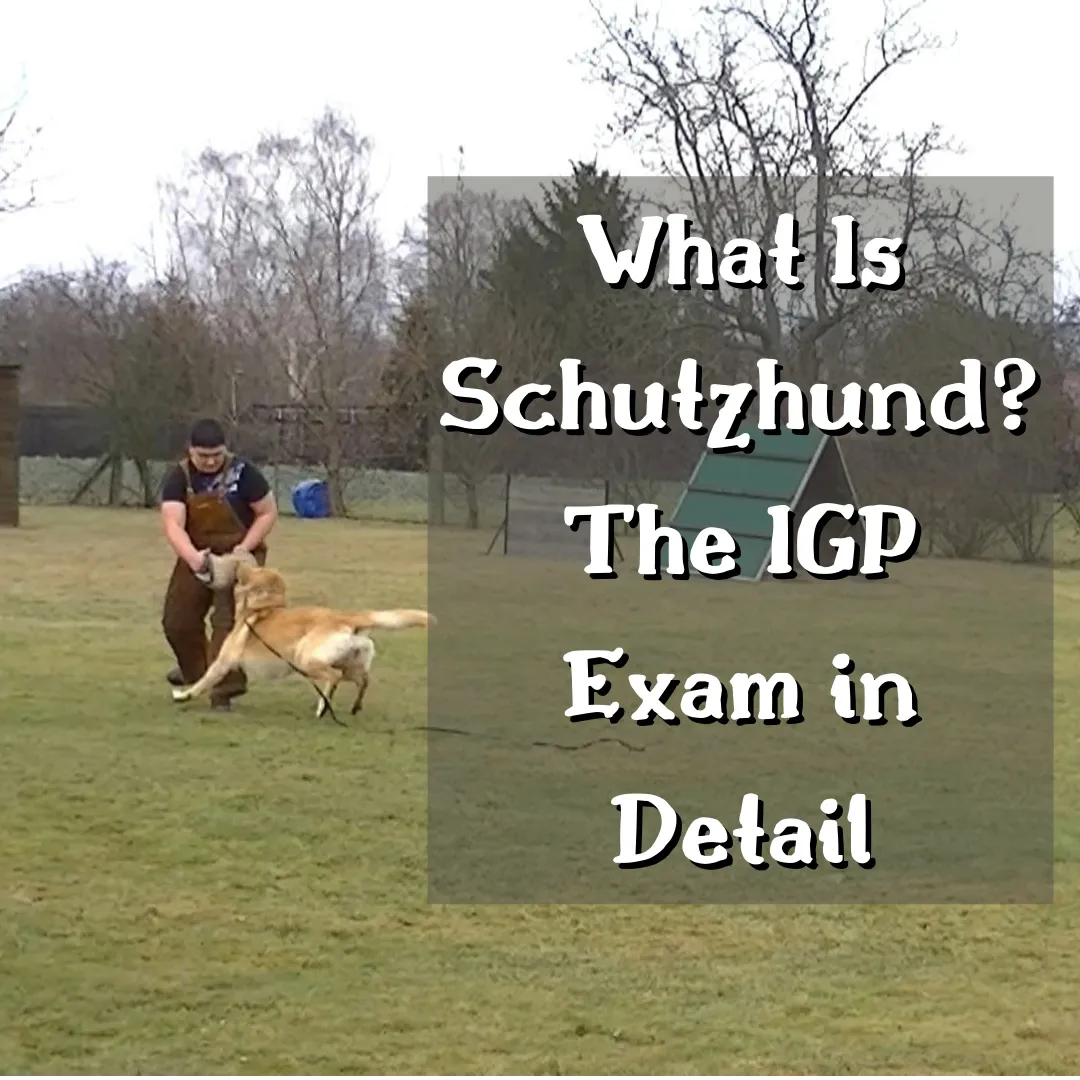
The Purpose Behind the IGP Evaluation
"Schutzhund," a German term translating to "protection dog," originated in Germany in the early 1900s as a breed suitability assessment. The evaluation aimed to determine whether a dog exhibited the appropriate traits of a working German Shepherd. Over time, Schutzhund has transformed into a sport where dogs participate in a highly rigorous examination.
Known today as "Internationale Gebrauchshund Pruefung," or IGP, the exam has undergone name changes—from Schutzhund to IPO and now IGP. This evaluation is highly demanding, and not every dog succeeds. The IGP consists of three distinct phases:
- Tracking
- Obedience
- Protection
Despite common misconceptions, the IGP exam remains challenging even as it has evolved. While it is a sport, it also reveals essential traits sought by owners and breeders. Its core purpose is still to identify dogs possessing specific character attributes.
These traits include:
- Physical strength
- Endurance
- Agility
- Desire to work
- Intelligence
- Courage
- Trainability
- Relationship with the handler
- Obedience
Additional Evaluations
IGP also assesses balance, temperament, and control. The objective is to observe a dog's character through training and deliberately introduced stress. These stress factors include weather, locations, environment, and the presence of other handlers and dogs.
For instance, rain does not cancel a competition—the trial proceeds. All trials take place outdoors, exposing dogs to changing weather conditions. This gives breeders valuable insight into a dog's constitution under designed stress.
The Three Main Tests
1. Tracking
The tracking phase evaluates scenting ability, mental soundness, obedience, and endurance. A track layer lays the track in a field (for IGP1, the handler lays it), placing small articles along the path. The judge records the time for aging (depending on the track level), and the dog and handler then work the track.
The dog must follow the laid track by scent and indicate the placed articles. Scoring depends on factors like intensity and intent on the track, article indication, and more. Each title has its own specific length, number of articles, and track age.
2. Obedience
Obedience exercises are performed in handler-dog pairs based on entries. One dog holds a long down position while another pair works, then they switch. The obedience routine includes multiple heeling exercises such as heeling patterns, retrieves, and send-outs. Throughout, the dog must show power, enthusiasm, and precision. While this may sound simple, adding control makes it a challenging routine.
3. Protection
The protection phase involves a person on the field known as the "helper." The helper's role is to test the dog through designed exercises for the judge's evaluation.
Extensive safety equipment is used for both dog and person. This program emphasizes control and precision, not violence or biting, as some outside the sport mistakenly believe.
The dog searches blinds, guards the helper once found, and must be recalled. Then various exercises similar to police work and transporting are performed. As in obedience, the dog must demonstrate power, enthusiasm, precision, and control.
Further Reading
- Schutzhund: A Sport for Working Dogs – Sports | Times West Virginian
- Why Do Guardian Dogs Excel at Schutzhund? | CANIDAE Guardian dogs and other working dogs often undergo Schutzhund training, a sport designed to maintain the working ability of the breeds.
- Schutzhund: Working Dog Training, Testing and Sport | Havre Daily News Schutzhund. Just what is it, and how is it connected to dogs? In English, the word means "protection dog." The sport of Schutzhund was originally designed as a temperament test for the German shepherd dog.
© 2020 Kelly Ward