Fatty Liver Disease in Cats: Hepatic Lipidosis Explained
Taylor Gray
Understanding Hepatic Lipidosis
Hepatic lipidosis, commonly known as fatty liver disease, is a condition where too much fat builds up in the liver. It is the most frequently diagnosed liver disease in cats across North America, yet much about it remains unclear. Cats of any age or breed can develop it, and it appears to be somewhat more common in females than in males.
Primary and Secondary Forms
Nearly all cats with this syndrome have a history of not eating for two weeks or more, though it can sometimes occur without that. When another illness causes appetite loss and comes before the condition, it is called secondary hepatic lipidosis.
When no other underlying disease can be found, the terms primary or idiopathic hepatic lipidosis are used. This is the case for about half of diagnosed cats. Being obese before a period of not eating raises the risk (overweight cats that lose weight too rapidly). Many things can lead to anorexia, including certain diseases and changes related to behavior or stress.
Important Note
The disease can affect cats of any age or breed, and it seems to be somewhat more common in females than in males.
Causes and Contributing Factors
Possible contributors to the disease include:
- diabetes mellitus,
- pancreatitis,
- cancer,
- owners going away,
- family members leaving or being introduced to the household,
- spending time in a kennel,
- changes in the pet population in the home,
- diet changes, and
- rapid weight loss.
Once the disease process starts, it often accelerates quickly; cats feel sick and refuse to eat, even if the original cause of their appetite loss has been addressed.
By the time symptoms appear, the disease is already well established. It turns into a vicious cycle: the longer the cat goes without eating, the worse the hepatic lipidosis becomes, and the worse it gets, the less the cat wants to eat. Without aggressive medical care, this cycle can be fatal in up to ninety percent of affected cats.
The precise mechanism behind hepatic lipidosis is not fully understood; the process is unique to cats in both its severity and how quickly it develops. It is known that as anorexia continues, increasing amounts of fat are broken down throughout the body and transported to the liver.
Normally, the liver would process this fat and send it back out to the rest of the body, but in cats with hepatic lipidosis, this processing is disrupted, and fat starts to accumulate in the liver. Liver damage typically happens because the liver cells become so swollen with fat that they cannot work properly.
The Vicious Cycle
It becomes a vicious cycle; the longer the cat refrains from eating, the worse the hepatic lipidosis becomes, and vice versa.
Symptoms
The most common symptoms of this syndrome are:
- loss of appetite,
- weight loss,
- lethargy, and
- jaundice.
Occasionally, owners notice behavioral or neurologic signs such as:
- excessive drooling,
- blindness,
- severe bloating, or
- seizures.
These neurologic signs result from hepatic encephalopathy, a brain dysfunction caused by liver disease. It occurs when toxins from the abnormally functioning liver circulate to the brain, or when bacteria in the gut produce substances like ammonia that are normally detoxified by the liver.
Ammonia is produced by gut bacteria from dietary proteins. In a healthy liver, it is detoxified, but when the liver fails, ammonia builds up in the bloodstream and causes brain dysfunction. If treated early enough, the brain changes may possibly be reversible.
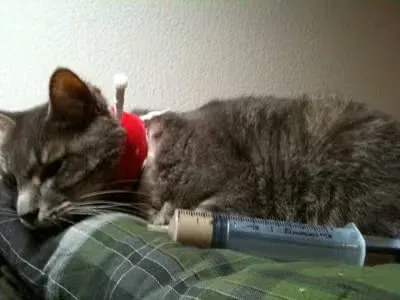
This cat is being treated for hepatic lipidosis. An esophageal feeding tube has been placed and is attached to a syringe containing a nutrient slurry.
By No machine-readable author provided. AGarren assumed (based on copyright claims). [Public domain], via Wikimedia Commons
Typical Symptoms
The symptoms most commonly associated with this syndrome usually include loss of appetite, weight loss, lethargy, and jaundice.
Treatment Options
The only way to reverse fat accumulation in the liver is to provide the cat with its full caloric needs through feeding. There are several approaches to try, but only a few are consistently successful. Offering different diets might encourage a cat to eat during the early stages of anorexia, but it is unlikely to work once clinical signs of hepatic lipidosis appear.
Avoid Force-Feeding
Force-feeding does not work, even with the most cooperative cat, because it is practically impossible to deliver enough food that way. Cats also tend to develop food aversions quickly, and associating food with a forced, unpleasant experience may delay the return to normal eating.
Appetite stimulants may help in the early phase of anorexia but are unlikely to consistently get a cat to eat once symptoms are present.
Tube Feeding
When a cat stops eating entirely, the only practical way to reverse the disease is tube feeding. Long-term tube feeding has transformed the outcome from a mortality rate above ninety percent to less than thirty percent. Most cats need tube feeding for one to three months. A commercially prepared, high-calorie diet is used in most cases.
The veterinarian will typically determine the exact amount and schedule tailored to each patient. Cats with hepatic encephalopathy may initially need a protein-restricted diet. The veterinarian may also add amino acids and vitamin supplements to the diet.
Regular Check-Ups
Frequent rechecks are necessary to monitor the tube, the cat's overall health and quality of life, and to repeat blood work to track liver function. Blood liver values usually improve within two to eight weeks after feeding begins. In cats with idiopathic hepatic lipidosis, recurrence is rare, and most cats that recover go on to live normal lives.
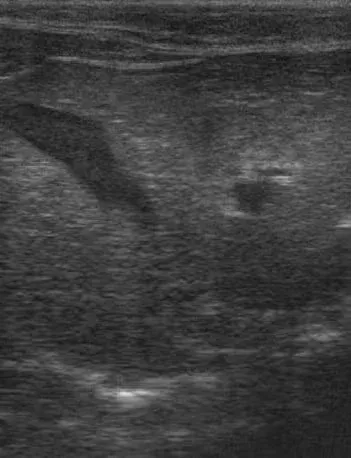
This sonograph shows severe hepatic lipidosis in a cat. Note the increased echogenicity of the liver parenchyma, similar to the fatty tissue surrounding the liver.
By Kalumet [GFDL () or CC BY-SA 4.0 (ivecommons.org/licenses/by-sa/4.0)], from Wikimedia Commons
Sources
- Brooks, Wendy. (2008). Hepatic lipidosis (fatty liver). The pet health library. Retrieved from inarypartner.com/Content.plx?A=1455
- Goldstein, Richard. (2008). Hepatic lipidosis in cats. American college of veterinary internal medicine.
- Personal experience.
This article is accurate and true to the best of the author’s knowledge. It is not meant to substitute for diagnosis, prognosis, treatment, prescription, or formal and individualized advice from a veterinary medical professional. Animals exhibiting signs and symptoms of distress should be seen by a veterinarian immediately.
© 2018 Liz Hardin