Recognizing Ocular Issues in Your Feline
Hayden Scott
Ocular Concerns in Cats
For cat owners, staying alert to eye issues is essential. Cats rely heavily on their vision for hunting and tracking prey, unlike dogs that use a mix of sight, hearing, and smell to navigate their environment.
Signs such as watery eyes, repeated blinking, squinting, or pawing at the eyes could indicate ocular pain. Additionally, cats possess a third eyelid, known as the nictitating membrane. When this membrane becomes visible, it often signals an underlying problem. In such cases, you should:
- Inspect the eye to identify any potential cause. Using a single light source like a flashlight in a dark room is ideal. To reduce stress, you can restrain the cat with a pillowcase pinned around its neck. Keep in mind that a frightened cat's pupils will dilate, which can hinder a clear examination.
- Compare both eyes for symmetry in shape, color, and size. Check for protrusion or recession. Look for discharge, or a cloudy, hazy, or smoky appearance. To assess vision, cover one eye and gently touch the other several times. A cat with vision will blink as your finger approaches.
If your cat appears to be in eye pain, seek veterinary care promptly.
Watch for these indicators:
- Discharge: A clear discharge without redness or pain suggests a tear drainage issue. Any discharge warrants checking for corneal or inner eye involvement. A thick, sticky mucus with redness and inflammation points to conjunctivitis.
- Pain: Symptoms include squinting, tearing, tenderness, and light sensitivity. The nictitating membrane may protrude due to pain. Common causes are corneal injuries and inner eye disorders.
- Film Over the Eye: A whitish or opaque layer moving across the eyeball is a protruded nictitating membrane.
- Cloudiness: A loss of clarity or transparency indicates an inner eye disorder. Conditions like keratitis, glaucoma, and cataracts can cause cloudiness.
- Hard or soft eye: Changes in eye pressure stem from inner eye disorders. The pupil may become fixed and unresponsive to light. A hard eye with a dilated pupil suggests glaucoma, while a soft eye with a small pupil indicates inflammation of the inner eye structures.
- Lid Irritation: These conditions cause swelling, crusting, itching, or hair loss on the eyelids.
- Bulging or Sunken Eye: Abnormal contours or positions of the eye.
- Abnormal Movements: Eyes that focus in different directions or jerk back and forth.
- Cross-Eyed Gaze: Common in Siamese cats and considered normal; however, other forms result from muscle paralysis.
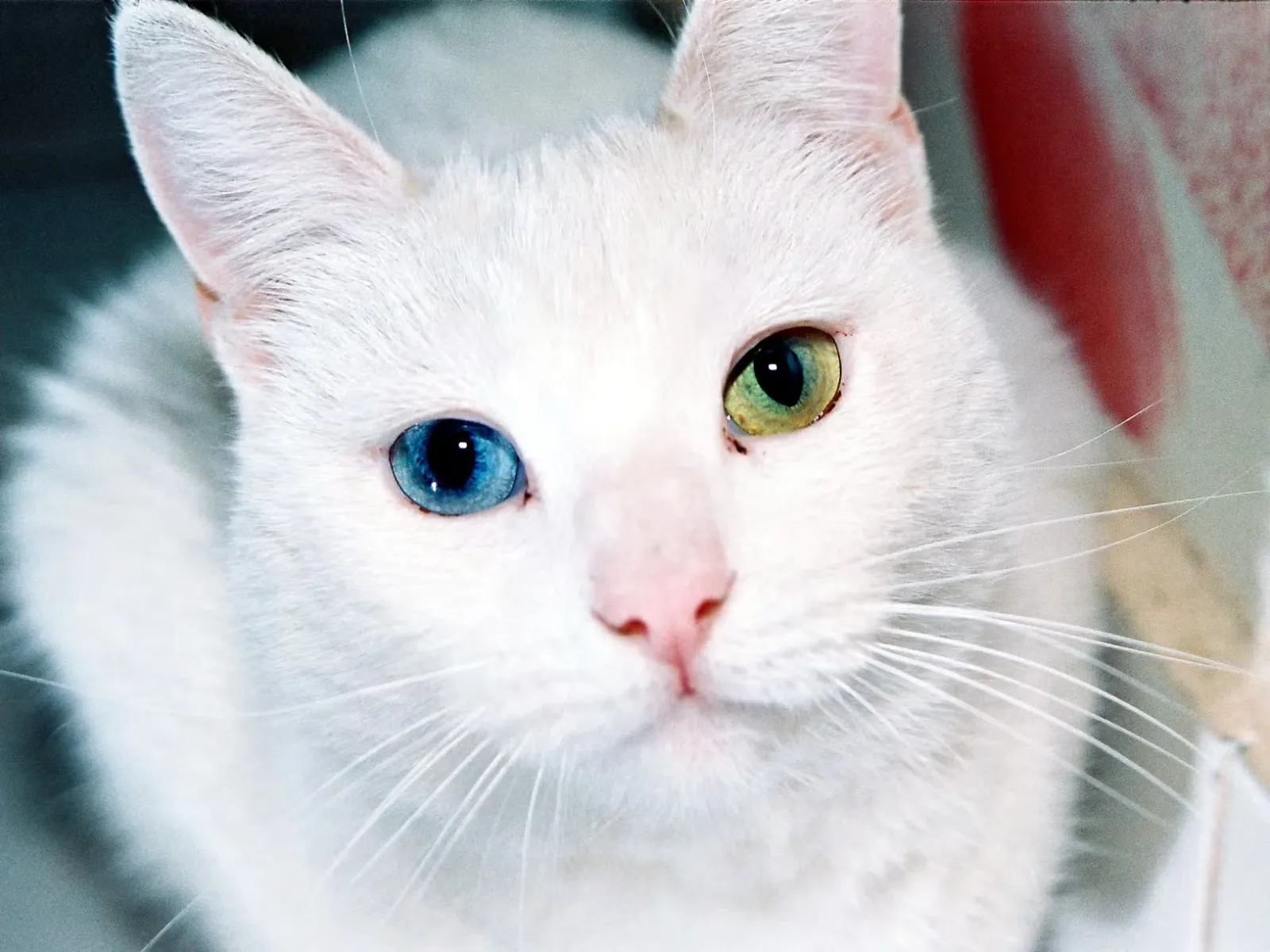
If your cat has a painful eye, you should seek immediate veterinary attention.
Public Domain via Wikimedia Commons
Third Eyelid Issues in Cats
Every cat owner encounters a problem that causes significant stress and anxiety for their cat. Some cats are born with special needs that are challenging to address, while others require extra effort and often expense to manage.
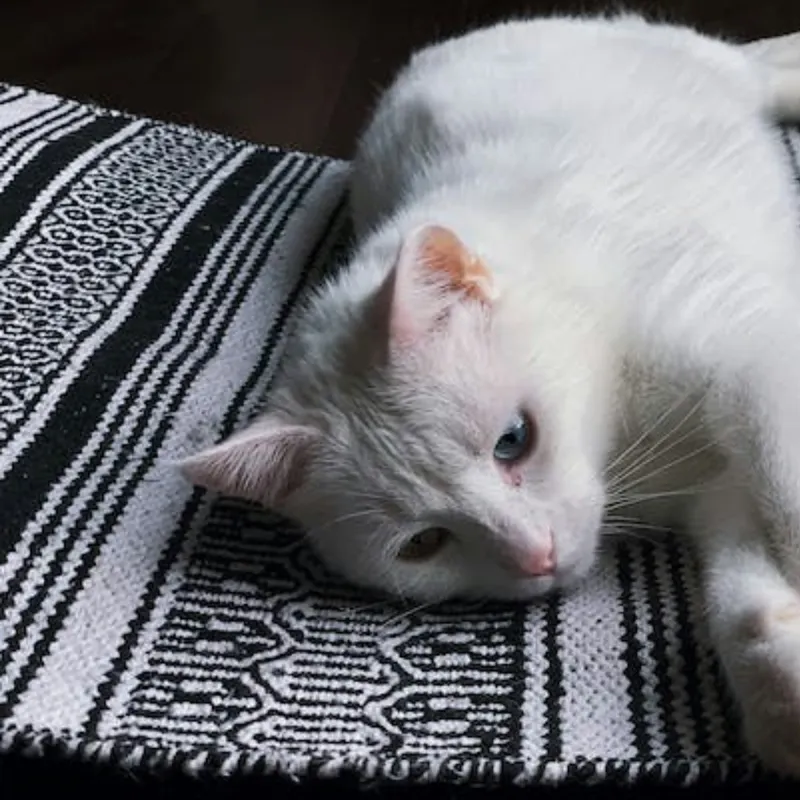
My two-year-old male cat Alvin has a third eyelid issue. This membrane, called the nictitating membrane, folds over sideways, giving him an unusual facial appearance. You can imagine the impact on his vision and sleep. He is a very skittish and nervous little guy, so finding a way to treat this condition has been challenging.
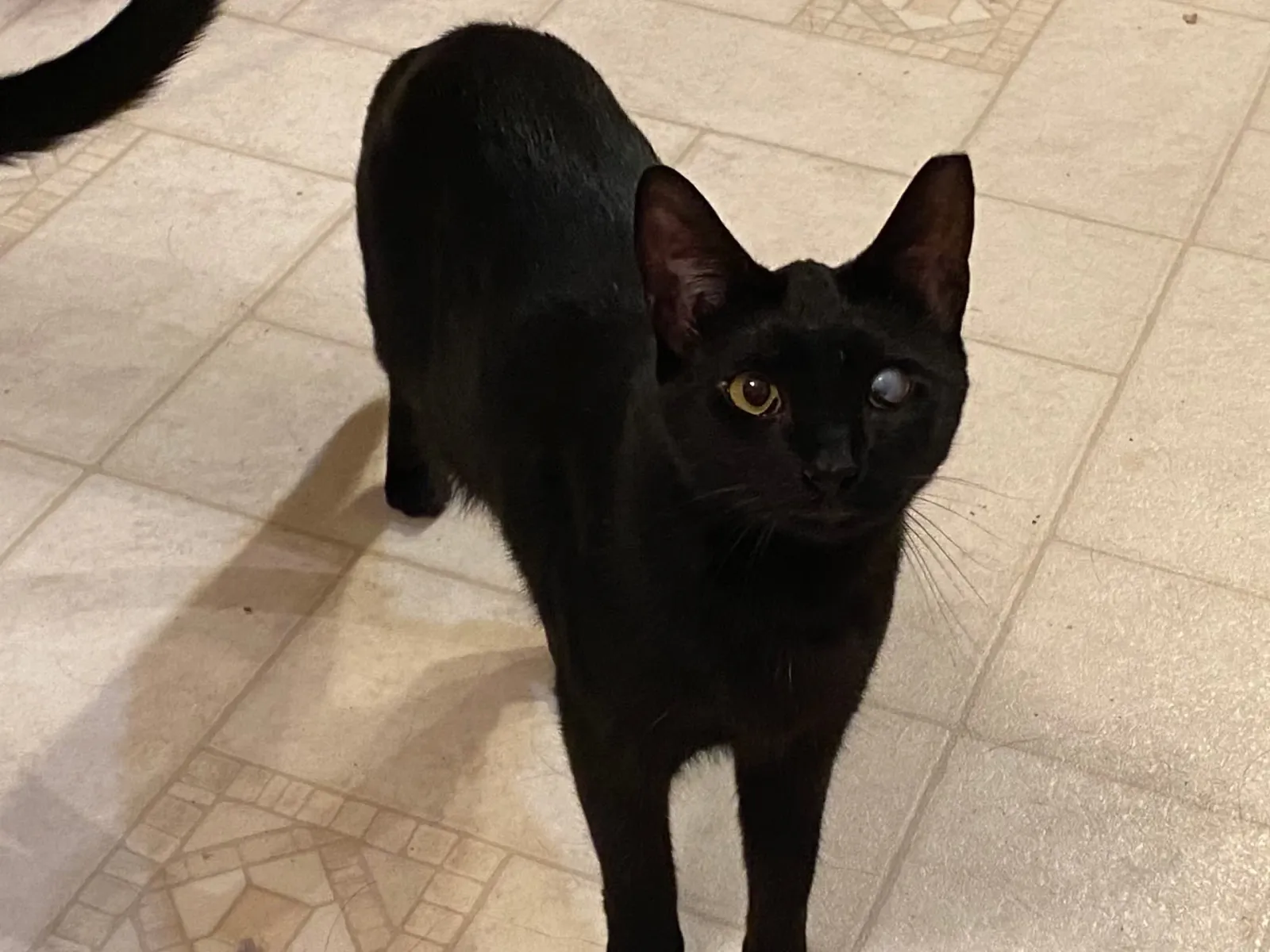
Alvin
When a cat's nictitating membrane is visible over the corner of the eye, it is typically described as protruding. If only one eye is affected, the likely cause is a painful eye condition due to corneal injury or a foreign body. If both eyes are involved, the condition is most likely caused by a feline viral infection. Since Alvin had this from birth, I assume he had an upper respiratory infection that affected one eye. Kittens born outdoors often develop some form of upper respiratory condition, usually mild, but Alvin may have had complications. This third eyelid problem doesn't seem to affect his playfulness or eating habits. He is also a healthy little guy.
An obscured cat's third eyelid should alert the owner to any chronic illness or disease causing weight loss or dehydration. In such cases, you should visit your veterinarian.
Administering Eye Medication
Ointments
Hold your cat's head steady with one hand and gently pull down the lower lid to reveal the inner surface. Apply the ointment inside the lower lid. Applying directly to the eyeball is irritating and may cause the cat to jerk its head, leading to eye injury.
Eye Drops
Eye drops can be applied directly to the eyeball. Rest the heel of the hand holding the dropper against the side of your cat's head. Tilt the nose upward and drop the medicine into the inner corner of the eye. Gently rub the eyelids to spread the medicine. Frequent application is usually necessary because tears tend to wash out the drops.
Use only preparations specifically labeled for ophthalmic use.
The source and diagnosis of any eye problems can often be determined by one of the above symptoms. Pay close attention to your cat to see if they exhibit any of them, and consult your vet if necessary.
Reference
- The Cat Owner’s Home Veterinary Handbook by Delbert G. Carlson, D.V.M and James M. Giffin, M.D. – First Edition
Cat Eye Problems
- Eye Infections in Cats Uveitis is an inflammation of the inner pigmented structures of the eye. It is one of the most common inner eye conditions of cats, in part because a number of feline infectious diseases can involve the eye.
This article is accurate and true to the best of the author’s knowledge. It is not meant to substitute for diagnosis, prognosis, treatment, prescription, or formal and individualized advice from a veterinary medical professional. Animals exhibiting signs and symptoms of distress should be seen by a veterinarian immediately.
Sources
- Recognizing Ocular Issues in Your Feline — pethelpful