Why Is My Cat Drooling So Much? 12 Causes and Home Care Tips
Hayden Scott
Common Reasons for Excessive Drooling in Cats
While it's normal for some cats to drool a little when they're happy and getting attention, a lot of saliva usually points to a health issue that requires quick attention.
If your cat is drooling more than usual, check this list of frequent causes to identify the possible culprit:
- Stomatitis: This is inflammation of the mouth, leading to redness and swelling along the gums, at the back of the throat, and sometimes even the lips. Some cats with stomatitis have an infection or dental problem, but others don't, and the reason remains unclear. It could be an autoimmune condition.
- Dental problems: Gingivitis causes pain and excessive salivation due to infection. The gums become red and swollen, there may be pus around the teeth, and some teeth might be loose or missing.
- Foreign object in the mouth or throat: Small toys like rubber balls are common culprits, but also watch for rubber bands, thread, and even small bones.
- Eating something unpleasant: Cats that roam outdoors are most at risk, but indoor cats that nibble on certain plants or table scraps can also react. A mouth exam will appear normal.
- Stress or fear: Anxious or nervous cats may drool, but it usually stops once the stressor is gone. The exam will be normal aside from the drooling.
- Nausea and pain: Sometimes just being put in a carrier and going for a car ride can make a cat salivate heavily. If it's not just stress or fear, the cat may be carsick. Many contagious diseases and oral inflammation (stomatitis) can also cause nausea from pain.
- Poisoning: There are many ways a cat can be poisoned, and drooling is just one sign. Your cat might also appear unsteady, breathe rapidly or irregularly, or have a strange odor if the poison touched the skin.
- Oral cancer: The tongue is the most common site for tumors in a cat's mouth, so any unusual swellings there need to be checked. Be sure to examine the gums as well when looking inside the mouth.
- Contagious disease (consider rabies first!): Although rabid cats don't produce more saliva, they can't swallow, so they drool instead. Other diseases like calicivirus, feline leukemia, and feline immunodeficiency virus can cause stomatitis, and the infected mouth is painful, leading to increased salivation.
- Heat stroke: Drooling is just one symptom of heat stroke in cats, but it's sometimes the first noticed. Your cat may also breathe abnormally, be weak or dizzy, and have bright red gums; if you can take its temperature, it will be very high.
The video above, like many others of cats in dryers, just shows a cute cat climbing into a warm spot for a nap. Unfortunately, not everyone always knows where their cat is; if the dryer is turned on, the cat will suffer heat stroke. Excessive drooling is only one sign of this dangerous condition.
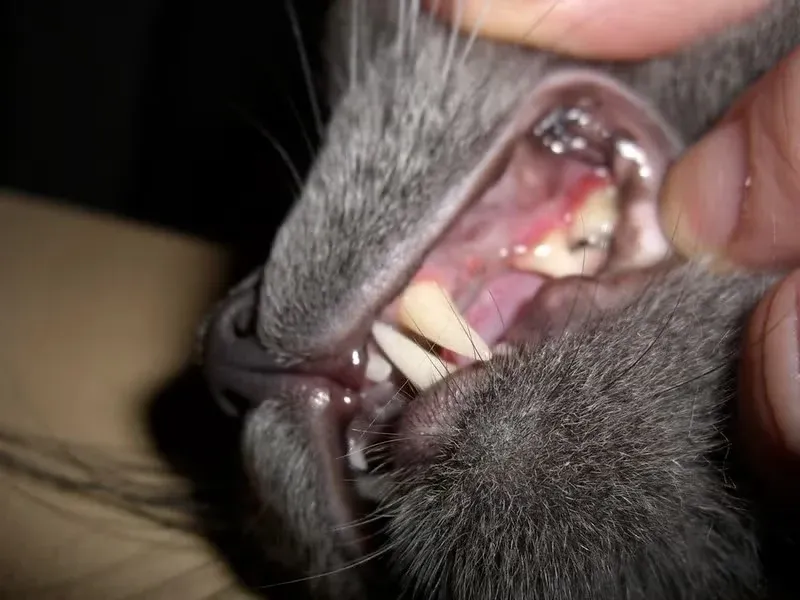
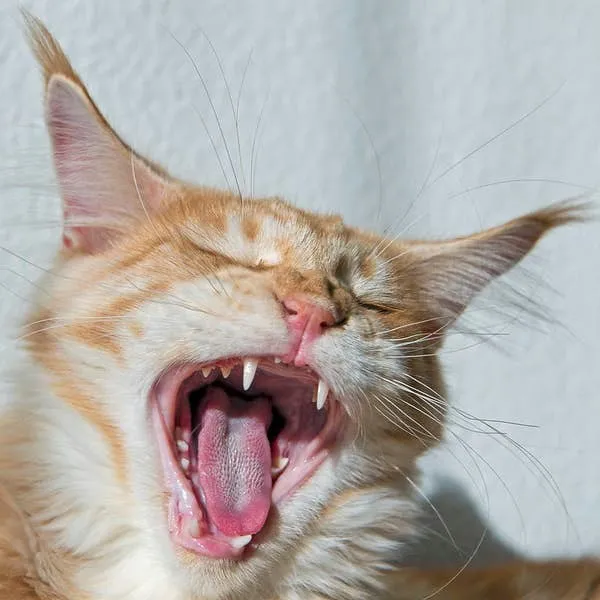
Dental disease in cats can lead to excessive salivation. It can only be treated under anesthesia, so it should be prevented if possible.
flickr.comphotosdeadling233226723
Home Care for Drooling
Before even thinking about a vet visit, place your cat on your lap and open its mouth. Try to figure out what's causing the excessive drooling.
- Stomatitis: If you can't take your cat for an exam, the only home remedy to reduce pain is to keep the mouth clean and relatively free of infection. Cats are in pain, but if they let you work in their mouth, there are chlorhexidine products that kill bacteria and are relatively safe. Some new reports suggest that piroxicam, an NSAID that can be used in cats, may be effective, and other anti-inflammatories like meloxicam might help. This disease usually needs a veterinarian's diagnosis before treatment, as giving an over-the-counter anti-inflammatory can sometimes be fatal to cats.
- Dental problems: By the time your cat is drooling from dental disease, it will need veterinary help (cleaning, antibiotics, and possibly extractions). If you haven't been caring for the teeth and want to try to control the disease's progression, but your cat won't let you brush, the chlorhexiderm product mentioned above is most likely to help.
- Foreign object in the mouth or throat: If something is stuck in your cat's throat, I want you to take care of it at home immediately and only take the cat to the vet if you can't help. (Strings swallowed but caught under the tongue may be impossible to remove and will need surgery.) Larger objects can usually be grabbed by hand, but be careful, as nervous cats in pain are much more likely to bite.
- Eating something unpleasant: This problem will go away on its own, but if you want to speed it up a bit, you can give your cat a little tuna or something it really likes. DO NOT give the regular food, as the cat might refuse it and stop eating its normal diet.
- Stress: Nervous or anxious cats will drool. Try to ask yourself why your cat is so nervous. Is there a dog or another cat bothering it when it wants to sleep? How about someone in the household making it very nervous? The drooling goes away when the stressor is gone, but if your cat is stressed again, the drooling will start up.
- Nausea: To reduce nausea, you have to figure out what caused it. Carsick? It's a fairly easy solution. Before trying nausea medication, the best thing you can do is withhold food, just like for a cat that is vomiting. If the cat is still sick and vomits, there's probably something more serious going on. If it's still a little nauseous but not vomiting, you can try giving 5 mg or less of famotidine to soothe the stomach. Do not give this more than once a day.
- Poison: If your cat has been poisoned, besides drooling, it may have vomiting, breathing problems, and act lethargic. (Seizures are also possible later.) All the websites most of you commonly search will just tell you to take your cat to an emergency veterinarian, but in many parts of the world, transportation isn't available, and in all parts of the world, money isn't always available to pay an emergency vet. Do what you can immediately for your cat. Some poisons can be removed from a cat's body through vomiting, and others can be diluted and will be less toxic so that your cat is less likely to die. Some things, however, like antifreeze, will only respond to ethanol and fluids.
- Cancer: If your cat has a tumor under the tongue or elsewhere in the mouth, there are some alternative treatments that might help, but there's no proof that anything will be effective. Even with traditional therapy, most tumors of the mouth in cats are malignant. The best thing you can do for your cat is to have the tumor examined and maybe biopsied to find out if it can be treated by your vet.
- Heat Stroke: Not letting your cat wander outside is the best way to prevent most cases of heat stroke, but as the video shows, some cats will seek out warm and dangerous places like the dryer. If your cat does suffer from heat stroke, it will need veterinary care, but emergency treatment immediately at home can be very important. You can use a cotton ball to pass rubbing alcohol on the pads so that your cat can cool down quickly, and it's also a good idea to rub its belly and any other hairless areas with cool water.
Although rabies is now uncommon in many parts of the world, it is still a threat almost everywhere (including the United States) and the best way to prevent it is to keep your cat from ever going outside. The cats with the greatest threat of catching this problem are unvaccinated cats that are allowed to roam.
Preventing Excessive Drooling
- Stop letting your cat outside. This is an important first step. Cats that roam outside will eat all sorts of things that cause vomiting, pick up more infections, might slobber more because of eating strange things and poisons, and are usually a lot more stressed than a housecat.
- Dental disease, including gingivitis and abscesses that cause the teeth to be sore, is preventable if the teeth are cleaned at home. Check out the Amazon ad for a good tooth cleaning system, but if your cat is older and does not allow you to mess with the mouth, there are oral rinses that may or may not be effective. The chlorhexidine product listed under the stomatitis section above has proven to be the most effective in cats I have taken care of.
- Make sure your cat is current on vaccinations to avoid diseases like calicivirus, which can cause stomatitis. Keeping your cat inside is the best way to prevent infections like feline leukemia.
- Just like you would with a child, keep all of your cleaning products out of reach of your pets and keep your cat out of your garage. Poisonous houseplants can be removed, of course, or better yet, don't buy a new one without being sure it is safe for your cat.
- Always look in your dryer before turning it on. (It sounds like an unnecessary and obvious suggestion, but many of us who have worked in emergency care have seen cats die from this.)
When to Seek Veterinary Help
If your cat has any of these symptoms along with the drooling, more help is needed:
- Vomiting frequently
- Weight loss
- Gagging
- Coughing
- Seizures
If you can take your cat to the vet, do so right away. The veterinarian might need to examine your cat under anesthesia, do bloodwork to check for organ damage or infection, and may even need to do x-rays or an abdominal ultrasound. None of these tests can be done at home.
When your cat has something stuck in its mouth, a broken tooth, or is just salivating a lot because of something it ate, if you have a veterinarian available, you should schedule a visit now and help them feel better. This excessive drooling problem might clear up right away or in a few days, and life can return to normal for both of you.
References
Brunt, S., Solomon, H., Brown, K., & Davis, A. (2021). Feline and Canine Rabies in New York State, USA. Viruses, 13(3), 450. i.nlm.nih.gov/pmc/articles/PMC7998993/
Crozet G, Rivière J, Canini L, Cliquet F, Robardet E, Dufour B. Evaluation of the Worldwide Occurrence of Rabies in Dogs and Cats Using a Simple and Homogenous Framework for Quantitative Risk Assessments of Rabies Reintroduction in Disease-Free Areas through Pet Movements. Vet Sci. 2020 Dec 18;7(4):207. i.nlm.nih.gov/33353001/
Cudney SE, Wayne A, Rozanski EA. Clothes dryer-induced heat stroke in three cats. J Vet Emerg Crit Care (San Antonio). 2021 Nov;31(6):800-805 i.nlm.nih.gov/34499793
Whyte A, Gracia A, Bonastre C, Tejedor MT, Whyte J, Monteagudo LV, Simón C. Oral Disease and Microbiota in Free-Roaming Cats. Top Companion Anim Med. 2017 Sep;32(3):91-95. i.nlm.nih.gov/29291775/
Cray, M., Selmic, L. E., & Ruple, A. (2020). Demographics of dogs and cats with oral tumors presenting to teaching hospitals: 1996-2017. Journal of veterinary science, 21(5), e70. i.nlm.nih.gov/pmc/articles/PMC7533385/
Marks S. L. (2016). Rational Approach to Diagnosing and Managing Infectious Causes of Diarrhea in Kittens. August’s Consultations in Feline Internal Medicine, Volume 7, 1–22. i.nlm.nih.gov/pmc/articles/PMC7152495/
This article is accurate and true to the best of the author’s knowledge. It is not meant to substitute for diagnosis, prognosis, treatment, prescription, or formal and individualized advice from a veterinary medical professional. Animals exhibiting signs and symptoms of distress should be seen by a veterinarian immediately.