Understanding Wolf-Dog Hybrids: Rules, Origins, and Ownership Realities
Taylor Mitchell
Regulations Surrounding Wolf Hybrids
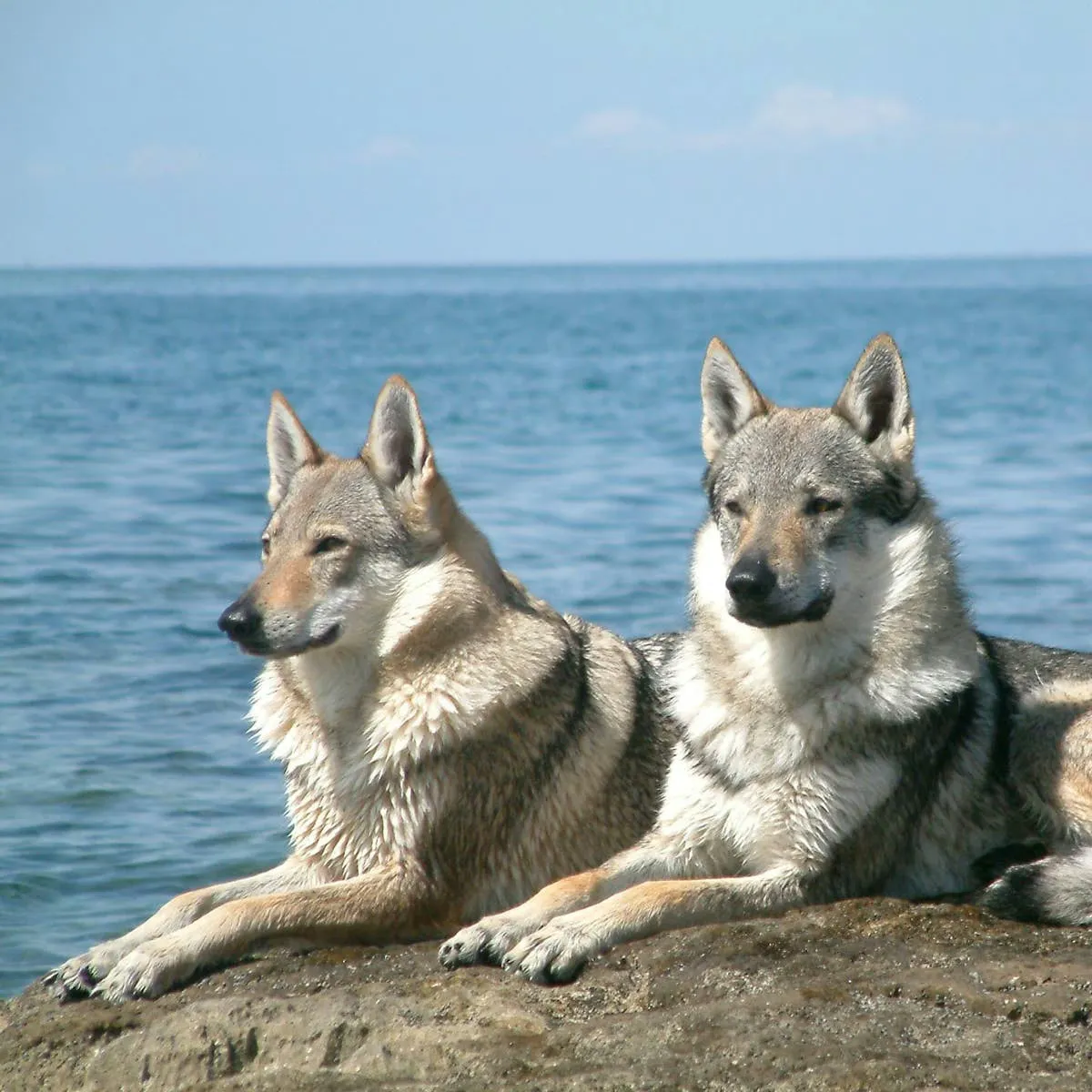
The legal treatment of wolfdogs—crosses between wolves and domestic dogs—is far from uniform, and the topic itself tends to generate strong opinions. A few nations formally acknowledge the wolfdog as a distinct breed. Czechoslovakia is one example: there, the kennel club registers the wolfdog as a breed and maintains breed standards similar to those applied to other dogs.
Within the United States, the picture is quite different. Roughly 40 states prohibit keeping or breeding wolf hybrids. Even within a single state, rules can shift at the county level—Wisconsin, for instance, illustrates this patchwork approach.
Defining the Wolfdog
Broadly speaking, a wolfdog is produced by crossing a wolf with a domestic canine, and the domestic side often involves breeds such as German Shepherds, Malamutes, or Siberian Huskies.
- Most of these animals are the product of intentional breeding.
- While wolves and domestic dogs can occasionally mate by accident, they generally are not inclined to do so.
- Wolfdogs are classified as exotic pets.
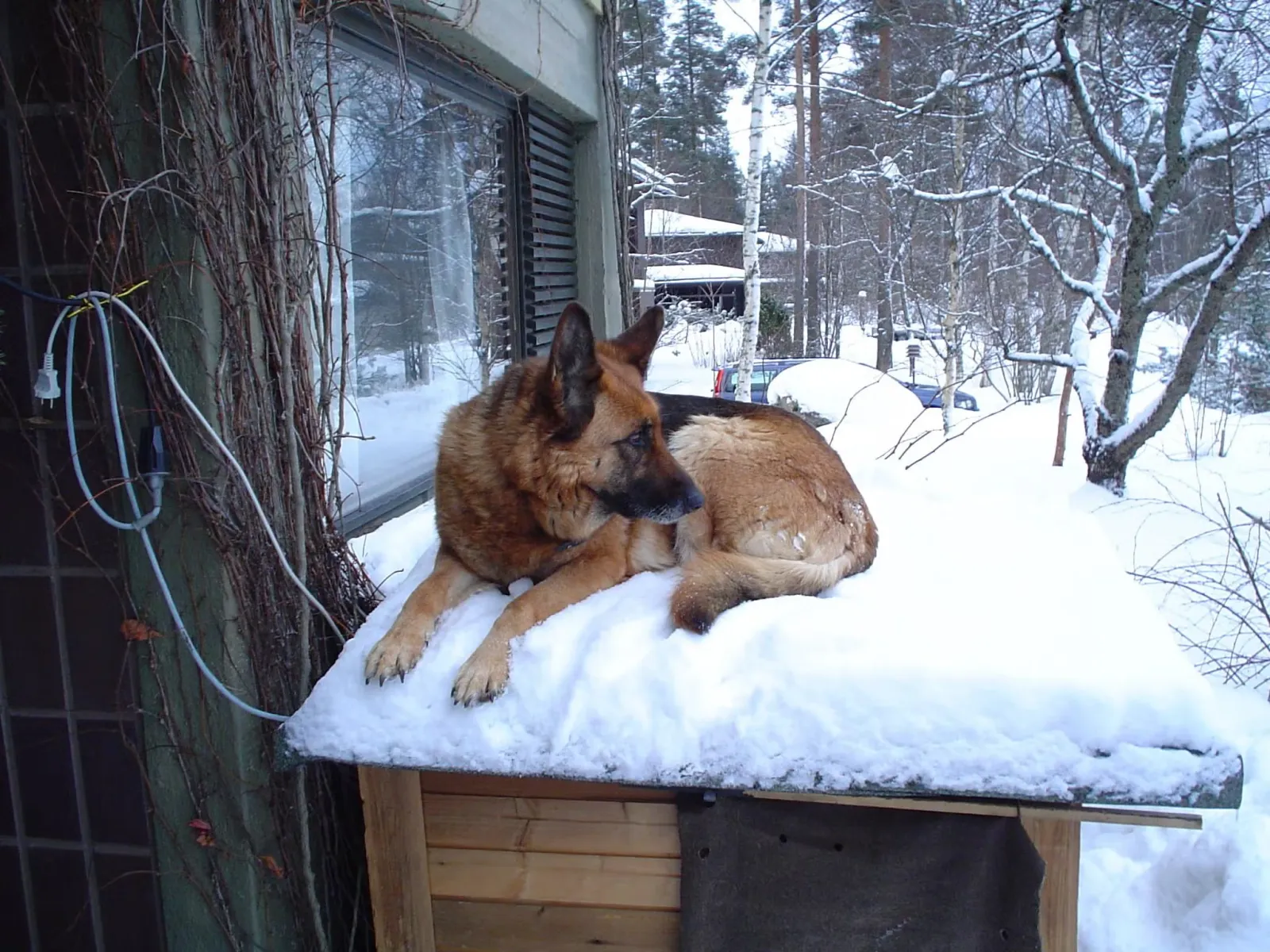
A wolfdog in the snow
By Untitled (Own work) [CC BY-SA 3.0 (ivecommons.org/licenses/by-sa/3.0)], via Wikimedia Commons
Historical Background
- Evidence points to wolfdogs existing in the Americas as far back as 10,000 years or more.
- European fossil finds suggest these animals were once used in hunting mammoths.
- Depictions in the art of the Teotihuacan civilization of Mexico’s Central Valley may represent wolfdogs; fossil evidence uncovered in 2010 indicates they were kept by the warrior class.
- The earliest documented wolf hybrid in Great Britain dates to around 1766, when a male wolf bred with a Pomeranian, producing a litter of nine puppies.
- English noblemen sometimes acquired wolfdogs as scientific curiosities.
- They also drew interest in British menageries and zoo exhibits.
- Intentional breeding appears to have begun only in the 1920s, when a Dutch breeder developed the Saarlooswolfhond.
- During apartheid in South Africa, wolfdogs were used as experimental attack dogs. These hybrids descended from German Shepherds and wolves from the Urals. The first, a male named Jungle, appeared in 1978 and served until 1989.
Recognized Wolfdog Breeds
Wikipedia lists at least seven breeds resulting from wolfdog hybridization. Four of these are deliberate crosses involving German Shepherds.
- Saarlooswolfhond: This breed emerged from an early effort to cross wolves with dogs in order to prevent distemper. The attempt did not succeed in its goal, yet the FCI and the Dutch Kennel Club went on to recognize the breed.
- Czechoslovakian Wolfdog: Developed during the 1950s.
- Lupo: Recognized by the Italian Kennel Club.
- Kunming Wolfdog: A Chinese breed used for military work.
- Japanese Wolfdog: Possibly descended from the now-extinct Japanese wolf.
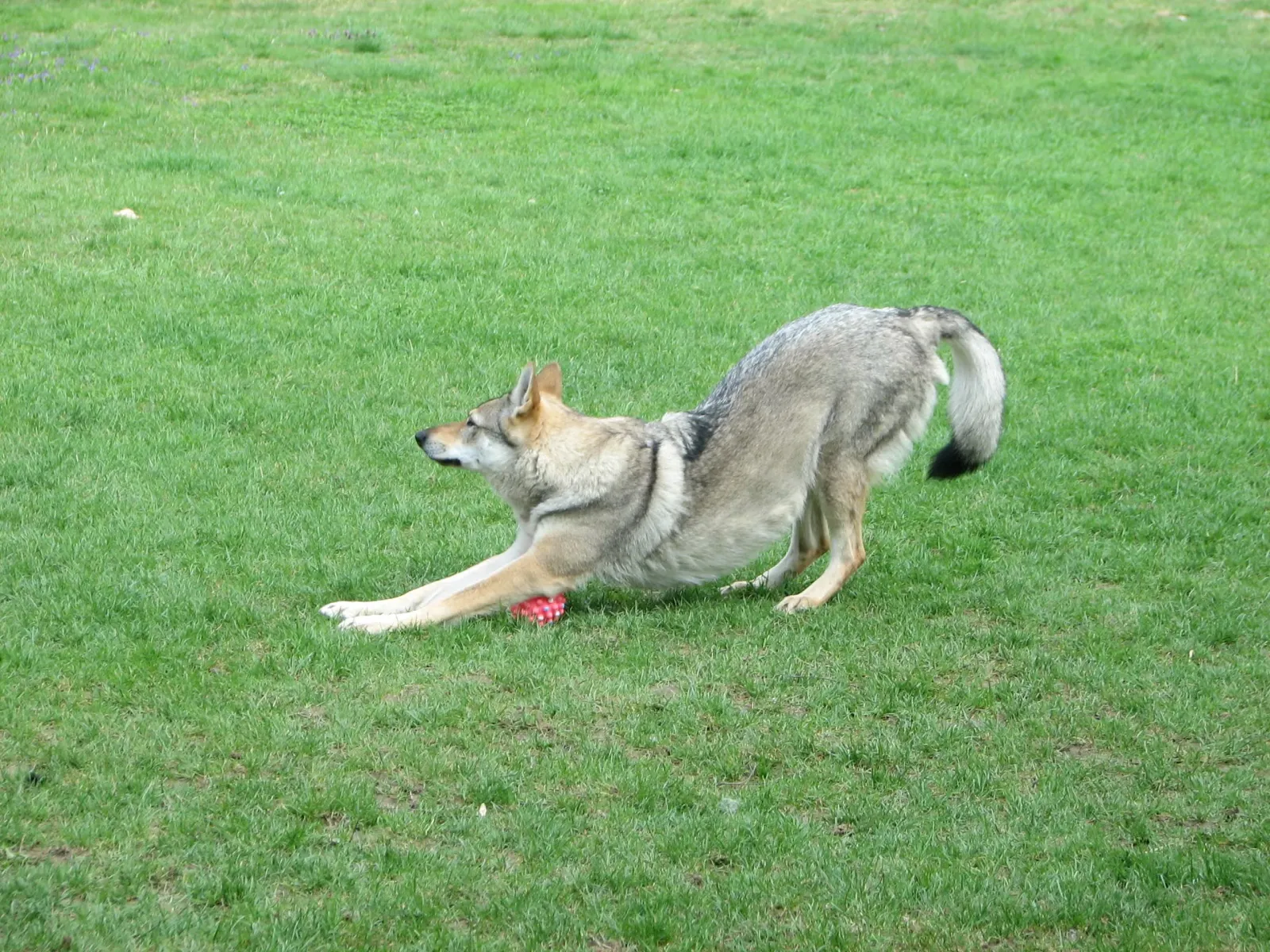
A wolfdog stretching
By Krzyżówki (Own work) [CC BY 3.0 (ivecommons.org/licenses/by/3.0)], via Wikimedia Commons
The Czechoslovakian Wolfdog in Detail
Breeding of the Czechoslovakian Wolfdog began in 1955, using 48 working-line German Shepherds crossed with 5 Eurasian wolves. As Wikipedia describes it, the objective was to combine the German Shepherd’s temperament, pack mentality, and trainability with the Eurasian wolf’s strength, physical build, and stamina. The breed was initially developed for Czechoslovakia’s border patrol. Over time, it found use in search and rescue, Schutzhund, tracking, herding, agility, obedience, and drafting. Czechoslovakia officially recognized it as a national breed in 1982, and the UK granted recognition in 2002.
In the United States, there does not appear to be a standard for wolf-dog hybrids. They are typically a mix of a pure wolf and a dog or a wolf hybrid, with the dog side usually being a Malamute, Husky, or German Shepherd. The resulting animals tend to be larger than wolves.
Temperament Considerations
Advocates for wolfdogs often describe them as gentle as domestic breeds, while critics frequently label them vicious and impossible to train. Since these hybrids inherit a variable blend of wolf and dog traits, neither their physical characteristics nor their behavior can be reliably predicted. The CDC and the Humane Society of the United States rank the wolfdog sixth among animals responsible for the highest number of attack fatalities in the U.S. Even so, aggressiveness differs from one animal to the next.
It stands to reason that wolfdogs require specialized training and likely a specialized trainer. The website Wolf Country advises against the average person keeping wolfdogs. That said, these animals can be a good fit for individuals who possess the knowledge and willingness to care for and train them.
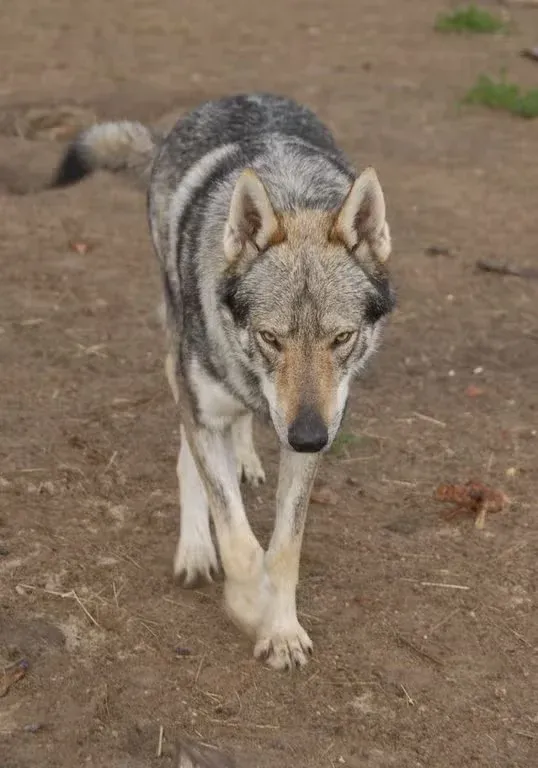
Aggression varies animal to animal.
By Margo-CzW (Own work) [CC BY-SA 3.0 (ivecommons.org/licenses/by-sa/3.0)], via Wikimedia Commons
Training a Wolfdog
Wolf Country also refers to the concept of the “position of alpha.” A dog, even a stubborn one, can be mastered, but a wolfdog will continually test its owner for dominance. The owner must assert superiority, which can turn into an ongoing struggle. Something similar appears to apply, to some degree, with wolf-like breeds such as Huskies, though perhaps not to the same extent.
The key point is that anyone considering raising a wolfdog should make an informed decision. Beyond local laws, a potential owner needs sufficient space, dedication, knowledge of the required diet, and access to medical care. It is worth asking whether your veterinarian can and is willing to treat a wolfdog.
According to Wolf Country, wolfdogs have particular physical and mental needs. Many hybrids end up euthanized because finding them new homes proves very difficult. For people who simply want an animal that resembles a wolf, the website suggests a Malamute or Husky instead.
People have to understand that a wolfdog is still part wild; it will never be the docile family pet.
— Wolf Country
Health Aspects
Wikipedia notes that wolfdogs are affected by fewer inherited diseases than most breeds. Some established breeds were developed specifically to improve the health and vigor of working dogs.
The USDA has not approved rabies vaccines for use on wolfdogs. Owners and breeders contend that this is a political move intended to discourage wolfdog ownership.
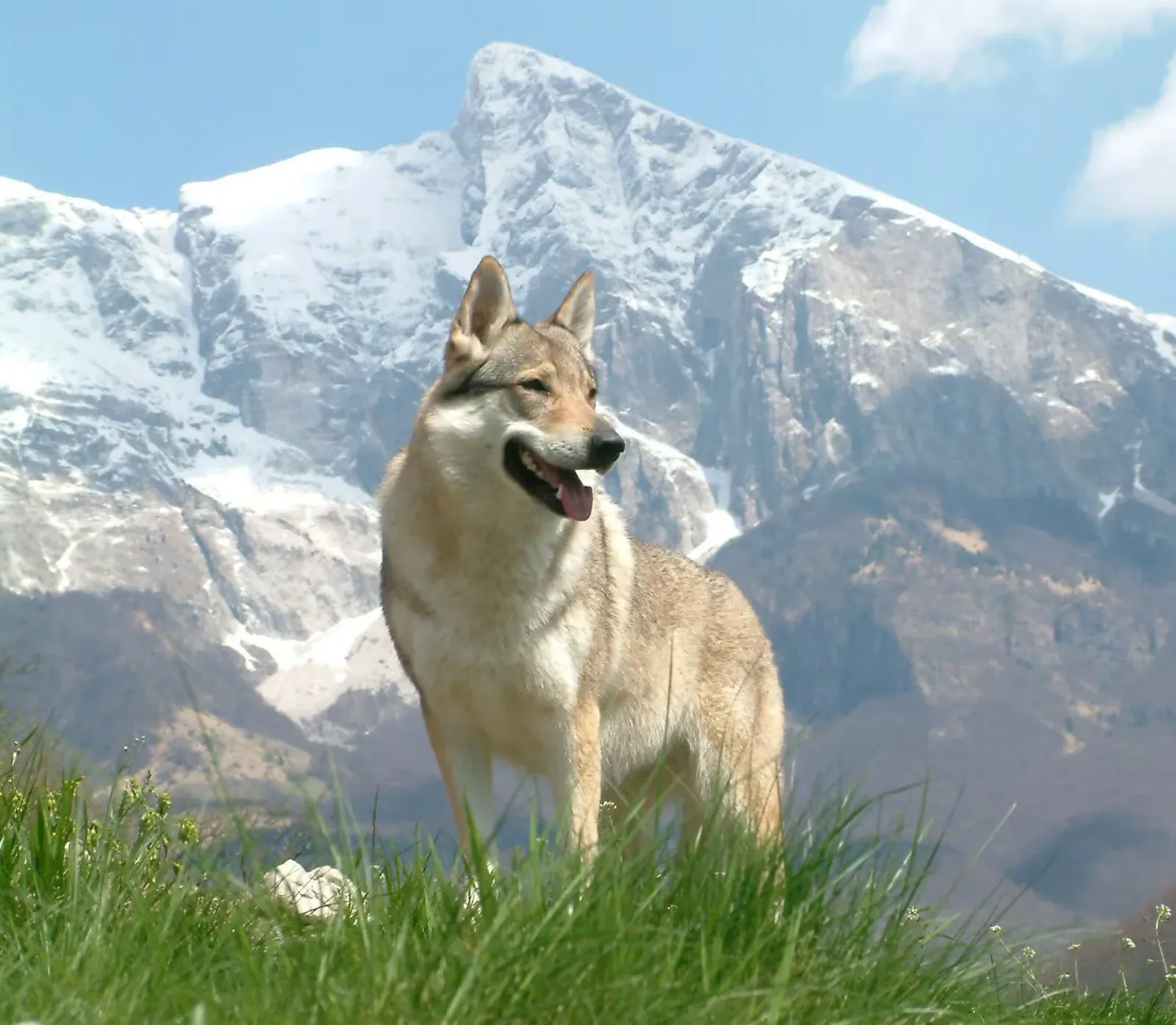
A gorgeous wolfdog
By Margo-CzW (en wikipedia) [Public domain], via Wikimedia Commons
Wisconsin’s Approach to Wolf-Dog Hybrids
When I moved to Wisconsin, I had a German Shepherd/Siberian Husky mix, and now I have a Siberian Husky of unknown mix. In both cases, people have frequently remarked that they look part wolf.
I have encountered wolfdog owners in town. One day, while walking my dog, a woman driving by stopped to ask whether it was part wolf. It turned out her own dog was a wolf hybrid. Another instance involved a man I used to see while walking my pup. His dog resembled a Husky. One day, as I passed his house, a neighbor informed me that the man had died. The neighbor wanted advice on what to do with the dog and later told me he had arranged for a wolfdog rescue to take it. That was the first time I learned the dog’s true breed.
Certain Wisconsin counties, such as LaCrosse County, prohibit wolf hybrids, while others do not. An article in the Lacrosse Tribune explained that wolf hybrids, being neither fully wolf nor fully dog, fall outside legal categories, which makes it difficult for animal control authorities to determine how to handle them. No state laws regulate them either. Because they are not dogs, dog regulations do not apply; because they are not wolves, wolf regulations do not fit. The article also noted that the Humane Society seeks a complete ban on wolfdogs.
Sources
- Czechoslovakian Wolfdog
- News Article: “State, county officials look to regulate wolf-dog hybrids”
© 2011 Don A. Hoglund