Whippet Breed Profile: A Complete Look at the Fleet-Footed and Devoted Sighthound
Taylor Mitchell
A Sighthound That Blends Speed with Sweetness
Among sighthound breeds in the United States, the Whippet holds the widest following and continues to win over new admirers.
For anyone who likes to jog or take extended walks and wants a four-legged partner, the Whippet makes an excellent choice. Those who prefer a quiet home will appreciate that this breed rarely barks, and it tends to behave courteously around people it doesn't know. Described as gentle by nature, Whippets enjoy snuggling with their human family and generally seek out the company of their owners as well as other dogs.
This guide covers the following topics:
- How the Whippet came to be,
- its physical traits,
- its disposition,
- how much activity it needs,
- the care it requires, and
- its overall health outlook.
Where the Breed Came From
Northern England is the birthplace of the Whippet. Its forebears took part in snap dog competitions, events that pitted dogs against one another to determine which could "snap up" the greatest number of rabbits in the least time. These ancestors were also recognized for poaching rabbits. The breed bears a strong resemblance to the Greyhound, with height being the clearest point of separation: the Greyhound is a large breed, whereas the Whippet stands at a medium height.
Selective breeding and refinement of this dog continued across the Industrial Revolution. It was kept almost exclusively by working men and their families, and in time it earned the nickname "the working man's racehorse." When working families relocated to areas with more industrial jobs, these dogs went with them, kept mainly for entertainment. Rag racing was one such pastime, in which dogs sprinted toward waving rags, and it became a familiar amusement for coal miners.
For working-class households, the Whippet proved a loyal companion, and the breed received official recognition in 1888. Well-known Whippets still exist today, among them Pluto, the dog of Lucien Freud who appeared repeatedly in his paintings, and Olive, the dog of Jennifer Saunders.
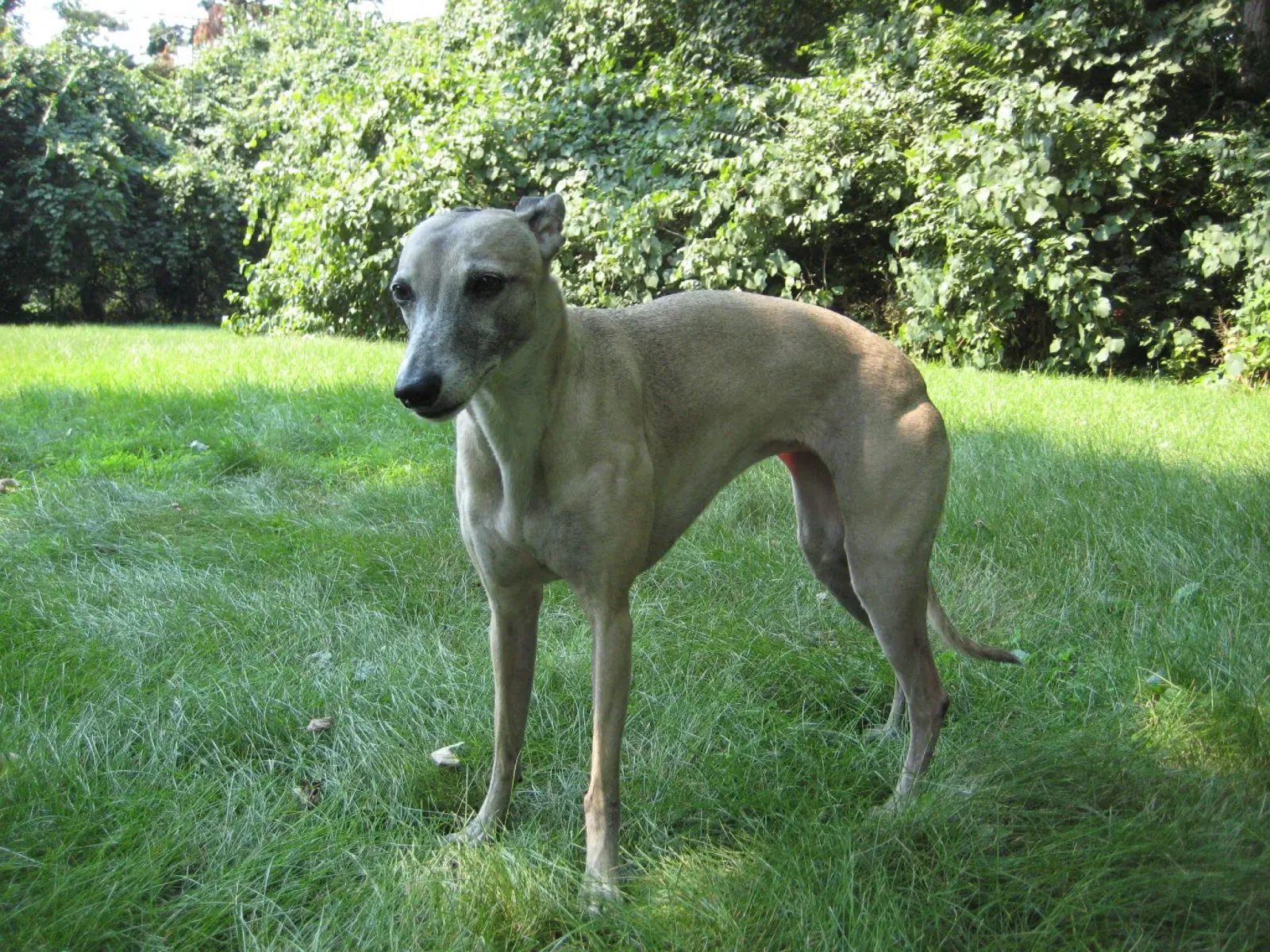
This breed has long legs and a lean body.
madaise - Flickr
Physical Traits
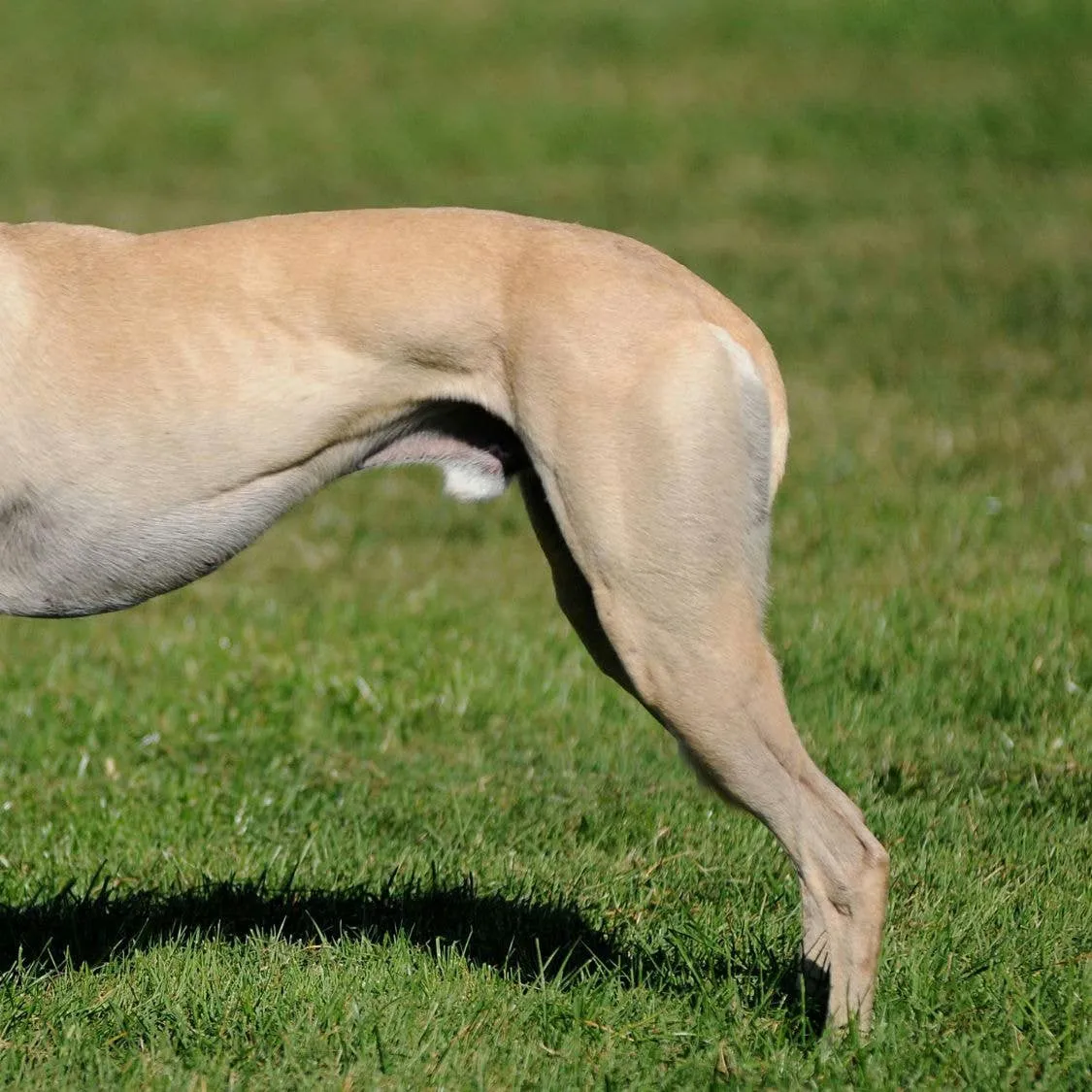
Of all breeds, the Whippet most closely mirrors its Greyhound ancestor. Its slim build and elongated legs give it extraordinary speed, enough to outrun every other dog breed. Males stand roughly 19 to 22 inches tall, females about 18 to 21 inches, and weight falls between 25 and 40 lbs.
This is a notably lean dog, so seeing two to four vertebrae is not a cause for concern—it falls within the normal range for a Whippet. The breed also features a long face and a short, flat coat whose color is described as "immaterial," meaning an extensive variety of colors and markings is acceptable. Should you come across a Whippet with a merle, tricolor, or harlequin coat, treat it with caution, as such coloring usually signals a mixed breed.
Disposition
Compared with most dogs, this breed leans toward the quiet end of the spectrum. Inside the home it seldom makes noise, aside from an occasional bark when something draws its attention. Its indoor manner is calm, yet the moment it steps outside, its demeanor and personality shift noticeably—far more outgoing than the reserved, composed behavior it shows indoors.
Among its sighthound relatives, the Whippet stands out for its unusual obedience, following commands with greater ease than the others. It is sweet and docile, and it has a reputation for gentleness around children and other pets, cats included. Given all of this, it comes as little surprise that the breed is regarded as one of the friendlier ones.
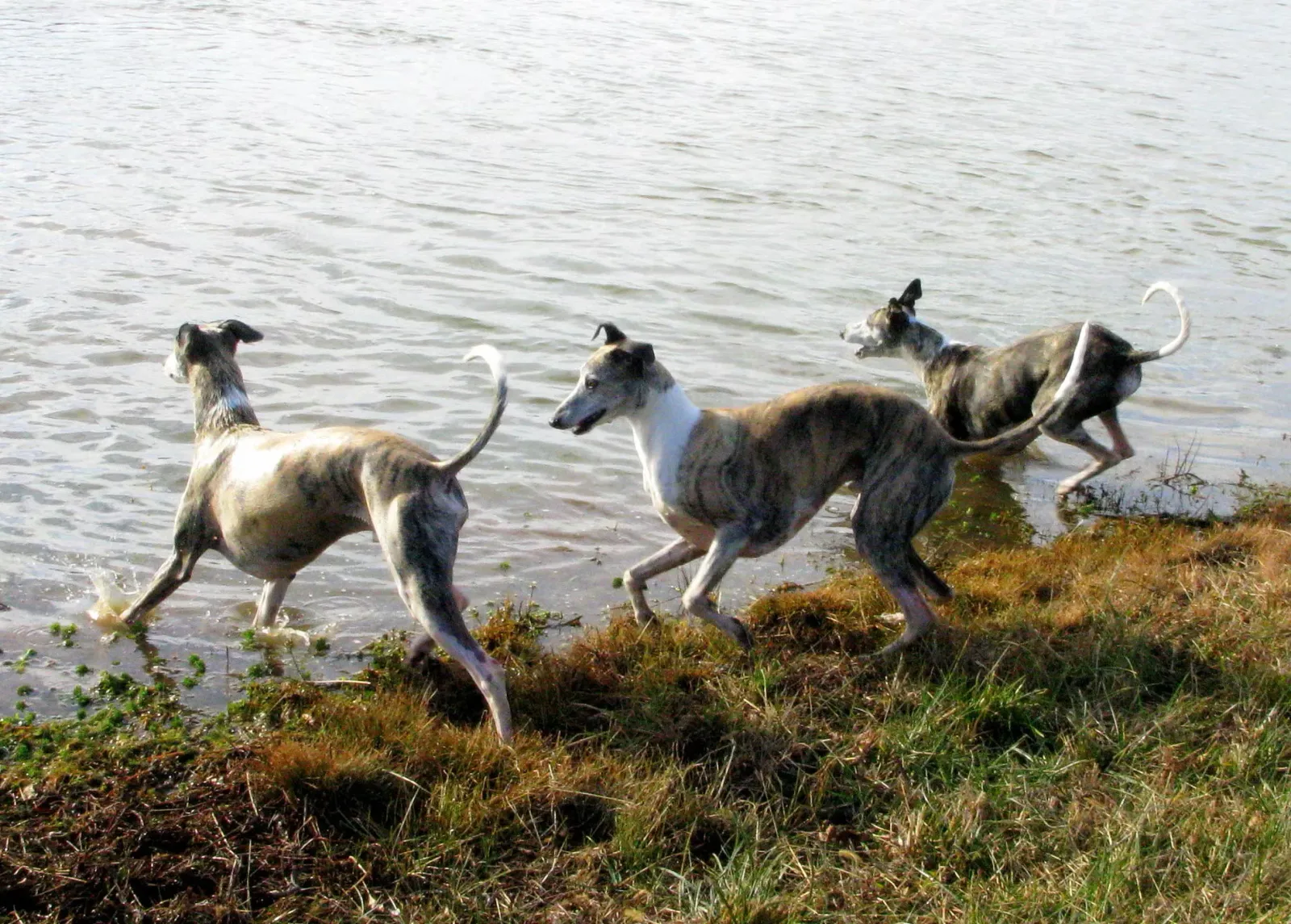
This dog breed needs a lot of physical activity.
OakleyOriginals
Activity and Exercise
Whippets were developed as retrieval dogs and sprinters, so they thrive when given long walks and runs each day. Aim to give your Whippet more than 40 minutes of activity per day, whether that means walks through the park or runs around the neighborhood—either works.
A game of fetch is another favorite for this breed. Keep in mind that these dogs were bred for hunting and retrieving prey, and later used in racing games among the working class. Chasing after frisbees or bringing back thrown toys such as balls would be a great source of enjoyment for them.
You might also invite another dog to play with your Whippet, or use a dog you already have. Whenever you bring other dogs over or visit the dog park, keep both animals under supervision at all times.
If your Whippet plays in a yard, the area should be fenced, since the breed has a strong prey drive and will pursue smaller animals. Catching this dog is no simple task either—it can reach speeds of up to 35 miles per hour and ranks as the fastest sighthound.
Looking After Your Whippet
Diet
When it comes to food, offer your dog high-quality dog food. Whether or not your Whippet races, it requires substantial protein and healthy fats. Some sources suggest food containing 30% protein and 20% fat, but feeding options below 20% protein and 10% fat are encouraged as well.
Calorie intake is something to monitor closely. Since these dogs are meant to stay slender, obesity is undesirable because their frame cannot support the extra weight. To keep portions healthy, feeding twice a day with a total of roughly 1 to 1½ cups is recommended.
Grooming
The Whippet's short, smooth coat means grooming demands are low. A monthly brushing should suffice, though you'll want to inspect the ears more frequently for possible infection. Unless outdoor play leaves your dog especially dirty, a bath once a month is all that's needed.
For dental care, brush your Whippet's teeth at least two to three times per week, and trim the nails once or twice a month.
Training
Training this breed calls for dedication. Fortunately, Whippets are intelligent and obedient—more so than most dogs. The best time to train is after exercise and before a meal, because a dog full of energy is less likely to listen and focus. When praise alone doesn't work, food can serve as a strong reward.
Keep training sessions short rather than drawn out. A dog's attention span only lasts so long, so concentrate on brief bursts of training and reward your dog each time it completes a command successfully.
Socialization
One key point about this dog: the Whippet cannot tolerate being alone. The breed longs for companionship and would do well in larger families with other dogs to play and have fun with.
As with any dog, introduce the two dogs to socialization gradually, since temperament varies by breed. While this dog is not inclined toward aggression, the same may not hold true for the other breed.
If you have a pet other than a dog, early socialization matters greatly for your Whippet. This dog is prey-driven and will chase smaller animals such as cats. Adopting your dog as a puppy allows you to socialize it to coexist with cats and other small animals, though close supervision is always strongly advised.
A few methods for socializing a cat and a Whippet include:
- Exchanging scents
- Direct face-to-face interaction
- Free-roam interaction
With scent swapping, the two animals must stay separated for about 3 to 4 days, possibly longer depending on aggression or reactions. During this stage, find items carrying your cat's and dog's scents and place them in the room where the other animal stays. This lets your cat and Whippet become familiar with each other's scent in a safe and secure manner.
Once scent swapping is done and both animals know each other's smells, move to face-to-face interaction, keeping both animals leashed so neither gets hurt by claws or nails.
Tip
During socialization, consider trimming your pet's nails!
Keep these interactions brief, and give commands during the meetings while offering praise as appropriate. The goal is to ensure they continue following commands even when another animal is present.
Tip
Exercise your Whippet to get rid of any excess energy and desire to chase the cat.
Next, allow the two to share the same room for a longer period, though keep your Whippet leashed throughout. Do this only so you can step in if things get a little chaotic. Once the two animals are socialized, Whippets are typically gentle and friendly with their feline companion.
Never hurry the process, as the safety of both animals comes first.
Health Issues and Lifespan
Common Health Conditions
This breed has few health concerns, if any. Two major health concerns exist:
- Bully Whippet Syndrome, a genetic mutation that affects muscle growth, and
- von Willebrand's Disease (vWD), a blood disorder caused by protein deficiency.
Other concerns that may arise include eye defects and deafness.
Preventative care, such as genetic testing, can be taken to prevent both conditions. As long as you bring your dog to the vet for checkups and tests, it should live a rather healthy life of 12 to 15 years. Another thing to keep in mind is their sensitivities, as Whippets are sensitive to barbiturate anesthesia.
FAQs
What are some interesting historical facts about the Whippet breed?
The Whippet was originally bred in England for hunting small game such as rabbits. During the Industrial Revolution, the breed grew more popular with working-class families and was used for illegal gambling in racing.
Are they good with children?
This particular breed is gentle with children and a great family companion. However, as always, practice caution and supervise interactions between your dog and child.
How much exercise do they need?
As Whippets were bred to hunt, they are known for their high levels and energy. When adding one to your family, it's necessary to walk them daily. Due to their love for running, this dog would be perfect for joggers and hikers.
What are some common health concerns for Whippets?
Although generally healthy, this breed is prone to certain health issues such as Bully Whippet Syndrome and von Willebrand's Disease. Regular checkups at the vet will help prevent or catch these health concerns early on.
Are they easy to train?
This breed is intelligent, but they are also known to be somewhat stubborn and independent. Consistent training is important, and positive reinforcement will help lead to success.
Do Whippets shed a lot?
Because of their short and smooth coats, Whippets don't shed much. They just require minimal grooming.
A Companion Worth Loving
Taking everything into account, Whippets make wonderful pets. They love playing with their owners and families and generally get along easily with other dogs. This is a quiet breed with courteous manners toward strangers, yet toward family it ranks among the most affectionate dogs around. Even though they are prey-driven animals, these dogs can learn through socialization training to coexist with cats and other animals—just remember to supervise both animals whenever they share a room.
A Whippet that receives love and proper care can more easily enjoy 15 years of fun with its owner, and anyone who enjoys long walks or jogs will find this breed more than satisfying.