Choosing a Canine Companion That Coexists With Your Pet Rabbit
Morgan Green
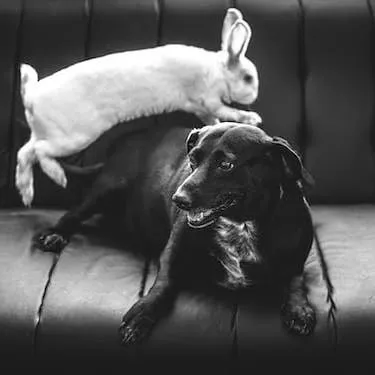
Are Dogs and Rabbits Compatible?
Often, this topic arises in unfortunate circumstances: when a much-loved pet rabbit has suffered fatal injuries, and the family reveals that their dog caused them. Usually, the rabbit is a household pet, supervised by one of the children. The rabbit darts away, and an untrained dog with a strong prey drive gives chase. Within moments, the rabbit is fatally wounded.
Can such an outcome be avoided? Is it possible to teach a dog not to pursue and kill your rabbit?
Dog Breeds That Are Less Likely to Harm Your Rabbit
The most effective prevention is choosing a dog wisely. Below are several breeds, small and large, that generally show little interest in bothering rabbits.
- Maltese
- Japanese Chin
- Bichon Frisé
- Cavalier King Charles Spaniel
- Golden Retriever
- Great Pyrenees
Of course, no breed comes with a guarantee. Dogs on this list typically have a low prey drive, but even a low-prey-drive dog may chase a rabbit.
Even if you select a breed that is more likely to ignore your rabbit, you must still train the dog properly and supervise interactions until you are confident they can share a room without any problems.
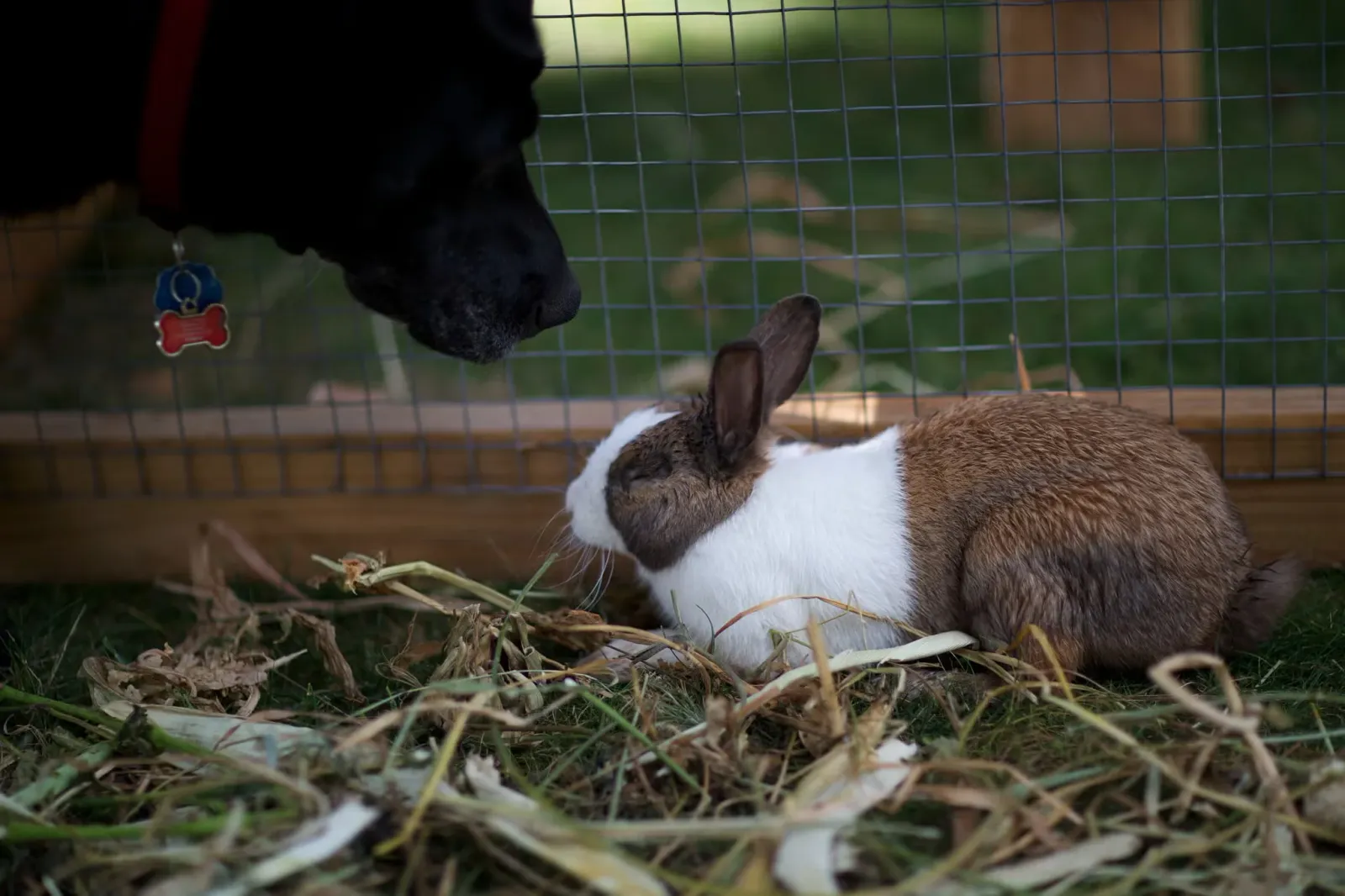
When your rabbit is around your dog, watch closely for signs of stress.
cc-by flickr.com rocketboom9302822988
Dog Breeds That Are Inclined to Chase Rabbits
Some families lose their rabbit to their dog because they made a poor choice when picking the dog. A Siberian Husky may be affectionate and good with children, but that does not mean it will be safe with rabbits. Below are categories of dogs I would not suggest for a household that has or plans to have a rabbit.
- Sled dogs, such as the Siberian Husky
- Sighthounds, including the Greyhound, Whippet, Russian Wolfhound, and others
- Scent hounds, such as the Beagle
- Terriers like the Airedale and hunting breeds like the Dachshund
- Guard dogs with a high prey drive, such as the German Shepherd and Belgian Malinois
Generally, dogs that view small animals as prey are more likely to chase rabbits. This does not mean every individual dog will be aggressive. (However, if you watch YouTube videos of dogs from these breeds playing with rabbits, you will often notice that both the rabbit and the dog display signs of stress.)
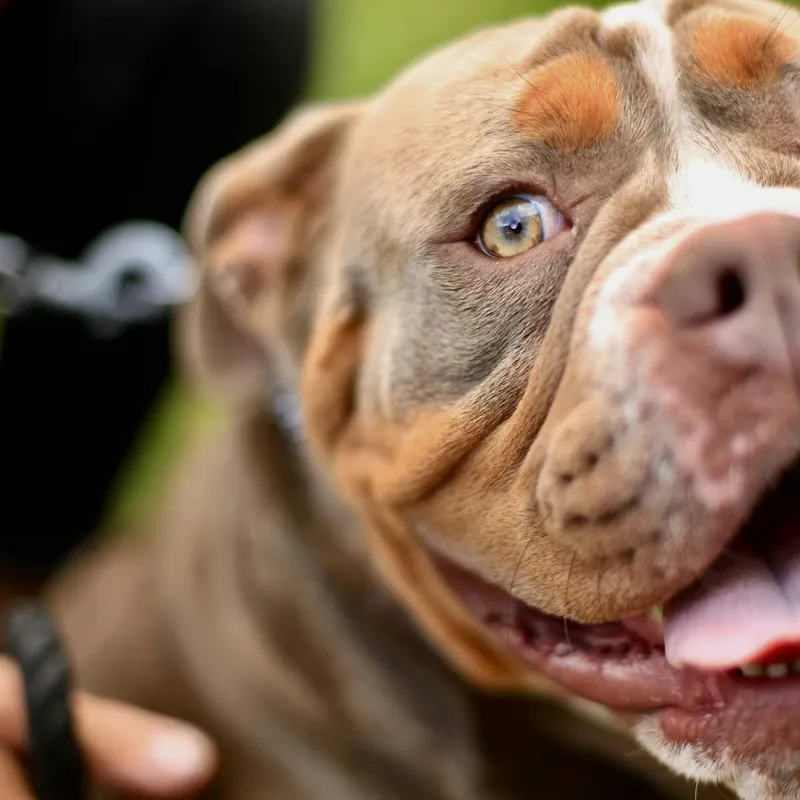
The dog that behaves best around my rabbits is a Pit Bull Terrier. She might have an instinct to go after a smaller animal, but she is trained and does not do so. Still, I cannot promise that any particular dog from a breed on this list can be trained to leave a rabbit alone.
If you want a dog that is safer with your rabbit, pick one from the low-prey-drive breeds.
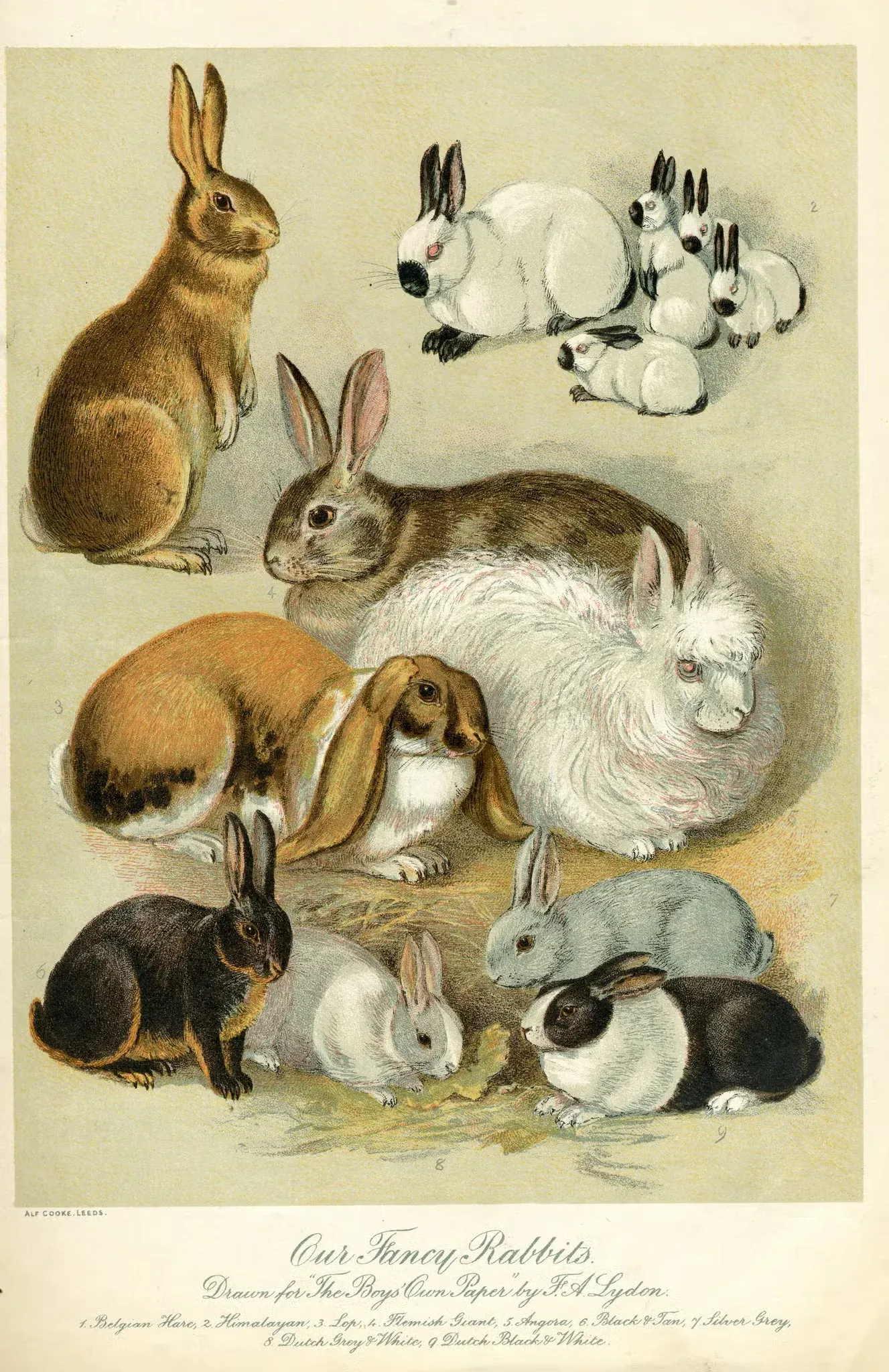
Many of the giant rabbit breeds are calmer around dogs.
cc-by flickr.com seriykotik15162563146
Rabbit Breeds Suitable for Homes With Dogs
If you are seeking the ideal rabbit breed to live with dogs, keep in mind that rabbits are individuals too. Finding a rabbit from a breed that generally does well with dogs does not ensure that your particular rabbit will be comfortable.
In general, the large meat-type rabbits are calmer:
- Flemish Giant
- California Giant
- Checkered Giant
The very small and slender rabbits can be more high-strung:
- Dutch Lop
- Netherland Dwarf
- Mini Rex
There are always exceptions. If you have mixed-breed rabbits, as I do, simply observe the animal and judge its type. I mostly have Dutch and New Zealand crosses. They are usually calm, but now and then a bunny is born that will not let the dogs come near.
Teaching Your Dog to Leave the Rabbit Alone
Begin with basic obedience. Teach your dog all other forms of impulse control so that it is accustomed to obeying you in every situation. The cue “Leave it” should be followed immediately, 100% of the time. I reinforce impulse control every time I walk my dogs; if your dog learns that it cannot do whatever it wants whenever it wants, it is far less likely to disobey and attack your rabbit.
- Bring the rabbit into a room so you can observe how the dog and rabbit interact. The rabbit should be in a car carrier so it can hide and feel safe; if you only have a wire cage, then at least provide something inside where it can retreat and hide (a box, a tube, etc.). Rabbits with nowhere to hide can become stressed easily and may die from shock.
- Put your dog on a leash and bring it into the room where the rabbit is waiting in the carrier. (If you do not have complete control of your dog on a leash, and it lunges just walking into the room with the rabbit, then neither of you is ready. You need more obedience training.)
- Place your dog in heel position and walk over so it can sniff the carrier.
- After it has investigated, put your dog in a down/stay position. Have your dog lie on its side. (I train my dogs to play dead, and when I ask them to lie on their side, they enjoy it because it is followed by lots of praise. I find this trick very helpful when introducing my dogs to new animals.)
- Open the carrier door and let your rabbit come out to investigate. (I never grab the rabbit and force the meeting. Let your rabbit approach the dog at its own pace.) This might take a while, so grab a chair or sit on the floor and wait.
- When the rabbit comes out, the dog should notice but should be looking at you. If it does not and gets up to investigate the rabbit without even asking for permission, call its name and put it in the down/stay position again. Give the rabbit time to investigate. If the dog gets up again without permission, take it out of the room.
- If your dog stays down, praise it and allow the rabbit to come over and check it out.
- When your rabbit has sniffed the dog, and your dog has remained in the down position, it is okay to allow it to get up and sniff the rabbit. If it gets too excited this first session, take the dog out of the room. (Rabbits do not understand behavior like the play bow. Even if your dog is being friendly, your rabbit will only understand that a prey animal is being aggressive. If you allow this to get out of control and the dog chases it, you may NEVER be able to train it.)
- If your dog sniffs the rabbit and stays calm, give it a treat, a lot of praise, and end the session.
- Try it again tomorrow, and repeat each step until you are sure that the dog will be calm when you open the rabbit carrier.
After your rabbit and dog have met inside the house, it is also a good idea to let them “bond” in another environment. In the early evening, when my rabbits are grazing in my front yard, I allow my senior pit bull to sit with me when I am outside reading. The first few times I did this, I kept her on a leash, but since she showed no interest in the rabbits when loose, I am now able to let her off-leash at the same time.
If you do not have a yard where your rabbits can run loose, taking the dog and rabbit for a walk together is a good idea. You will need to carry the rabbit in a carrier the first few times until it becomes used to the experience, but eventually, you can hold it in your arms or even let it down to investigate the trail. (Please make sure it is on a leash and rabbit harness. A rabbit can jump out of your arms quickly and will run off before you are even aware of what is happening.)
Dogs that go for a walk with their rabbit do exceptionally well together. You have to be sure that it is in a place where no other dogs walk, however.
Does Training Always Succeed?
Rabbits are prey animals. Dogs are predators. Many dogs can be trained to leave rabbits alone, and many rabbits can grow accustomed to a dog and will no longer run when a canine is around.
Always? No, some dogs will never be able to accept a rabbit despite all the training you do. If you pick one of the breeds I recommend, however, your chances of success are much greater.
If you do not yet have a dog, visit a shelter and look for one of the animals in the list above that are good with rabbits. Puppies can hurt your rabbit just trying to play, so a senior is the best choice since these dogs are quiet and not as likely to wrestle.
Questions & Answers
Question: Will a miniature dachshund hurt my middle aged rabbit?
Answer: Dachshunds are bred to have a high prey drive so they will most likely chase and hurt your rabbit. Miniature Doxies have a much lower prey drive since they were crossed with several other breeds but I still would not recommend you get a dog like that to be around your rabbit.
Question: What kinds of hypoallergenic dog breeds don’t pay attention to a rabbit?
Answer: Maltese have a very low prey drive and get along with rabbits most of the time. The Bichon Frisé is also a very good choice. There is no guarantee with any dog breed, so be careful and follow the instructions on this article when it is time to introduce your new dog to your rabbit.
© 2018 Mark dos Anjos, DVM