The Toy Poodle: A Tiny Dynamo with a Remarkable Mind
Morgan Green
Introducing the Toy Poodle: Small Stature, Striking Intelligence
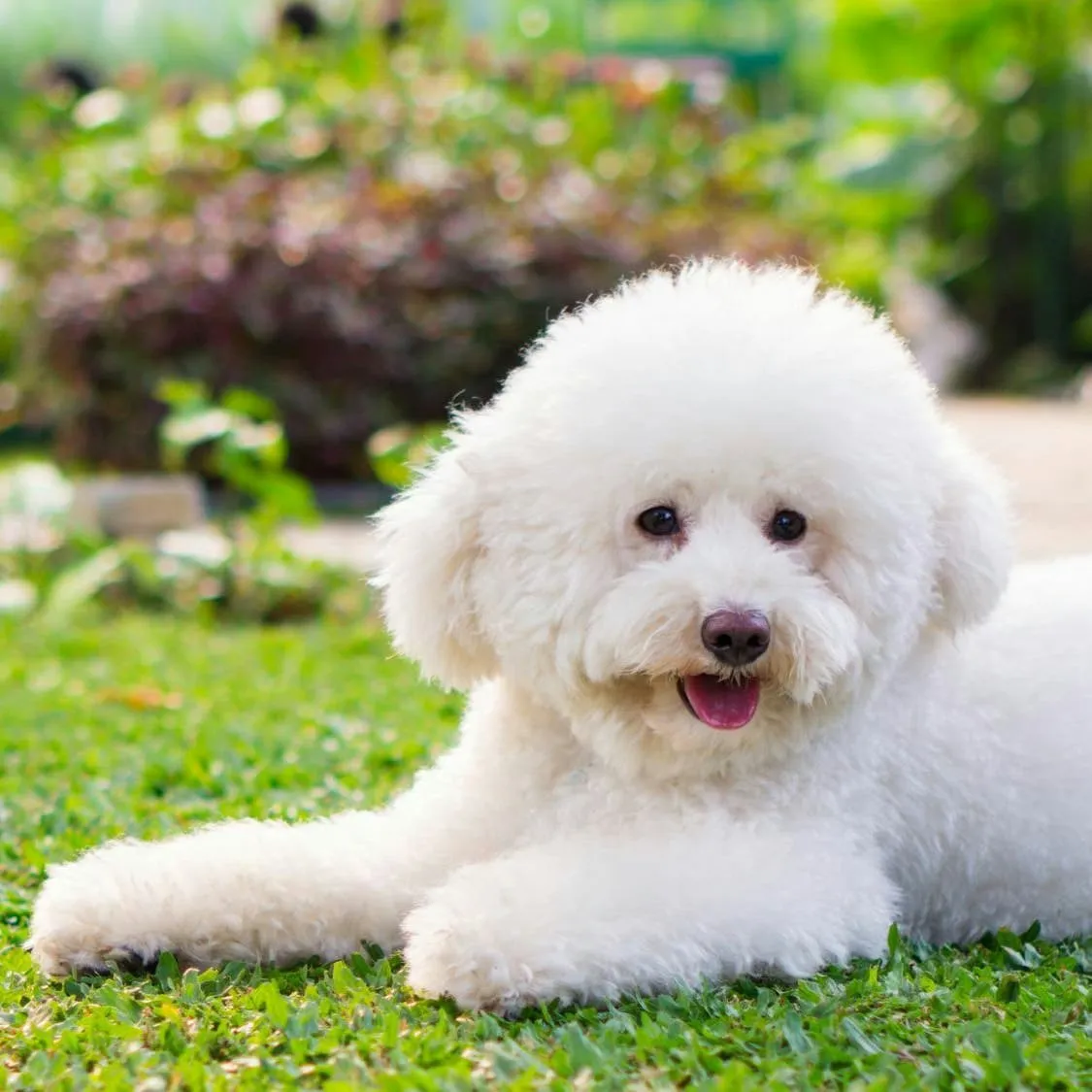
Among the three Poodle varieties, the Toy Poodle stands as the smallest. It carries the same sharp mind, elegant look, and self-assured demeanor as the Standard Poodle, condensed into a compact size well-suited to apartment life. Toy Poodles shine in conformation shows, yet they are also capable athletes that can take part in canine sports, master complex tricks, and accompany their owners on hikes or swims.
The Poodle's roots trace back to Germany, where its forebears were rough-coated retrievers assisting duck hunters. The breed's signature clip—a shaved body with rounded tufts (called “pompons”) left on the head, chest, and joints—was actually devised by those hunters. The goal was to keep the dog warm in chilly water while preserving unrestricted movement. That practical origin story is a striking contrast to the clip's seemingly ornamental appearance.
Toy Poodles have become favored companions for families and individuals alike, thanks to their charming looks, trainability, low-allergen coats, and affectionate disposition. Their petite frame suits smaller living spaces, but these clever dogs have personalities that are anything but small.
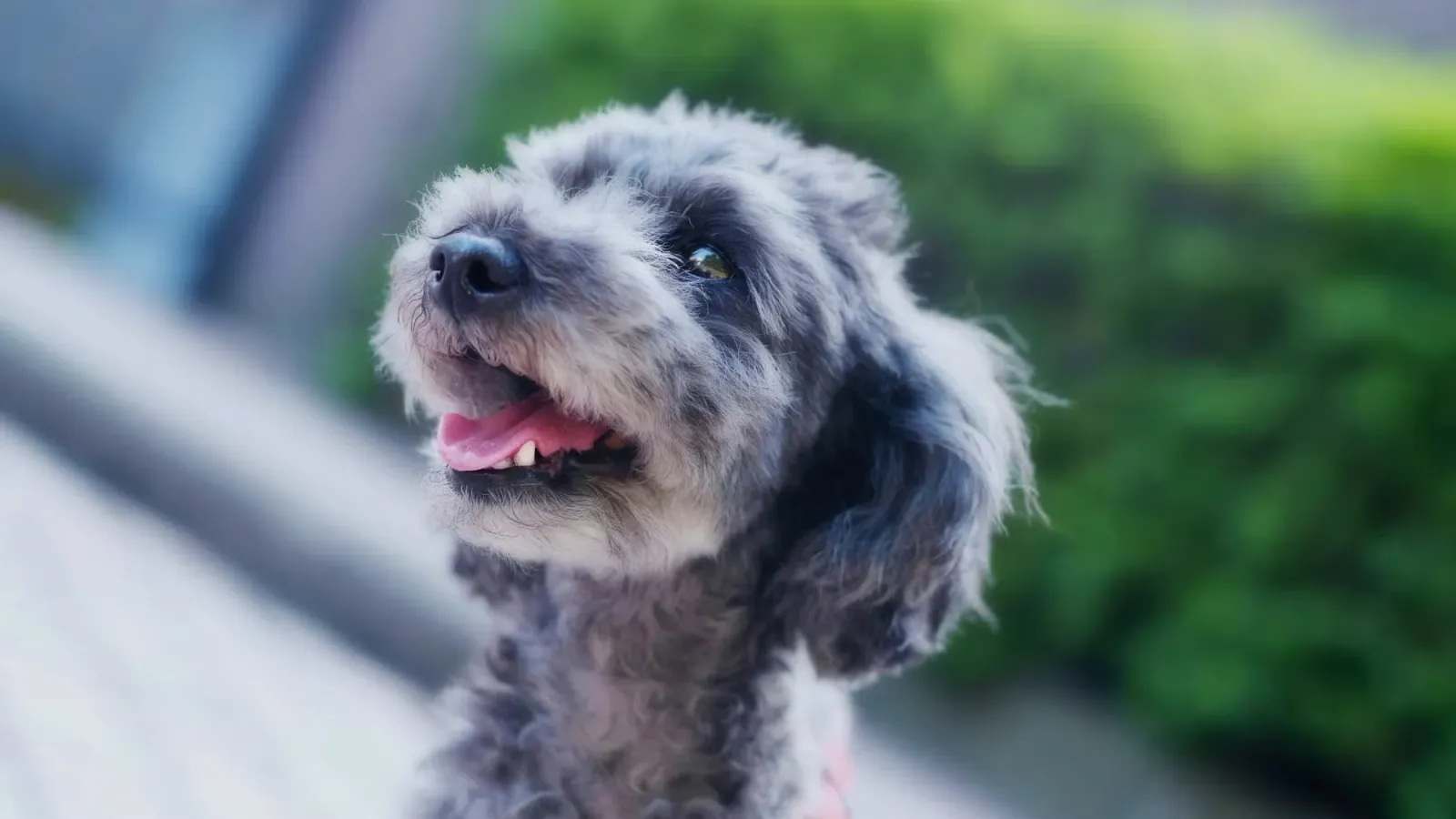
The Toy Poodle is identical to the Standard Poodle, apart from its size (obviously!).
Photo by hirohiko from Getty Images; Canva
Physical Traits and Temperament
The Toy Poodle mirrors the Standard Poodle in every way except size. The Standard was first downsized into the Miniature Poodle, and then further reduced to the Toy Poodle during the early 1900s.
Having three recognized sizes—a rarity among dog breeds—reflects the Poodle's widespread appeal: demand was high, and the smaller versions allowed city dwellers, particularly apartment residents, to keep a Poodle. Below is a comparison of the three sizes.
How the Three Poodle Sizes Stack Up
- Toy Poodle: No more than 10 inches tall; 4–6 pounds (no more than 25 centimeters tall; 2–3 kilograms)
- Miniature Poodle: 10–15 inches tall; 10–15 pounds (25–38 centimeters; 5–7 kilograms)
- Standard Poodle: At least 15 inches tall; 40–70 pounds (at least 38 centimeters tall; 18–32 kilograms)
Coat and Coloring
The Toy Poodle's coat is crisp and curly, virtually shed-free, and the breed is regarded as hypoallergenic. Colors vary widely. The American Kennel Club (AKC) recognizes the following as standard for Toy Poodles.
- Apricot (a light brownish orange)
- Black
- Blue (in dogs, “blue” refers to a silvery gray)
- Brown
- Cafe Au Lait (a light tan)
- Cream
- Gray
- Red
- Silver
- Silver Beige
- White
Solid-colored dogs are most common, but combinations like black and white also occur. For Toy Poodles, the standard markings are black masks, black points, white masks, and white markings.
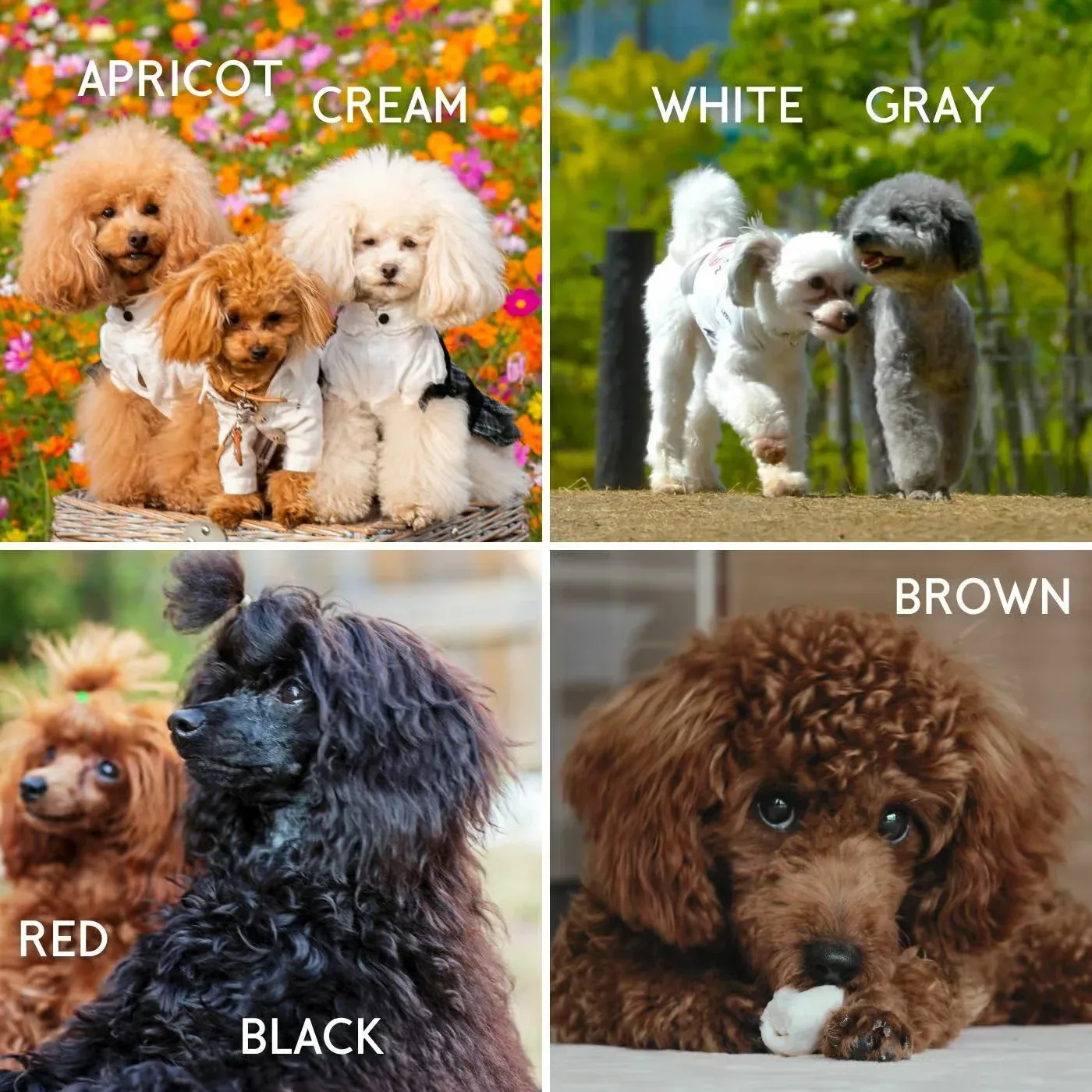
Here are a few examples of the standard coat colors for Toy Poodles.
tulongji; Kyosuke Taji; vitapix; Vanhop via Getty; Canva
Defining Personality Features
Intelligence is the Toy Poodle's standout trait. The AKC calls this breed's intellect “off the charts,” and according to canine researcher Stanley Coren, author of the influential book The Intelligence of Dogs, Poodles rank as the second smartest breed worldwide. Only the Border Collie surpasses them. Remarkably, Toy Poodles can pick up new commands after hearing them fewer than five times.
Beyond quick learning, Toy Poodles are eager to please their humans—a combination that makes training straightforward. Owners should anticipate teaching intermediate and advanced cues, because Toy Poodles will breeze through the basics and crave more. This breed requires abundant mental engagement to ward off boredom, whether through training, activities, or even a job to do.
Toy Poodles are deeply affectionate with their families. They do well with children, generally get along with other dogs, are friendly toward strangers, and are extremely playful. They are also energetic, adaptable, and simply fun to be around.
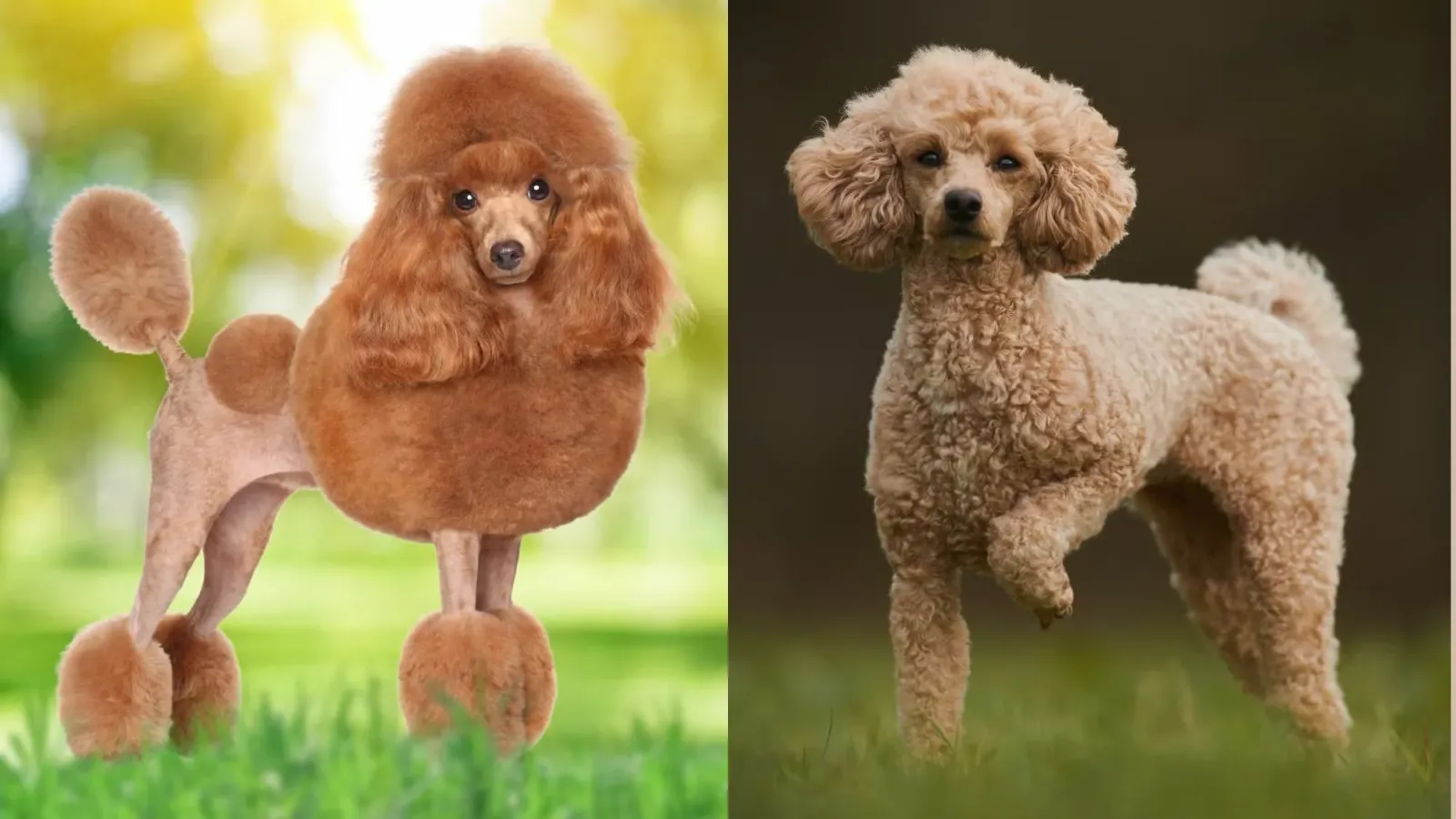
The Toy Poodle on the left has a Continental clip; the dog on the right has a simple all-over short clip.
Photos by Kurt Pas; 1xpert; fotojagodka via Getty; Canva
Caring for a Toy Poodle's Coat
The Poodle's distinctive curly coat barely sheds, but that does not make it low-maintenance. Those curls tangle easily, which can be painful and may even cause skin infections, so daily brushing is necessary to prevent mats.
Alternatively, keeping the Toy Poodle's coat clipped very short is an option. A close trim reduces brushing needs but still requires regular clipping to maintain the short length.
Choosing a Clip Style
Unless your Toy Poodle is a show dog, an elaborate haircut is unnecessary. The iconic style with puffy pompons is called the Continental clip. While it looks stunning in the show ring, maintaining it is a great deal of work for an ordinary family pet.
Most Toy Poodle owners opt for a short clip or a simpler style. A Sporting clip, for instance, involves shaving the face, throat, feet, and tail, then clipping or scissoring the body to about 1 inch, leaving a fluffy cap on the head and a single pompon on the tail tip.
Some owners learn to clip their dog's coat themselves, but many rely on professional groomers. Depending on the style, the dog will need a trim every 4–6 weeks.
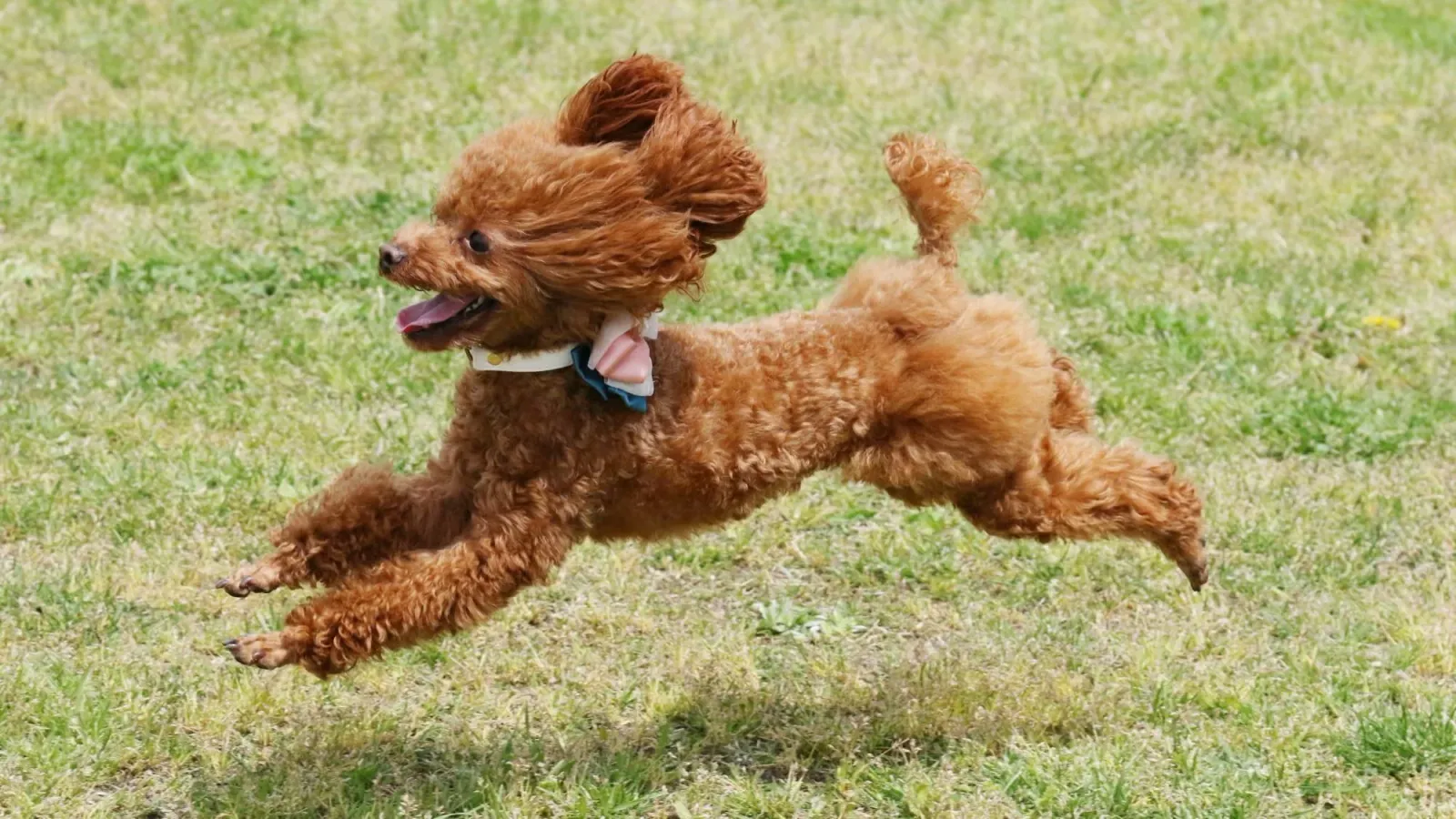
Toy Poodles love to play, swim, and jump!
Photo by kukai from Getty Images; Canva
Exercise Requirements
Toy Poodles are high-energy dogs. Their small size makes them easier to exercise than Standard Poodles and other large breeds, but make no mistake: these little dogs are still remarkable athletes that love to romp, jump, and swim. They need at least 30 minutes of daily exercise and will eagerly join their owners for jogs or long walks.
Keep in mind, however, that this breed is not especially fast—their legs are quite short—and at just five pounds, they are not very robust. They should not be coddled, but they lack the stamina for extremely strenuous activities.
Activities and Canine Sports for Toy Poodles
Here are some excellent ways to exercise a Toy Poodle. These activities help the dog burn energy and provide mental stimulation to prevent boredom.
- Swimming: Remember that Poodles are water dogs. They love to swim!
- Retrieving: A game of fetch will let your Toy Poodle use its innate retrieving instincts. Try playing with a ball, stick, or one of your dog's favorite toys. For extra fun, throw it in the water for your dog to swim out and retrieve!
- Walking, jogging, and hiking: Just keep your Toy Poodle's size in mind when planning these activities. A long walk should be fine, but keep the jogs short and ensure that the hiking terrain isn't too strenuous.
- Tracking: Toy Poodles have keen noses (in fact, Poodles have been used to hunt truffles), so they'll enjoy playing games that involve tracking scents. Tracking is also a canine sport where dogs compete to identify and follow scents. Owners can consider enrolling their Toy Poodle in tracking classes to get started.
- Competing in agility trials: Toy Poodles can compete in the small dog category for agility trials. All Poodles love to jump, and Toy Poodles tend to shine in the jumping portion of agility in particular. Watch the video below to see a Toy Poodle absolutely tearing through the jumping course at Crufts (and winning)!
Health Concerns to Watch For
As purebred dogs, Toy Poodles are predisposed to a few health issues. Fortunately, they are generally healthy dogs, and they have a long life span of 10–18 years. Here are a few common health problems for the breed that owners should be aware of.
- Legg-Calvé-Perthes Disease: With this disease, the bone that forms the top of the dog's femur starts to break down due to reduced blood supply, causing the dog to limp in pain. It's more common in Toy and Miniature Poodles than in Standard Poodles. The disease usually affects Toy Poodle puppies that are 18 months old or younger. Veterinarians may treat Legg-Calvé-Perthes with pain medication or, in extreme cases, surgery.
- Patellar Luxation: This is an orthopedic problem where the dog's kneecap slips out of place. The most obvious sign of patellar luxation is when a dog suddenly starts limping mid-run. As with Legg-Calvé-Perthes, it's more common in the smaller Poodle sizes. Sometimes this issue resolves itself, but if it doesn't—or if it occurs frequently and/or affects multiple legs—then veterinarians may recommend joint supplements, anti-inflammatory medication, or possibly surgery.
- Von Willebrand's Disease (VWD): This is a blood disorder that affects clotting. Toy Poodles with VWD may bleed from areas like their nose and gums, and they may also bleed excessively from injuries like cuts. Screening for VWD is available, and veterinarians will usually test for the disease prior to surgery if there's a possibility the dog has it, since it will affect clotting after the procedure. This is a genetic disorder, and breeders can screen for it to avoid passing it on.
- Progressive Retinal Apathy (PRA): This actually refers to a group of eye diseases that can eventually lead to blindness. Early symptoms include difficulty seeing in the dark. Unfortunately, there is no treatment available for PRA, but many dogs are able to adjust to their limited or lost vision. This is another inherited disease, so breeders are able to screen for it.
- Dental Problems: Since Toy Poodles are just pint-sized versions of Standard Poodles, they have exactly the same number of teeth that Standard Poodles do—but in a much, much smaller mouth. Food can get trapped between their teeth, which can lead to a build-up of tartar and plaque. Also, toy breeds typically don't lose their puppy teeth as easily as larger breeds do; in many cases, the adult teeth will grow in, but the puppy teeth won't fall out. Veterinarians may need to pull the dog's puppy teeth to avoid overcrowding.
The Poodle Club of America recommends that Toy Poodles receive a patella evaluation, hip evaluation, ophthalmologist evaluation, various PRA DNA tests, and a VWD DNA test to check for these common issues.
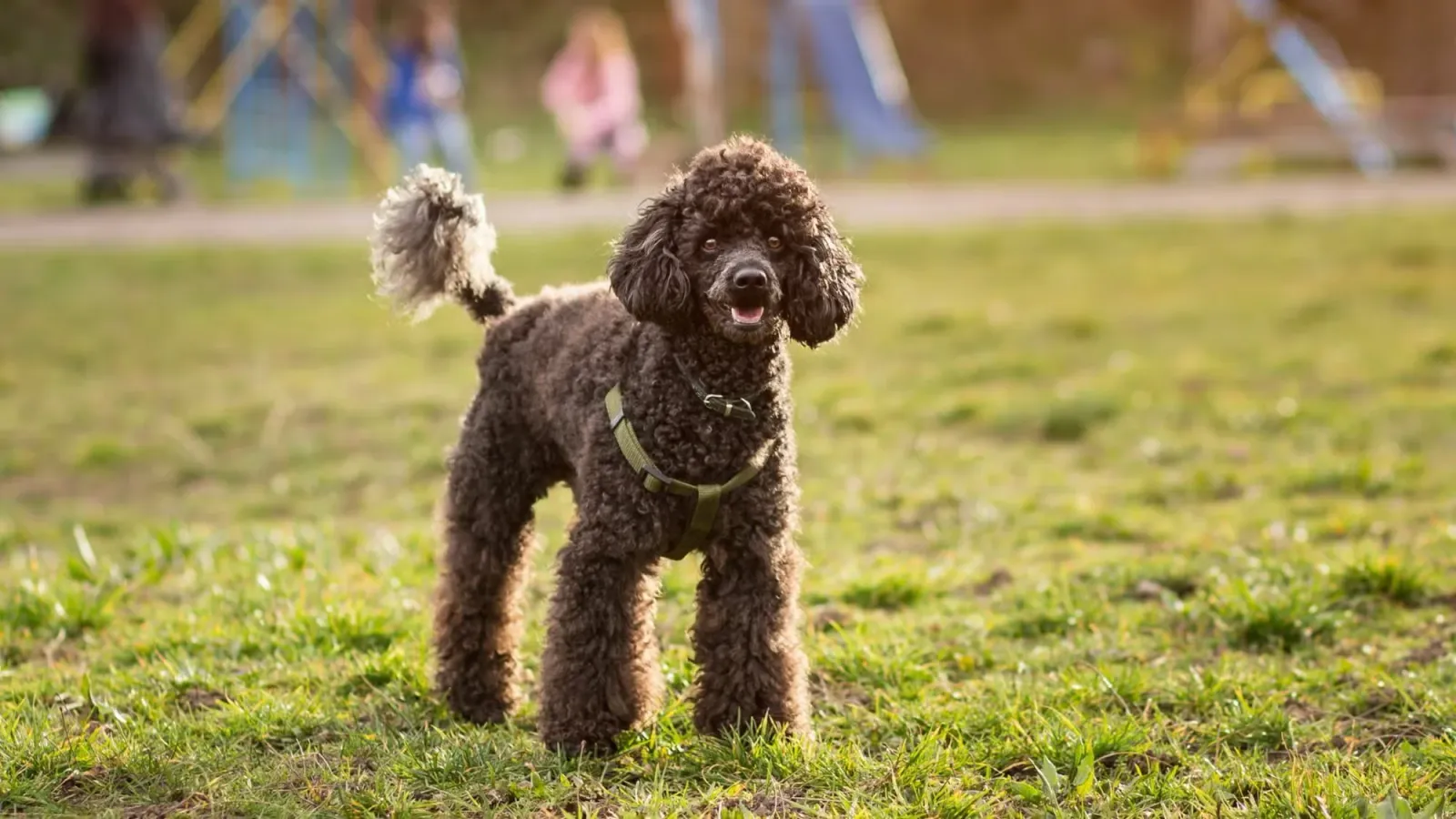
If you use positive reinforcement and keep the training fun, your Toy Poodle will love learning with you.
Photo by Pekic from Getty Images Signature; Canva
Training Your Toy Poodle
As mentioned earlier, Toy Poodles are easy to train. They're extremely smart, they're eager to please, and they love spending time with their owners. However, owners still need to put in the effort to make training fun and engaging for their dog.
Owners should use positive reinforcement to reward their Poodle for following their commands. For example, you should lavish your dog with praise and pet them when they perform well. You could reward them with a play session, a fun outing (swimming, anyone?), or time with their favorite toy.
Small treats also work well, but be careful not to give your Toy Poodle too many treats. Given the dog's teeny-tiny size, those extra calories add up! Canine obesity can cause or exacerbate many health problems, so it's important to help your dog maintain a healthy weight.
Common Behavioral Issues for Toy Poodles
- Barking: Poodles are fairly vigilant dogs, and they can be vocal—sometimes overly so. If your Toy Poodle barks at everything unusual they see or hear, one way to manage the noise is to teach them the “quiet” and “speak” commands. This will help your dog understand that there are times when they should and shouldn't bark.
- Separation Anxiety: Toy Poodles absolutely love being with their people, to the extent that they can suffer from separation anxiety if they're left alone too long or receive too little attention. To deal with separation anxiety, you can start by ensuring that you give your dog lots of your time and attention every day. Your Toy Poodle will want to feel like an integral part of the family, so make sure you don't leave your dog out of family activities. If separation anxiety continues to be a problem for your pet, discuss it with your veterinarian. They may suggest behavior modification techniques or medication, or they may direct you to a veterinary behaviorist for further recommendations.
- Boredom: A bored Toy Poodle is a destructive Toy Poodle! You can prevent boredom by giving your dog enough daily exercise, engaging their bright mind with training and games, and simply spending time together. Toy Poodles are natural lap dogs and will happily sit with you for hours. For more active pastimes, enrichment toys are a great option for Toy Poodles, like puzzles the dog has to solve to earn a small treat. (Keep the treats in moderation, though!)
Socialization
Toy Poodles are generally good with kids, other dogs, and new people. However, their small size can make them skittish—after all, even a child will look huge to a Toy Poodle! Without proper socialization, these dogs may nip at people out of fear, especially kids and strangers who approach them too quickly. Early socialization classes are recommended to expose the Poodle to all kinds of people (young and old), dog breeds, situations, and sounds.
Even with a well-socialized dog, adults should supervise the Toy Poodle around children. This is as much for the dog's safety as the kids', if not more. Children are often clumsy and may not understand how small the Toy Poodle is, and they could easily hurt these little dogs without meaning to.
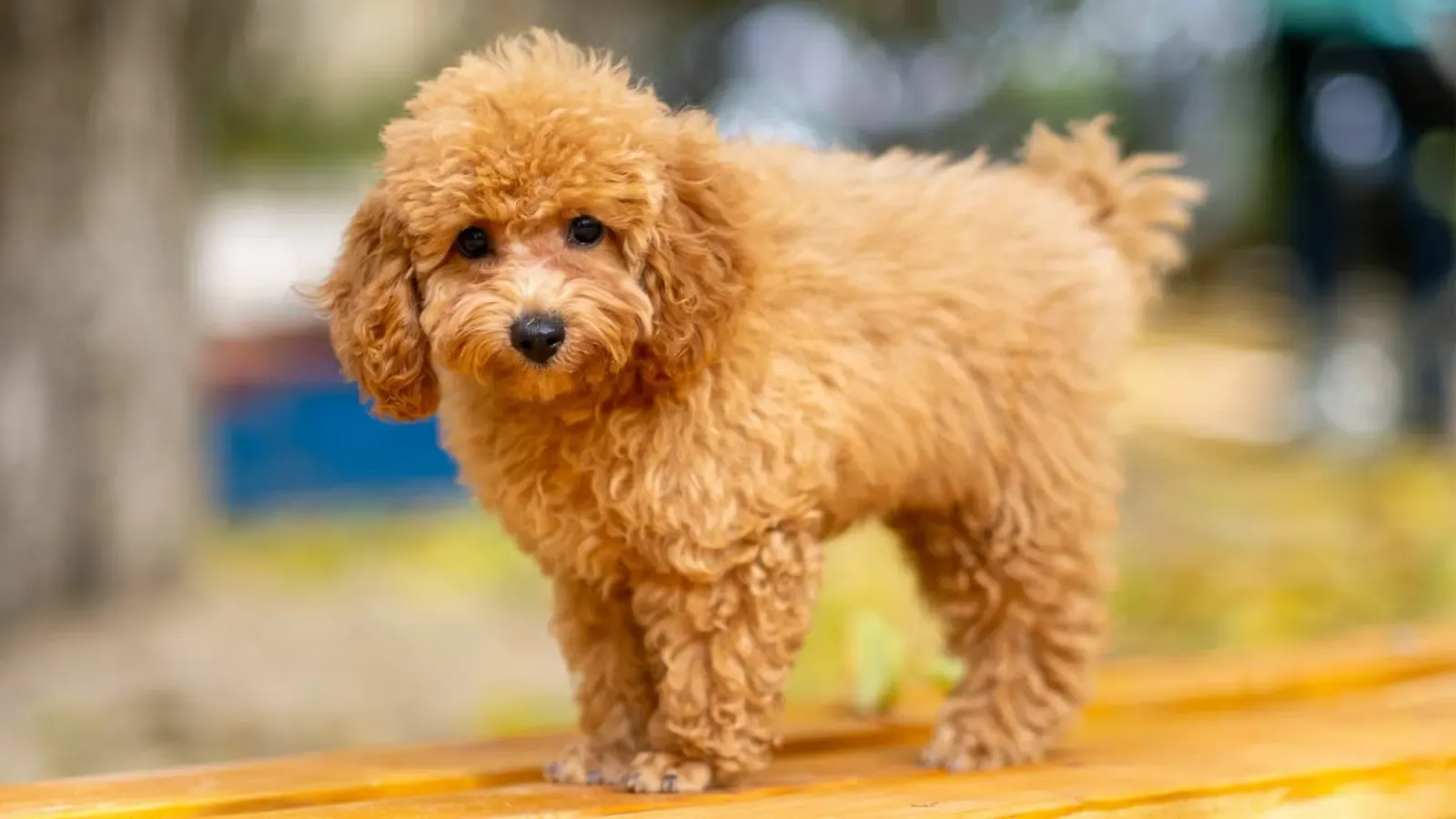
Beauty, brains, athleticism—Toy Poodles have it all.
Photo by Anna Bondarenko from Getty Images; Canva
Toy Poodles Are Irresistible!
These tiny but mighty dogs really have it all. They're almost unbearably cute and fluffy, but they're also brainy, and they have funny, charming personalities. If you add a Toy Poodle to your family, you'll be impressed by how quickly your dog learns, and you'll be surprised by your pet's agility and athleticism.
With their hypoallergenic coats and their ability to live in small spaces, Toy Poodles can find a happy home with all kinds of owners. They're easy to train, fun to play with, and they love spending time with their people, whether that's going for a nice walk or simply relaxing together on the couch. This breed really lives large despite its diminutive size!
FAQs
How much exercise do Toy Poodles need?
Toy Poodles are energetic dogs that need daily exercise. Owners should aim to provide their dog with at least 30 minutes of exercise every day. These are athletic little dogs, so there are lots of fun options for exercise: walking, jogging, hiking, swimming, training for agility trials or other canine sports, or just playing fetch in the yard.
Are Toy Poodles easy to train?
Yes, Toy Poodles are both highly intelligent and eager to please their owners, and those two traits make them easy to train. Owners should use positive reinforcement while training their dog, which involves offering lots of praise, petting, and the occasional small treat when the dog follows their commands. Consistency is also important—Toy Poodles learn fast, so you have to teach them correctly the first time! This breed is very capable of learning advanced commands and tricks.
Do Toy Poodles shed a lot?
Toy Poodles almost never shed! They have a unique curly coat, and they're considered to be hypoallergenic dogs. They do need lots of brushing to prevent their coat from matting, but they rarely shed any loose hair.
How do you deal with separation anxiety in Toy Poodles?
Start by ensuring that you're giving your Toy Poodle enough of your time and attention. Toy Poodles can experience separation anxiety even when their people are nearby if they feel neglected or left out.
If separation anxiety is a problem when you leave the house, talk to your veterinarian about it. There are many options to try, including behavior modification training, teaching your dog how to settle, using calming medications, establishing an area for relaxation, and offering your dog enrichment toys (like treat puzzles). Your veterinarian can offer guidance or refer you to a veterinary behaviorist for help.
Are Toy Poodles good with children?
Yes, these are gentle and playful dogs that get along well with kids. However, Toy Poodles are tiny, and children can easily injure them without meaning to. Some Toy Poodles are skittish around kids (who, let's face it, can be noisy and unpredictable), which can lead to fearful nipping. Early socialization around children will be a big help. Even with a well-socialized Toy Poodle, adults should always supervise the dog around children, both for the kids' safety and for the dog's safety.
Are there Toy Poodle mixes?
Yes, Poodle mixes are some of the most popular designer dogs, and some of the smaller types were created by mixing different breeds with the Toy Poodle. For example, the Maltipoo is a cross between a Maltese and a Toy or Miniature Poodle.
Sources
- American Kennel Club. (n.d.-c). Poodle (Toy)—Dog breed Information—American Kennel Club. Web.
- LaMon, V., DVM. (2023). Toy Poodle. . Web.
- Taylor, C., & Guthrie, C. (2021). Toy Poodle. Daily Paws. Web.
- Murphy, L. (2022). Toy Poodle: Dog Breed Characteristics & Care. The Spruce Pets. Web.
- Chewy Editorial. (2016). Toy poodle dog breed. BeChewy. Web.
- Coren, S. (2022b, July 16). Top 10 Smartest dog breeds—Most intelligent dog in 2022—Stanley Coren. Stanley Coren. Web.
- Separation Anxiety in dogs | VCA Animal Hospitals. (n.d.). Vca. Web.
This article is accurate and true to the best of the author's knowledge. It is not meant to substitute for diagnosis, prognosis, treatment, prescription, or formal and individualized advice from a veterinary medical professional. Animals exhibiting signs and symptoms of distress should be seen by a veterinarian immediately.
© 2023 Mortimer Sink
- #Dogs
- #Small Dog Breed Guides
- #Breed Guide Filter: Popular Dog Breeds
- #Breed Guide Filter: Hypoallergenic Dogs
Sources
- The Toy Poodle: A Tiny Dynamo with a Remarkable Mind — pethelpful