Rat Terrier Breed Guide: History, Traits, Care, and More
Charlie Ross
A Multipurpose Terrier
The Rat Terrier, as its name suggests, was historically employed to hunt rats and other vermin, and also served on farms and in hunting expeditions. After the advent of chemical rodenticides, the breed's popularity waned, but it has since regained status as a beloved and affectionate companion. With proper training and socialization, this dog could be an excellent match for the right household.
Background and Development
The Rat Terrier's ancestry includes a mix of several breeds: the Fox Terrier, Bull Terrier, Manchester Terrier, Old English White Terrier, Whippet, Italian Greyhound, Beagle, and others. Whippets and Italian Greyhounds contributed speed, while the Beagle added pack-hunting instincts. This combination was intended to produce a dog capable of both hunting and farm work.
Developed in the early 1900s, the breed became especially popular between 1910 and 1920, when it was a common fixture on farms, tasked with catching rats and other pests. These dogs also guarded henhouses, served as watchdogs, and provided companionship. However, the growing use of poison to control rodents led to a decline in their numbers.
Several varieties exist within the breed:
- Decker Rat Terrier – a larger type with enhanced hunting abilities, capable of pursuing bigger game such as pigs, deer, and bears; named after its developer.
- Hairless Rat Terrier – a smaller variant that appeared in 1972.
- Miniature Rat Terrier – weighs between 10 and 18 pounds and stands up to 15 inches tall.
- Toy Rat Terrier – weighs 5 to 10 pounds and reaches no more than 12 inches in height.
In 2013, the American Kennel Club (AKC) officially recognized the Rat Terrier as its 178th breed.
Breed Characteristics
Appearance
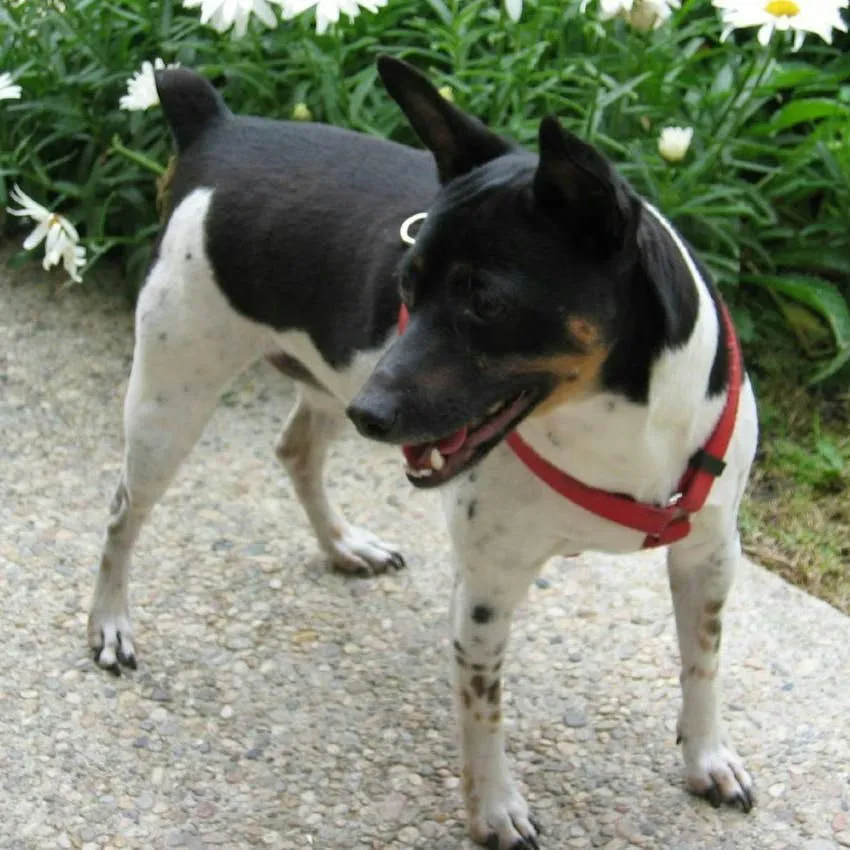
Distinctive features define this breed. It has a short, smooth, glossy coat that can be bi- or tricolored, often with white patches and various patterns. Common colors include black, chocolate-brown, black and white, tan, and red.
At birth, the ears stand up but later become droopy. The breed's athletic build and physical traits sometimes lead to confusion with its more popular cousin, the Russell Terrier.
Size varies, but the standard Rat Terrier typically stands 13 to 18 inches tall and weighs between 10 and 25 pounds.

This breed has very distinct coloring and patterns.
Klermon
Temperament and Behavior
Like other terriers, the Rat Terrier is intelligent and thus trainable, though it can be willful and occasionally stubborn. It is also highly energetic and active, a trait likely inherited from its hunting background.
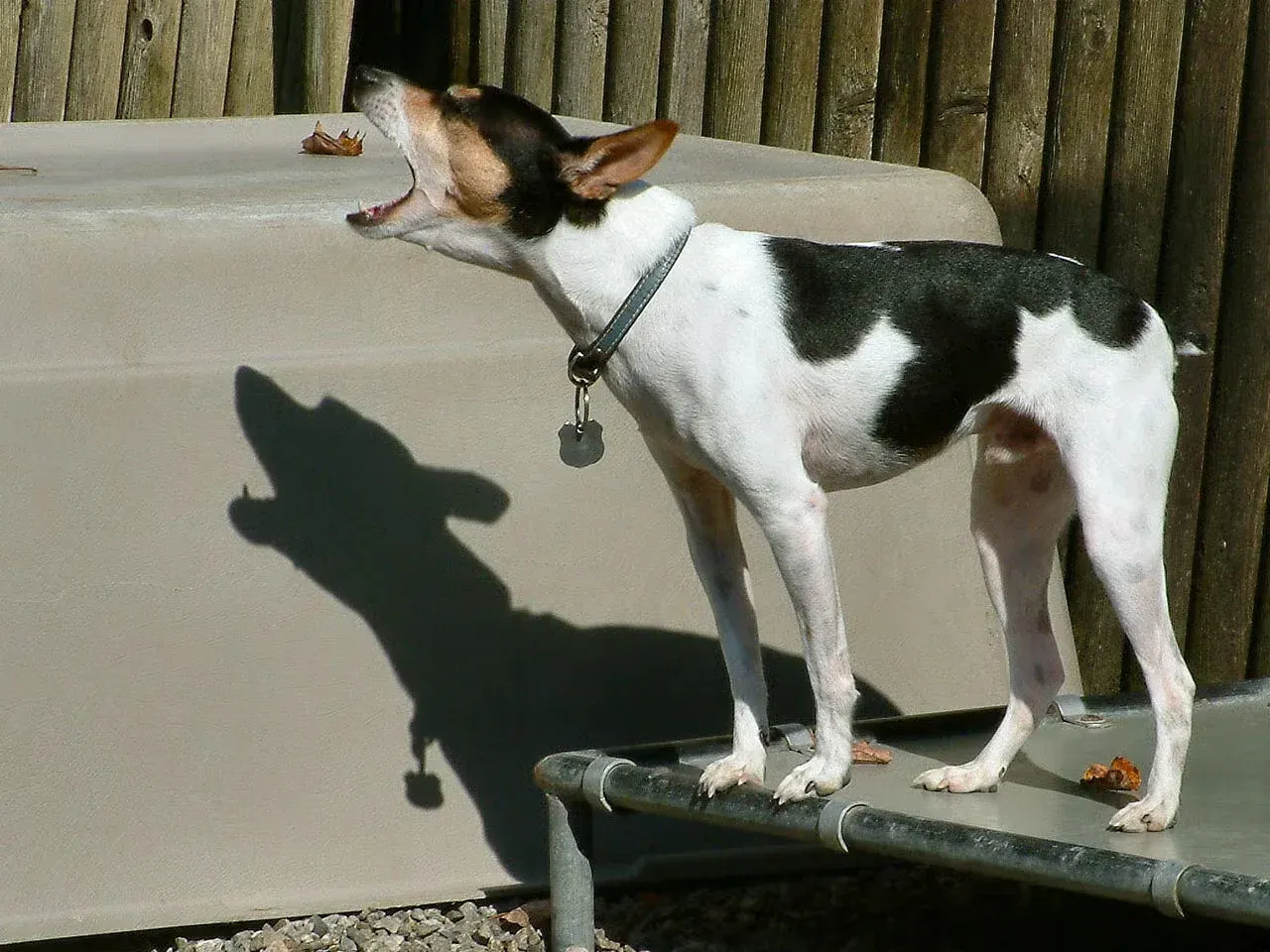
This breed is social and enjoys being around people and other dogs. Its love for people and high energy make it playful and always up for fun. Because it was bred to work, it requires substantial exercise. For the same reason, it tends to bark a lot, exhibiting watchdog-like behavior. If you prefer a quiet dog, this breed may not be ideal. However, there are ways to reduce barking:
- Provide toys to keep your dog occupied.
- Block your dog's view of whatever triggers the barking.
- Use a white noise machine to mask other sounds.
- Try a pheromone-based treatment.
- Train your dog to respond to a "hush" command.
- Ignore attention-seeking barking.
- Increase daily exercise.
Beyond this, the Rat Terrier is very affectionate and eager to please, thriving on praise. If you want a companion that enjoys spending time with you, this breed could be a great fit.
Health and Lifespan
Health Issues
Generally healthy, the Rat Terrier still has some conditions to monitor during vet visits:
- Patellar luxation (slipped stifles): a condition in small dogs where the kneecap slips out of place, causing pain.
- Demodectic mange (demodicosis): caused by the demodex mite, transmitted from mother to pups, not to humans. It often resolves on its own, but if not, it can develop into an infection.
- Malocclusion: an improper bite and misaligned jaw, with three types: overshot bite, undershot bite, and wry mouth. It usually corrects itself, but surgery may be needed if it persists beyond 10 months.
These conditions can often be prevented or managed with early care.
Lifespan
Rat Terriers generally live around 15 years, and healthy individuals can reach 18 years.
Feeding
When feeding your Rat Terrier, consider factors such as size, age, build, activity level, and metabolism. These help determine appropriate portions. General guidelines based on size: a dog under 10 pounds typically needs about ½ cup of dry food per day, while one over 30 pounds should get no more than 2 cups daily.
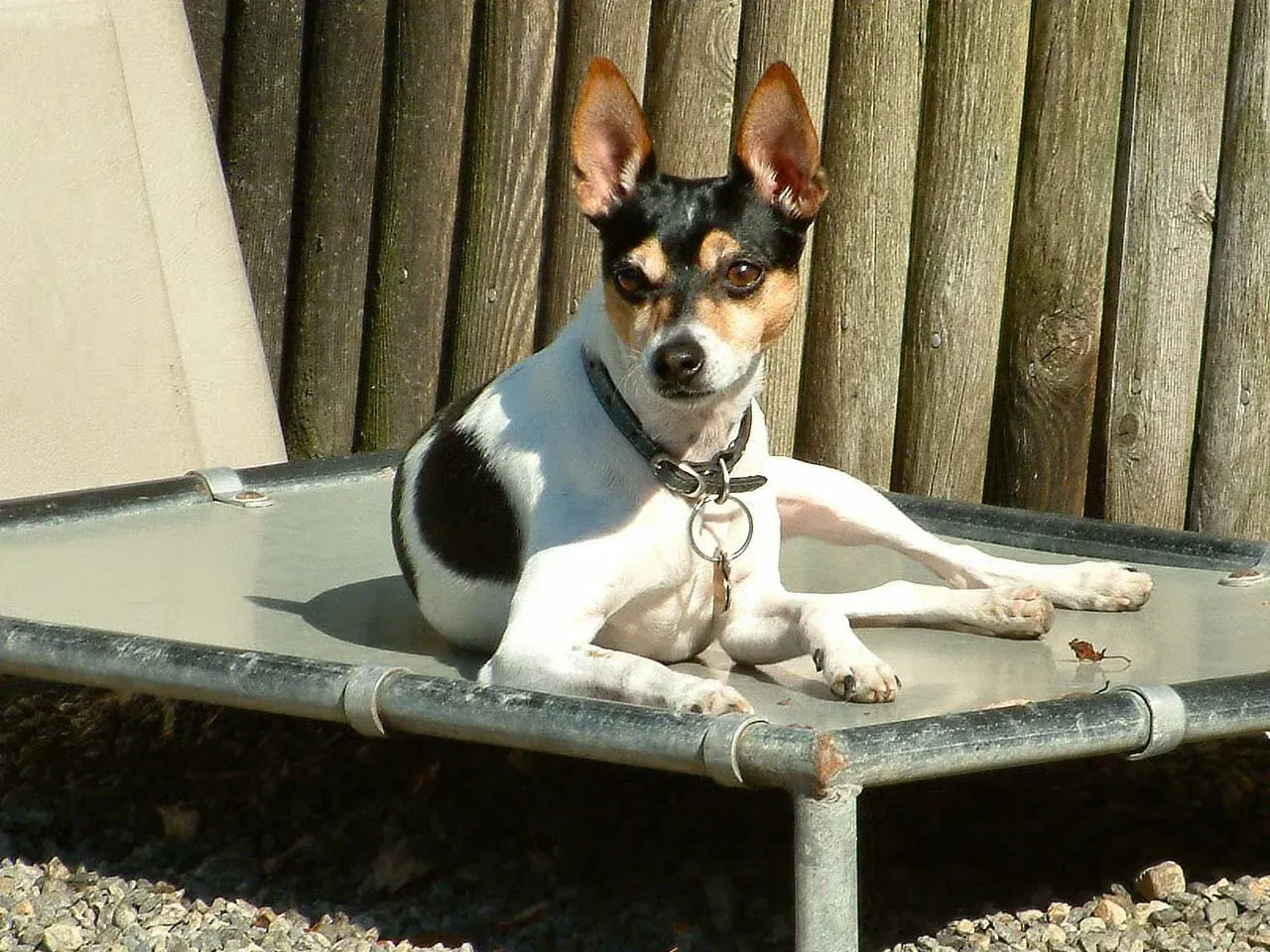
Although Rat Terriers are considered low-maintenance, they do have high amounts of energy.
s.wikimedia.org/wiki/Rat_Terrier#/media/File:Rat_Terrier.jpg
Exercise Needs
Given their high energy, Rat Terriers need plenty of exercise. Indoor play may suffice sometimes, but experts recommend daily walks of at least 20-30 minutes, with more being better. Due to their strong prey drive, a fenced yard is necessary to prevent chasing squirrels or rats. Playing with other dogs of similar or larger size is encouraged, but training should precede socialization with other dogs.
Grooming
The short, dense coat requires minimal grooming: weekly brushing and bathing only as needed. For dental health, brush your dog's teeth 2-3 times a week to prevent tartar buildup, which can lead to tooth loss, decay, and gum disease, as well as bad breath.
Other often-overlooked care includes checking ears for infections (bad odor or redness). Clean ears with a pH-balanced solution and cotton ball. Trim nails regularly if not naturally worn down to avoid painful tears.
Grooming tools needed:
- Soft brush
- Rubber curry mitt
Training
All dogs need training, especially those bred for specific tasks. The Rat Terrier's eagerness to please makes training easier, but its terrier nature can also make it stubborn.
Obedience Training
Many owners teach basic commands for safety. Because Rat Terriers (and most terriers) have a high prey drive, teaching "sit" is crucial. It's also the foundation for more advanced training. Methods to teach sit include:
- The Capturing Method
- The Luring Method
- The Modeling Method
Keep treats handy during training, as Rat Terriers respond well to praise and rewards. They also learn best in quiet environments.
Socialization
Start socialization early, ideally with classes. When introducing your dog to other animals, especially cats, be patient as it can be a slow process:
- Begin with basic obedience training.
- Supervise all interactions between dog and cat; never leave them alone.
- Provide the cat with a safe escape space.
- Swap scents between pets to help them get acquainted.
- Use a baby gate during initial meetings to allow sniffing without direct contact.
- Let the cat retreat if uninterested; never force interaction.
- Praise rather than scold; scolding can create negative associations.
- Give both animals time; don't rush the process.
- Feed them on opposite sides of a door to create positive associations.
- Seek professional help if problems persist.
Is the Rat Terrier the dog for you?
Bree Bailey
Living with a Rat Terrier
With Children
Rat Terriers are patient with children, but if not raised with them, socialization and supervision are essential, as with any breed. They are friendly with people in general, often affectionate even with strangers.
With Other Pets
They usually get along with dogs of similar or larger size, but socialization is key. After successful socialization, supervised interactions with unfamiliar dogs are still recommended.
Ideal Environment
Due to their small size, Rat Terriers can adapt to apartment living, but they need frequent walks if no yard is available. If you have a house, a fenced yard is important because their high prey drive may lead them to chase after prey.
Is a Rat Terrier Right for You?
Despite a decline in popularity due to rodent poisons, the Rat Terrier remains a friendly breed that gets along with other dogs and children, making it a great family pet. Though small, it has abundant energy, making it a playful companion for dogs and kids. Those who enjoy walking or jogging will appreciate this breed as a furry friend.
Sources
- Rat Terrier Dog Breed Health and Care | PetMD Rat Terriers are smart and crafty little dogs that need lots of attention and positive reinforcement to thrive. Though the Rat Terrier lifespan is long, they are prone to certain health issues. Learn more about caring for Rat Terrier puppies and dogs
- Rat Terrier Dog Breed Information & Characteristics The Rat Terrier is a lively small breed known for its loyalty and agility, first bred in the United States for hunting and pest control.
- Rat Terrier Dog Breed Information – Vetstreet | Vetstreet
- Rat Terrier Dog Breed Information Is the Rat Terrier the right breed for you? Learn more about the Rat Terrier including personality, history, grooming, pictures, videos, and the AKC breed standard.