Raising a Pit Bull: Five Training Essentials and Common Misconceptions
Logan Rivera
Challenging Common Beliefs About Pit Bulls
Misinformation circulates widely. I once came across an article advising people to use a pack of "bloodthirsty" pit bulls as property guards. Sites such as DogsBite.org attribute all dog-on-human violence to these breeds and compile yearly statistics on pit bull attacks and human fatalities in the United States. In 2014, they stated that nearly 64% of fatal dog bites involved pit bulls, or dogs identified as such. That's a lot of information, much of it ____!
Regardless of how many pit bull advocates try to correct the record, critics persist. Why? One reason is that some claims made by pit bull enthusiasts are inaccurate.
Before examining the false statements often made about pit bulls, here are my recommendations for raising one so that it is never labeled aggressive.
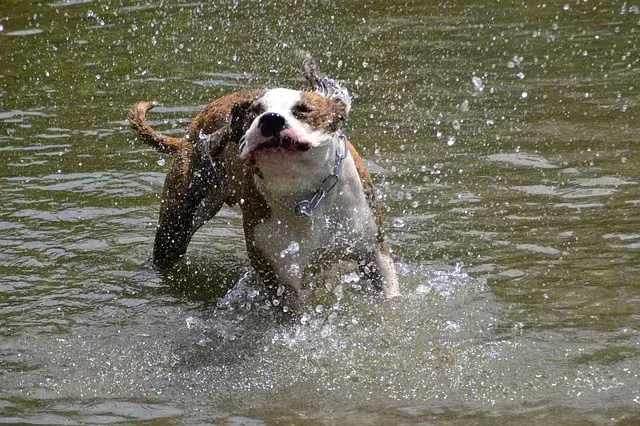
Provide your pit bull with plenty of exercise.
Pixabay
Five Practical Steps for Raising a Well-Behaved Dog
Given that your pit bull will face prejudice from the outset, how can you help your dog remain as calm as possible so it is never accused of a violent act?
1. Obedience Training
Begin obedience training as soon as you bring your dog home. This may seem obvious, but nearly all dogs that cause problems have not been trained. If you lack training skills, learn them now and start immediately upon bringing your dog home so she responds to your hand signals and voice without delay. When I walk my dog, I always put her in a "down-stay" whenever we approach someone on the beach. People can see what a well-trained and obedient dog she is, and she serves as an "ambassador" for other pit bulls.
2. Socialization
Socialize your dog from a young age. There is considerable debate about how early to begin, since young dogs are more vulnerable to contagious diseases before their final vaccinations. From my own experience, I believe socialization should occur during the sensitive period (up to 16 weeks of age) before a dog finishes her vaccines. A well-socialized pit bull will enjoy human company.
3. Establish Yourself as the Leader
Whether or not you accept alpha dog and dominance theory, there are simple exercises to practice at home consistently: feed your dog only after he sits, keep him off the couch, have him sleep in his own bed rather than yours, and teach him to wait for your signal before going through a door. Even if your pit bull does not require this kind of training, it will become a routine part of her life and make her a better-behaved pet.
4. Provide Exercise
Ensure your dog gets plenty of exercise. It's another cliché, but a tired dog truly is a well-behaved dog. Almost all pit bull attack stories I read involve people who leave their dogs indoors constantly, keep them chained up all day, or do not know how to interact with a large athletic dog. If you want a pit bull only to keep it chained in the yard and show off to neighbors, you shouldn't have a dog at all.
5. Maintain Good Health
Keep your dog well fed and in good health at all times. These factors can influence behavior. A starving dog is more likely to bite; a dog suffering from a painful illness will have a short temper and be more prone to snap when bothered by a family member or stranger. Keep your pit bull in good shape, and if something seems wrong, take him to your veterinarian for an examination.
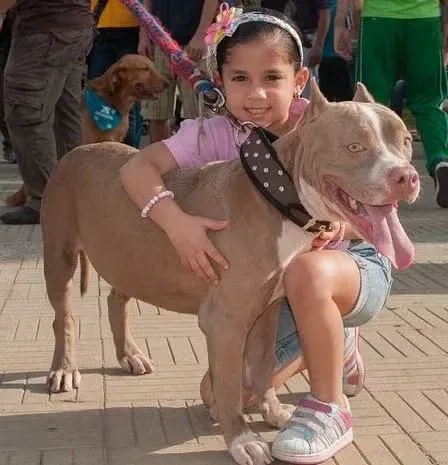
If you train him right your pit bull should not be considered a dangerous dog.
Pixabay
Why Pit Bulls Face So Much Hostility
Here are a few statements made by pit bull fans and what detractors say in response.
Pit Bulls Do Not Have Locking Jaws
Pit bulls do not have locking jaws. This is easy to argue because anyone with veterinary medical training will confirm they do not have locking jaws, despite false reports on numerous anti-pit bull websites. Their jaws are no different from any other breed. Many dogs do, however, hold on tightly during a fight, and pit bull fans sometimes fail to acknowledge this.
The Media Is Biased Against Them
The media is biased against them. If a small or medium-sized dog not known for biting attacks a human, no one cares and it won't make the news. Attacks by small dogs rarely cause serious injury and are unlikely to be reported. Pit bulls, however, always make the news. Thus, whether the anti-pit bull lobby accepts it or not, the media is biased. When an unidentified breed bites, it may be described as a "pit bull type" by a writer trying to make the front page.
It Is the Owner and Not the Breed
It is the owner and not the breed. Although these breeds are powerful and athletic dogs, all serious attack cases I read about are caused by poor handling and could be avoided by following the steps listed in the second part of this article. Does this mean these breeds should be forbidden to all just because some owners do not know how to care for them? Not in my opinion. It is the fault of the owner, not the breed.
Punish the Deed and Not the Breed
Punish the deed and not the breed. This phrase is commonly repeated by all pit bull supporters, but it does ring true. The anti-pit bull crowd wants to forbid ownership of all pit bulls since they think it will prevent the deed by eliminating the breed. However, before these breeds became a common status symbol among gangstas and others, people bought Rottweilers, Dobermans, and even earlier German Shepherd dogs. All of them were accused of viciousness. It is not the pit bull that is at fault—the problem is with people that do not even deserve to care for a large dog.
These dogs are not vicious breeds but there are many myths out there that owners have to fight against. In order to crush some of these negative perceptions, every owner has to make sure that his dog is always on his best behavior.
Additional Recommendations
The following suggestions will not make your pit bull less aggressive but will make him a better canine citizen.
- Even if walking your dog off-leash, carry a leash with you and put her on it when approaching children. Almost half of the victims of dog bites and fatal dog attacks are less than 13 years of age, and even if your dog is a good citizen, many parents are ready to condemn her just because of the breed. Keeping your dog on a leash when a child is close is the best way to avoid any problems.
- If you are walking your dog off-leash and see another dog or small animal, attach the leash immediately. Not all pit bulls are aggressive (even those with scarring that makes it look like they have been involved in fighting) to small dogs, but if the small dog is aggressive and attacks your dog, your dog is going to be blamed for any damage even if he is only defending himself.
- If you have the opportunity to participate in a therapy dog program, do so. Pit bulls are great dogs and every person that meets a dog in therapy will remember the experience.
All pit bull owners know that these dogs have a terrible reputation and face extreme prejudice. Do not make things worse. Follow these steps to make sure that your dog is not aggressive.
References
Williams EJ, Blackwell E. Managing the Risk of Aggressive Dog Behavior: Investigating the Influence of Owner Threat and Efficacy Perceptions. Risk Anal. 2019 Nov;39(11):2528-2542. i.nlm.nih.gov/31136682/
Miller KA, Touroo R, Spain CV, Jones K, Reid P, Lockwood R. Relationship Between Scarring and Dog Aggression in Pit Bull-Type Dogs Involved in Organized Dogfighting. Animals (Basel). 2016 Nov 15;6(11):72. i.nlm.nih.gov/pmc/articles/PMC5126774/
Clarke, N. M., & Fraser, D. (2013). Animal control measures and their relationship to the reported incidence of dog bites in urban Canadian municipalities. The Canadian veterinary journal = La revue veterinaire canadienne, 54(2), 145–149. i.nlm.nih.gov/pmc/articles/PMC3552590/
This article is accurate and true to the best of the author's knowledge. It is not meant to substitute for diagnosis, prognosis, treatment, prescription, or formal and individualized advice from a veterinary medical professional. Animals exhibiting signs and symptoms of distress should be seen by a veterinarian immediately.
Questions & Answers
Question: My 14-month-old pit bull has attacked a puppy at obedience training. According to your list, I have been doing everything right. She seems to have an extremely high prey drive. How can I train my pit bull to be less aggressive?
Answer: Sorry to hear about your pitbull. There is not a lot I can recommend that is not outlined in the article. If you have already obedience trained her and socialized her properly, then the aggression is most likely due to her prey drive. Some dogs are just built this way. (One of my seniors is this way and will jump on any puppy that will approach her. She does not hurt them, but will not stop until the puppy goes running away whining.)
The thing you should do now is realize the potential problem and prevent any dogs from being hurt. Keep her on a leash when walking. Make sure that she cannot jump out of your backyard. You should continue to socialize her with other dogs, but sometimes it is just the one other dog they put up with, not a strange animal.
Question: My 5 month pitbull was a nice pup bit now that he is growing he starts to bite everyone; when you touch him he stays still but once ypu let him go he starts biting again. Everytime I put him in a leash to go walk he starts biting it too. What can I do ?
Answer: Have you taken your dog for obedience classes? This is a good first step. It does not sound like you have a mean puppy, just a very rambunctious dog that needs to learn boundaries.
If you have not started obedeince training with an experienced group, start immediately. If you have, and are still having this problem despite training, socialization, and the other things suggested in this article, you need to consult an animal behaviorist. If you do not know who is available in your area talk to your regular vet and get a referral.
Question: My 11-month-old female pit bull attacked my 15-year-old male dog last night. She was acting weirdly overprotective of some new toys I bought them to the point she was growling at me when I sat close or looked in her direction. I've had her since she was one month old. All the 15-year-old dog did was pass by the sofa she was laying on to get into the room. I also have a 5-year-old daughter and a cat. What should I do?
Answer: It sounds like your dog was resource guarding, not being aggressive to the other dog. You can read more about this subject, but the most important thing in controlling your dog is having her obedience trained so that she will obey you. If she does not respond to your commands every single time, get further training.
If she does, you may need to consult a behaviorist about this problem. Talk to your local vet about getting a referral closest to where you live.
Question: My five year old Pitbull is a sweetheart to humans and my other dog, but with other animals she goes crazy and tries to kill them. She has killed many toads, cats, possums and owls. I don't know what to do?
Answer: Your dog has a very high prey drive. You are fortunate that she is okay with your other dog, because a dog with a high prey drive that is not good with other dogs can be a real nightmare.
There are a few things you can do to make her more manageable. The first is to stop playing any game that makes her interested in prey. A flirt pole (a ball on the end of a fishing pole type stick), tug of war, and sometimes even catch can make this problem worse.
The other thing that high prey drive dogs need is an activity. Teachig her obedience is very important. She should respond immediately to sit, down, stay and other basic commands. Use the time that you play with her now to work on her obedience.
Sometimes almost nothing works. Dogs with high prey drive (like greyhounds and Afghan hounds) are sometimes impossible to have around other animals. Cats are usually in danger if they run, which most of them will.
Question: Why does my dog go crazy around other dogs?
Answer: The tips in this article are mainly focused on making your pitbull less aggressive around you; if you need to find out how to help your dog become less aggressive around other dogs read s/dog-to-dog-aggression Send me another question if you need more help.
Question: I adopted a six-month-old Pitt from my local shelter. Will I still be able to socialize her safely with other dogs and humans? Also, can training her now still be as effective as it would've been when she was just a few weeks old?
Answer: Training will be just as effective, but dogs have a window of socialization (sensitive socialization period) that closes about four months of age. Your dog can still be socialized, and should be even more than a young dog, but it is going to be a lot more work.
Get your dog started in obedience classes right away. The socialization with other dogs at well-run classes will be a big help.
Question: My two-month-old Pitbull bull terrier started biting; is there still enough time to stop him from biting me? How do I do it?
Answer: Two-months-old is still very young and you have plenty of time, although you should get started right away. Your puppy is not being aggressive, just mouthy. Please follow the instructions in the article.
Start taking your puppy for obedience training. Socialize your puppy correctly. Make sure that your puppy is in good health.
You can have a great time with your new dog. Do it right now, from the start, and you will both have a better life.
Question: My female pitbull is over two years old and has been with us since she was a small puppy; we found her abandoned on the side of the road. Recently she has been attacking us for doing things we have always done with her. How can we stop this behavior?
Answer: What is triggering her aggression to you? Is she aggressive when you try to take a toy away, when you are messing with her food, etc.? To curb her behavior, it is vital to know what is causing it.
Dogs are not aggressive for no reason.
As far as what you can do, without more information, all I can suggest are the things already outlined in the article. She needs obedience training. If she is getting aggressive during play time, give her a down/stay command. If she is aggressive during your meal times, have her lie down and stay in one position while you eat. This is impulse control.
If you want to learn more about teaching her impulse control, and teaching her to be polite, read: s.com/dogs/teach-your-dog-impulse-c…
The other thing that you want to emphasize is adequate exercise. She is still a young dog, and if she is not going for a walk a few times a day, she has to use that energy somewhere.
You need to figure out what is causing her behavioral changes, but sometimes an improved exercise regimen is all that a dog will need.
Question: My six-month-old male pit bull was obedient when he was small but now has become aggressive. He likes to socialize with people and shows his love by licking us, but then he starts biting on the face and tries to pull my hair. When I tell him "NO," he starts barking at me. What should I do ?
Answer: A six-month-old puppy is not becoming aggressive yet. He is probably afraid. After all, he is playing with his favorite person in the world when all of a sudden the person stops yelling at him!
Limit his opportunities to become excited. Do you get down on the floor with him before this happens? When he starts licking, even before he starts play biting, tell him to sit, tell him down, have him roll over on his back and then rub his belly. Let him chill out.
He sounds like a great puppy. Do not condemn him for something he has not even done. Just handle him with kid gloves: stay calm, keep your voice down, and give him a command he can follow.
If you have not started obedience training yet get on it right away. He should understand "sit" and "down." Almost no dogs will bark at their owner when they are told to lie down.
Question: I just adopted a 2-month-old aggressive pitbull puppy. She growls and bites. I don't know how I can make her stop doing it before she becomes older. What can I do?
Answer: A two-month-old puppy is testing her environment and being playful; she is not too aggressive. If she were still with her littermates and mom, they would teach her not to bite by doing what you have already tried (yelling ouch!) and also by stopping all play when the biting stops. You should provide her with an alternative to mouth on, then leave the room and stop interacting with her at all. She is going to figure out quickly that when she plays too rough and uses her teeth that you will not play with her anymore. Work on this now, because as you know, it is going to become a problem if you do not spend time teaching her bite inhibition now.
Here is a short article that you should read for some other ideas: s/dog-training-bite-inhi…
Question: Why does my pitbull not like kids except those she was raised around?
Answer: Not all dogs like kids. They move differently than adults, sound differently, and your dog may have had a bad experience with a neighbor kid that you do not even know about. All you can try to do is socialize your dog more, but there is always the danger that your dog will get fed up and bite the kids that you are trying to socialize her with.
Question: I don't want my pitbull to grow up to be mean. We just recently got her. Is it bad that she is biting me as a baby?
Answer: You need to teach her that it is not okay to touch her teeth to your skin now while she is still a puppy. You need to show her that biting has consequences (you screech even if her bite does not hurt, you stop playing with her if her teeth touch you, etc.). Dogs that learn bite inhibition may end up biting as an adult, but if they do so, they are not going to bite down and hurt the person they are biting. Work on it now. If you need more information on teaching her this important lesson go to s.com/dogs/dog-training-bite-inhibi…