Japanese Chin: A Look at the Enduring Appeal of This Noble Toy Breed
Logan Rivera

Small in body yet carrying itself with a dignified air, the Japanese Chin has won admirers well outside Japan, the country from which it originated.
Behind this lap dog lies a history stretching back hundreds of years. The sections below cover its appearance, temperament, upkeep needs, and the cultural weight it carries, so readers can better grasp what sets the breed apart.
Appearance and Physical Profile
Elegance defines the Chin, a toy breed whose compact build and poised bearing give it a refined look. Most weigh between 4 and 9 pounds and measure roughly 8 to 11 inches at the shoulder.
Distinctive Facial Structure
The face is among the breed's most recognizable traits. Large, expressive eyes give an impression of intelligence, while the short, flat muzzle contributes to the dog's appealing look.
Coat and Color Variations
Black and white is the most frequently seen color pattern, though red and white, sable and white, and tri-color dogs also occur. Keeping the silky, straight coat looking its best calls for routine grooming.
Disposition and Personality
Affection is central to the Chin's character, and the breed has long been regarded as a devoted lap dog and companion. These dogs want to be around people and tend to build deep attachments to their owners.
Although generally friendly and sociable, many Chins form especially tight bonds with one or two particular people, which can make them highly loyal and responsive to those individuals' moods.
Could Behavior Problems Arise?
As with other breeds, a lack of proper training and socialization can lead to behavioral difficulties in the Japanese Chin. Because the breed is sensitive, using positive reinforcement may help head off such problems and support a smooth relationship between dog and owner.
Day-to-Day Care
Small though they are, Japanese Chins have energy to spare and appreciate daily walks and play. Their coats need consistent attention, including regular brushing and baths from time to time.
Feeding a balanced diet suited to the dog's size and activity level also matters for overall health.
Are Health Problems a Concern?
Japanese Chins are typically sturdy, but their brachycephalic face structure means respiratory issues can occur. Routine veterinary visits, proper nutrition, and a comfortable living space all support the dog's well-being and lifespan.
Keeping a Japanese Chin Healthy and Content
Toys, activities, exercise, and mental engagement all play a role in a Chin's happiness. A dependable routine that mixes play, walks, and cuddle time helps produce a balanced, satisfied pet.
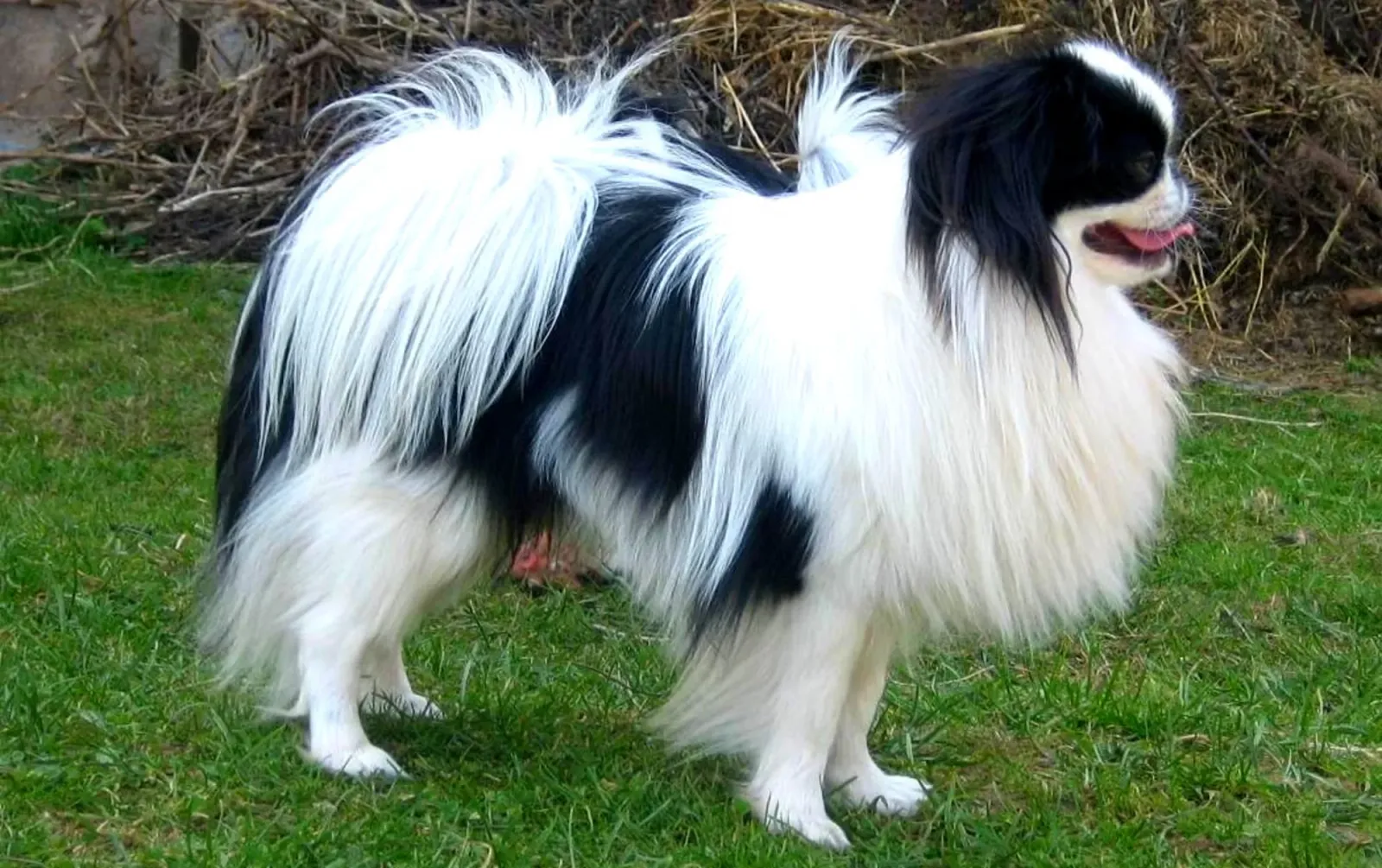
What are the ancestors of the Japanese Chin?
Photo by Pointer8, CC BY-SA 3.0, via Wikimedia Commons
History and Cultural Standing
The breed's origins reach back more than a thousand years, when it was first kept as a companion for Japanese royalty and the aristocracy. Its frequent appearance in Japanese art and literature reflects the high regard in which it was held.
Viewed as a bringer of good fortune and treasured by Japanese nobles, the Japanese Chin occupied a place of prestige within the imperial courts, where its dignified manner and appealing character won over the upper ranks of society.
More recently, the breed has found its way into homes around the globe. Its appeal as a companion crosses cultural lines, and the combination of elegance and affection has made it a breed sought after worldwide.

Are Japanese chins friendly?
Photo by Petites Perles Enchantées, CC BY-SA 4.0, via Wikimedia Commons
Should You Bring a Chin Into Your Home?
Anyone weighing whether to add a Japanese Chin to the household is considering more than a pet; they are considering a loyal and loving companion. Getting to know the breed's particular qualities is the first step toward enjoying a lap dog shaped by centuries of charm and refinement.
FAQs
Does the Japanese Chin suit families with children?
The breed can bond closely with children, but households with very young kids may not be the ideal match. Japanese Chins are delicate and may not cope well with rough play or accidental injury.
How much exercise does a Japanese Chin require?
These dogs need only a modest amount of exercise, though short daily walks and mental stimulation help keep them engaged and active.
Can Japanese Chins be trained?
They can. Japanese Chins are intelligent, but a stubborn streak means training calls for patience and positive reinforcement.
Which health issues are seen in Japanese Chins?
Eye problems, dental issues, and breathing difficulties are among the conditions the breed may develop. Routine veterinary care and proper attention can help prevent them.
Are Japanese Chins hypoallergenic?
No breed is completely hypoallergenic, but because Japanese Chins have a single coat and do not shed heavily, they may suit some allergy sufferers.
Sources
- “Japanese Chin – Dog Breeds” from American Kennel Club
- “Japanese Chin Dog Breed – Facts and Personality Traits” from Hill’s Pet
- “Japanese Chin (Japanese Spaniel): Characteristics & Care” from The Spruce Pets
© 2023 Jennifer Bové