Thinking About Getting an Olde English Bulldogge? Here's What You Should Know
Logan Rivera
Distinguishing the Olde English Bulldogge from Other Bulldogs
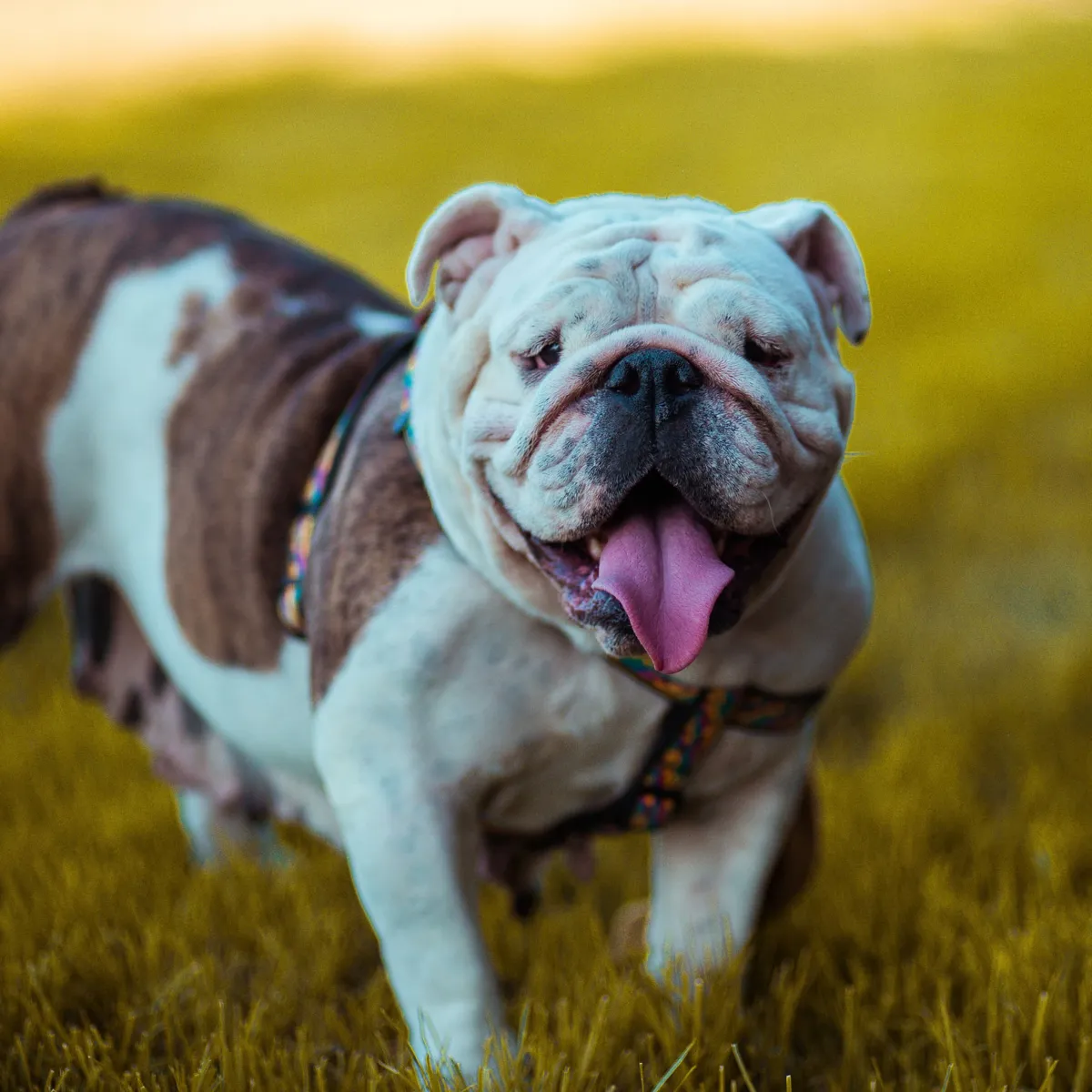
Many people picture the classic bulldog—short, stocky, and wrinkly—when they hear the term. That image usually corresponds to the modern English Bulldog. What often surprises people is that the Old English Bulldog, the original bull-baiting dog, is actually extinct. Both the English Bulldog and the Old English Bulldog are frequently confused with a newer breed: the Olde English Bulldogge (OEB), which first appeared in the United States during the 1970s.
The OEB was developed to bring back some of the characteristics of the original Old English Bulldog—a breed from the 17th century known for being athletic, agile, and used in bull-baiting.
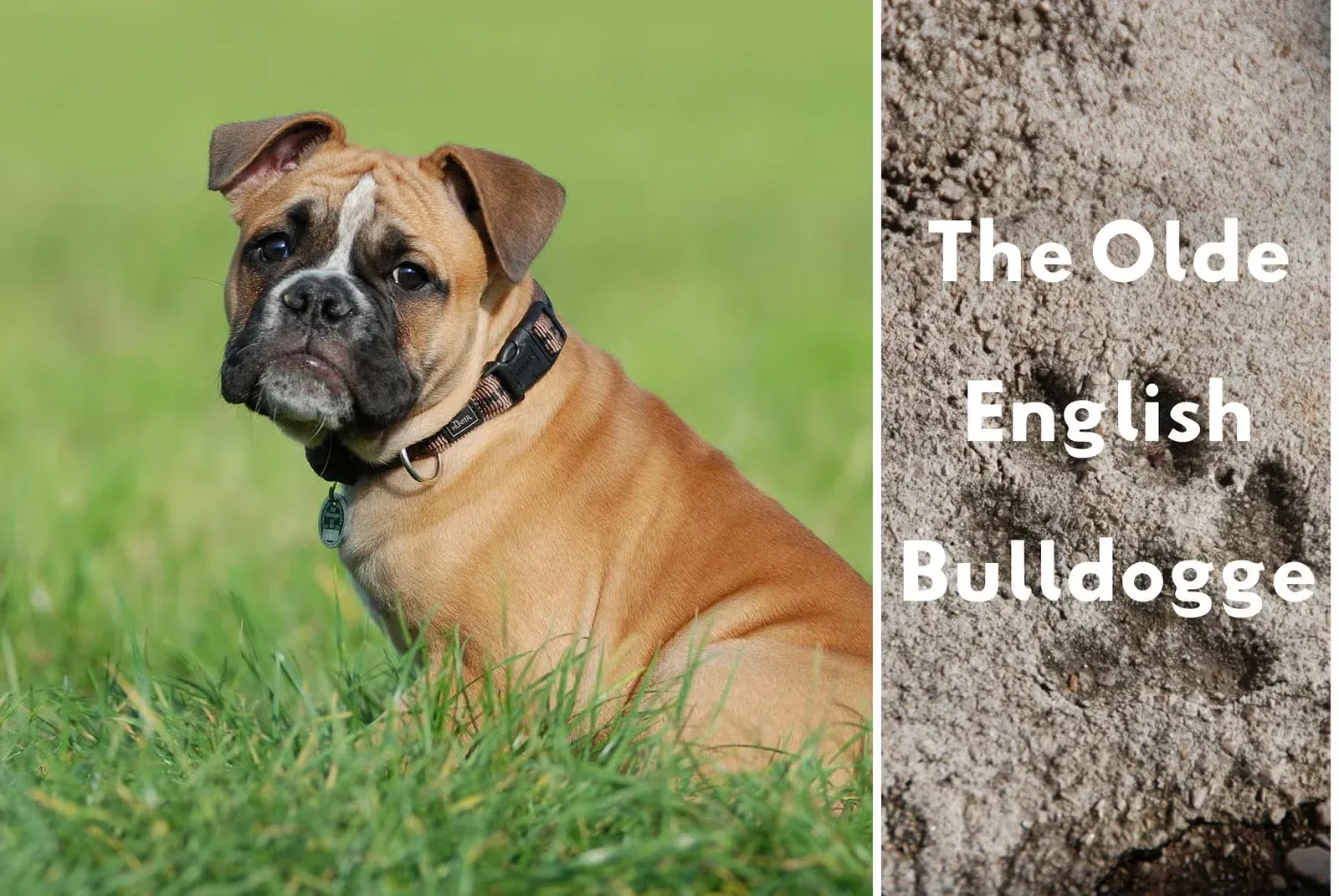
An Olde English Bulldogge puppy—this breed originated in the United States in the 1970s.
Tierpfotografien, CC BY-SA 3.0, Wikipedia
Fact
The Old English Bulldog no longer exists.
What Is an Olde English Bulldogge?
The OEB looks quite different from its living relative, the English Bulldog, and its name was chosen to keep the two distinct.
This breed is a mix of several others:
- 1/2 English Bulldog
- 1/6 Bullmastiff
- 1/6 American Pit Bull Terrier
- 1/6 American Bulldog
Why the Olde English Bulldogge Can Be a Wonderful Companion
The OEB offers many appealing qualities. It tends to have fewer of the health problems common in flat-faced (brachycephalic) breeds and is known for a generally excellent temperament. Some of its strong points include:
- Good Temperament: Trustworthy, loyal, protective, and affectionate.
- Friendly: Gets along well with other animals and young children, especially when socialized and trained from an early age.
- Athletic: Hardy and agile, with better tolerance for heat and cold than many other flat-faced breeds.
- Hypoallergenic: Its coat and dander are less likely to trigger allergies in sensitive people.
- Trainable: Eager to please and responsive to training activities.
- Good Health: Compared to other breeds, OEBs have fewer inherited bulldog issues such as airway problems, hip issues, climate sensitivity, and difficulties with birth and breeding.
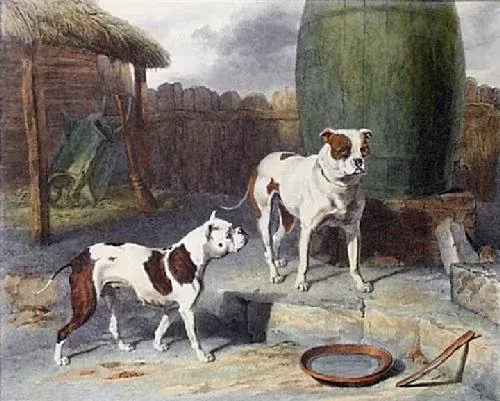
Abraham Cooper’s famous 1817 painting “Crib and Rosa” of the now extinct Old English Bulldog.
SirIsaacBrock, Public Domain, Wikimedia
The Old English Bulldog: An Extinct Ancestor
The Old English Bulldog is extinct. It was developed in England around the 1600s or 1700s and is an ancestor of many bully breeds still with us today, including the English Bulldog and the American Bulldog. Known for its compact, muscular build and large lower jaw, this strong, courageous, agile, and hardy breed was used in English blood sports and bull-baiting in London until those activities declined after the Cruelty to Animals Act was passed in 1835. The breed is thought to have descended from the Old Mastiff or Alaunt of the 17th century, an ancient breed used in wartime.
How the Breed Was Bred to Extinction
The proper Mastiff, one of its parent breeds, was not fast enough for bull-baiting, so the Old English Bulldog was crossed with the Old English Terrier to produce a quick, athletic hybrid. This dog was called the “Bull and Terrier” and was an early step toward the Bull Terrier and American Pit Bull breeds. This development contributed to the Old English Bulldog's eventual decline.
Breeders who admired this beautiful dog worked to reduce its aggression. They crossed remaining dogs with other breeds to select for the temperament and features they wanted, eventually producing the English Bulldog. Unfortunately, this breed has many inherited health problems.
The breeders’ goals moving forward should be to create even healthier dogs that are free breathers, free breeders, and free whelpers, meaning that they can breathe with ease, can breed without artificial insemination, and do not need to be delivered via C-sections.
— Author
Featured Gallery
1 / 1
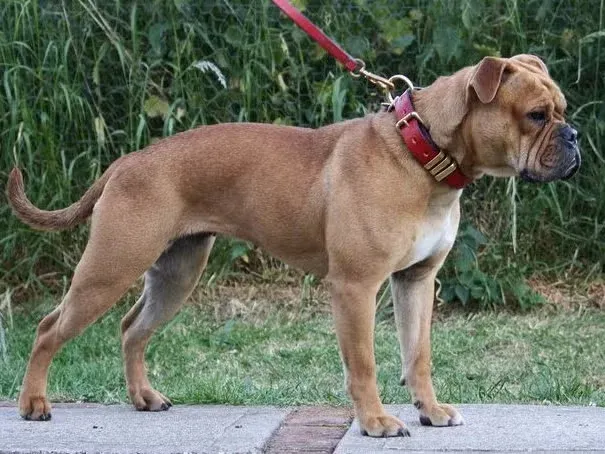
_The Leavitt Bulldog or Olde English Bulldogge—a recreation of the extinct Old English Bulldog.
Freedombulls, CC BY-SA 3.0, Wikimedia Commons_
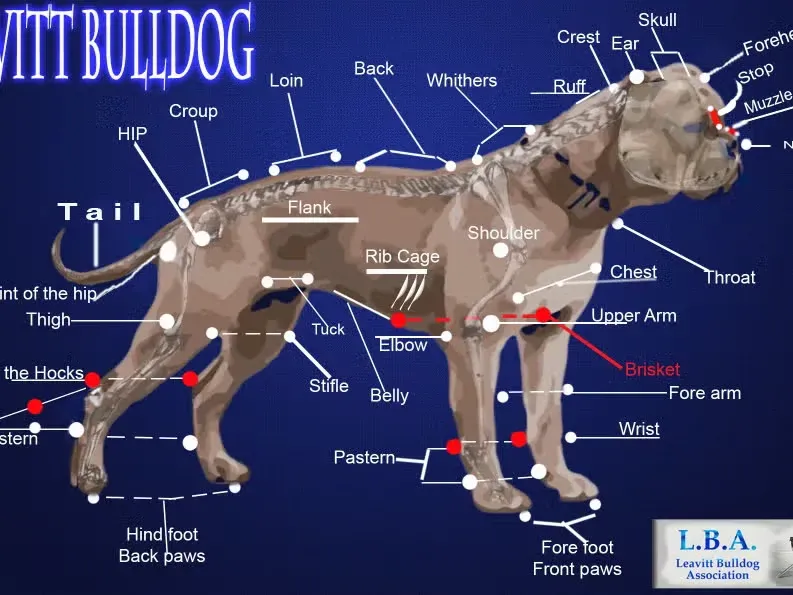
_The Leavitt Bulldog
Freedombulls, CC BY-SA 3.0, Wikimedia Commons_
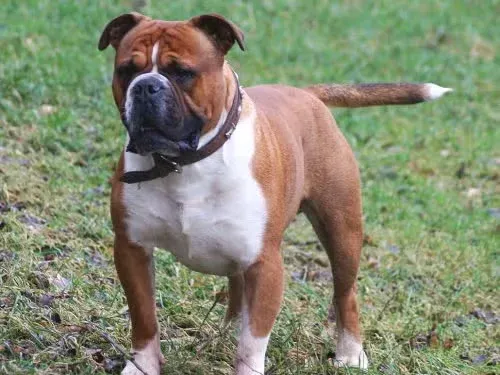
_The Olde English Bulldogge
Ss 051, CC BY-SA 3.0, Wikimedia Commons_
The Olde English Bulldogge: A Modern Recreation
The contemporary Olde English Bulldogge is essentially a healthier, more active version of its 17th-century ancestor. It combines the English Bulldog, American Bulldog, American Pit Bull Terrier, and Mastiff. These breeds were selected to achieve the desired traits and temperament, resulting in a good-looking, athletic dog (compared to the English Bulldog) with a happy disposition.
David Leavitt and the OEB Association
The name “Olde English Bulldogge” was chosen to distinguish it from the modern English Bulldog. The American Kennel Club (AKC) does not currently recognize it as a breed, but the International Olde English Bulldogge Association (IOEBA) does. Many, including the AKC, view the dog as a mix rather than a breed. However, all dog breeds change and adapt over time as they are bred for certain features, and often they eventually gain recognition. It would not surprise me if the AKC eventually recognizes OEBs as a breed.
Breed Development and Standards
In 1971, David Leavitt used a cattle-breeding model developed by Dr. Fechimer of Ohio State to produce an athletic bulldog with a build and gentler temperament similar to the extinct Old English Bulldog. According to Leavitt, the OEB does not have the undesirable traits of its relatives (difficult births, hip issues, and brachycephalic syndrome). Leavitt is quoted below regarding his breed standards:
“Cesarean section births are not necessary. Artificial insemination, due to male ineptness and lack of drive, has been replaced by natural ties. Life span is over eleven years. All breeding stock have had hip x-rays. No dog with bad hips is bred.”
Today, many breeders misleadingly register their designer puppies and dogs for sale as OEBs, even though their breeding program standards may have been compromised.
Note!
To counter false breed registries, the Leavitt Bulldog Association and registry was formed in 2006 to recognize the small percentage of OEB original stock.
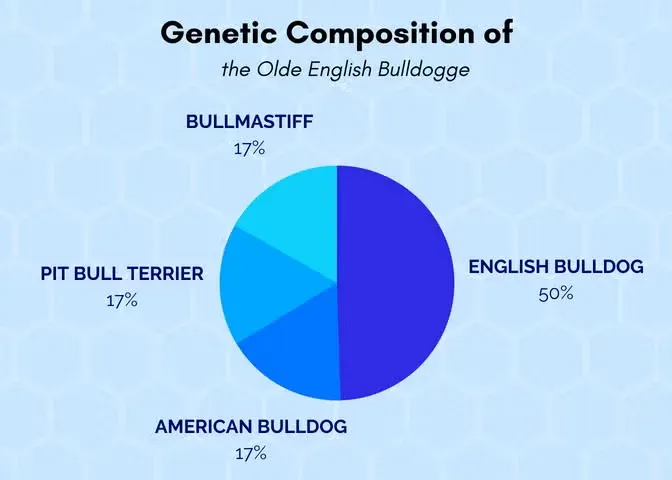
Data was rounded from 1/6th or 16.67% to 17%. Information adapted from Wikipedia.
Canva
Olde English Bulldogge Traits and Temperament
- Body Weight: 50–70 pounds (females); 65–85 pounds (males); (Mine weighs in at about 96 pounds!)
- Body Height: 17–19 inches (females); 18–20 inches (males)
- Body Type: Medium to large; wide shoulders, muscular, strong, and athletic
- Muzzle Type: Large and broad; brachycephalic traits but with unrestricted nares; undershot jaw, blocky head
- Temperament: Courageous and stable; enjoys praise; trustworthy, loyal, and protective
- Lifespan: Between 10 and 14 years
- Coat Type: Short
- Trainability: High; eager to please
My Personal Experience with the Breed
When considering a new dog, I often research online and read breed descriptions. While those are helpful, I want more than stats and generic descriptions. I want to know what it's really like to live with the dog, and I appreciate hearing from actual owners. So here is my experience:
- Choose a Reputable Breeder: I got my dog at eight weeks old from a breeder who followed the breed standard and aimed to improve the breed, including genetic testing for health defects.
- They Can Be Stubborn: This breed is unlike any other I've owned. I've had mutts, Border Terriers, Rottweilers, and pit bulls, and this breed has its own distinct personality. They are very strong-willed, bordering on stubborn.
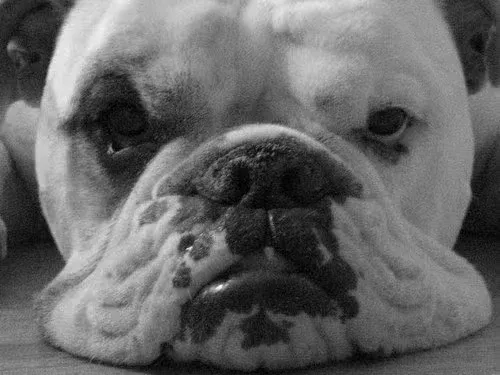
My Olde English Bulldogge “Bam Bam.”
- Start Training Early: This was my first strong-minded dog, and I probably could have been a stronger owner and pack leader. Despite two puppy schools, a private trainer, and my own work, he is not as well-trained as dogs I've had before. I'm largely to blame, but this breed is not going to be as obedient or timid as a Golden Retriever.
- Expect Drool: This breed is very slobbery. I'm always surprised when bulldog owners tell me their dogs are not slobbery. Mine is extremely slobbery—I think the Mastiff mix is responsible.
- Teach Good Manners: Because these dogs are large and strong, training is important. Imagine visiting someone whose dog jumps on you. With a Maltese, it's not a big deal. But with a 100-pound Olde English Bulldogge, that dog isn't just bouncing off your grandma's ankle—he's taking her to the ground. You need to be a strong owner, have a well-trained dog, and stay in control.
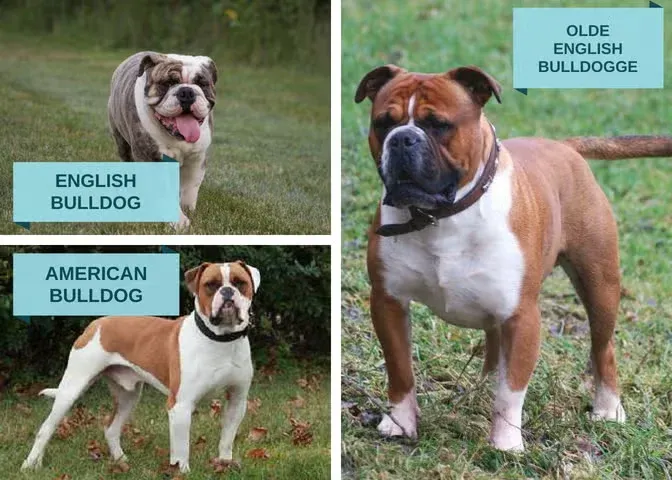
This photograph cross-compares three popular types of bulldog breeds.
Tha1uw4nt, CC BY-SA 3.0, Wikimedia Commons; CC0; Ss 051, CC BY-SA 3.0, Creative Commons
Comparing Bulldog Breeds
| Trait | Olde English Bulldogge | English Bulldog | American Bulldog |
|---|---|---|---|
| Size |
|
50–70 lbs (F); 65–85 lbs (M)
|
30–50 lbs (maybe 60 lbs)
|
60–90 lbs (F); 71–119 lbs (M)
| |
Lifespan
|
10–14 years
|
8–10 years
|
10–15 years
| |
Body Height
|
17–18 inches (F); 18–20 inches (M)
|
12–16 inches (F); 12–16 inches (M)
|
20–24 inches (F); 20–26 inches (M)
| |
Health Concerns
|
Several
|
Numerous
|
Several
| |
Breathing Difficulty
|
Mildly Problematic
|
Highly Problematic
|
Moderately Problematic
| |
Breeding
|
Free breeders and free whelpers
|
C-section required
|
C-section with large litters
| |
Heat and Cold Tolerance
|
Mild Sensitivity
|
High Sensitivity
|
Mild Sensitivity
|
*Breed information adapted from Wikipedia
The “Classic” English Bulldog: Traits and Temperament
The English Bulldog, or the classic bulldog many people know, is quite different from the OEB. Olde English Bulldogges tend to be healthier because they are a mix of several breeds and were specifically designed to be more active and healthy, with fewer of the traditional health problems English Bulldogs have.
English Bulldog Traits
- Appearance: Large head, short muzzle (brachycephalic), undershot jaw
- Size: Medium (averaging 50 pounds as adults)
- Body: Stocky, blocky head; short legs
- Wrinkles: Heavy
- Temperament: Gentle, loyal, protective, stubborn
- Notable Traits: Heavy breathers, brachycephalic
- Health Issues: Respiratory, heat and exercise intolerance; dental and pallet malformations; skin and dietary allergies; knee, joint and hip complications; reproductive issues and dystocia-prone (difficult birth); cherry eye
The English Bulldog is noticeably smaller and lighter in build and much more sensitive to hot and cold—you can't leave them outdoors for long in extreme temperatures or exercise them as hard. The average cost of ownership (in vet fees) for an English Bulldog can exceed several thousand dollars a year. They are expensive dogs to own and tend to have many health issues, similar to French Bulldogs.
Olde English Bulldogge vs. American Bulldog
Olde English Bulldogges and American Bulldogs look quite similar, but the American Bulldog is much larger, taller, and originated in the 1700s. The OEB is a good choice for beginner owners, while the American Bulldog is recommended for experienced owners. Both are great with children, trainable, and loyal. The American Bulldog tends to bark more, is more energetic, has higher grooming needs, and is not hypoallergenic, whereas the Olde English Bulldogge is hypoallergenic.
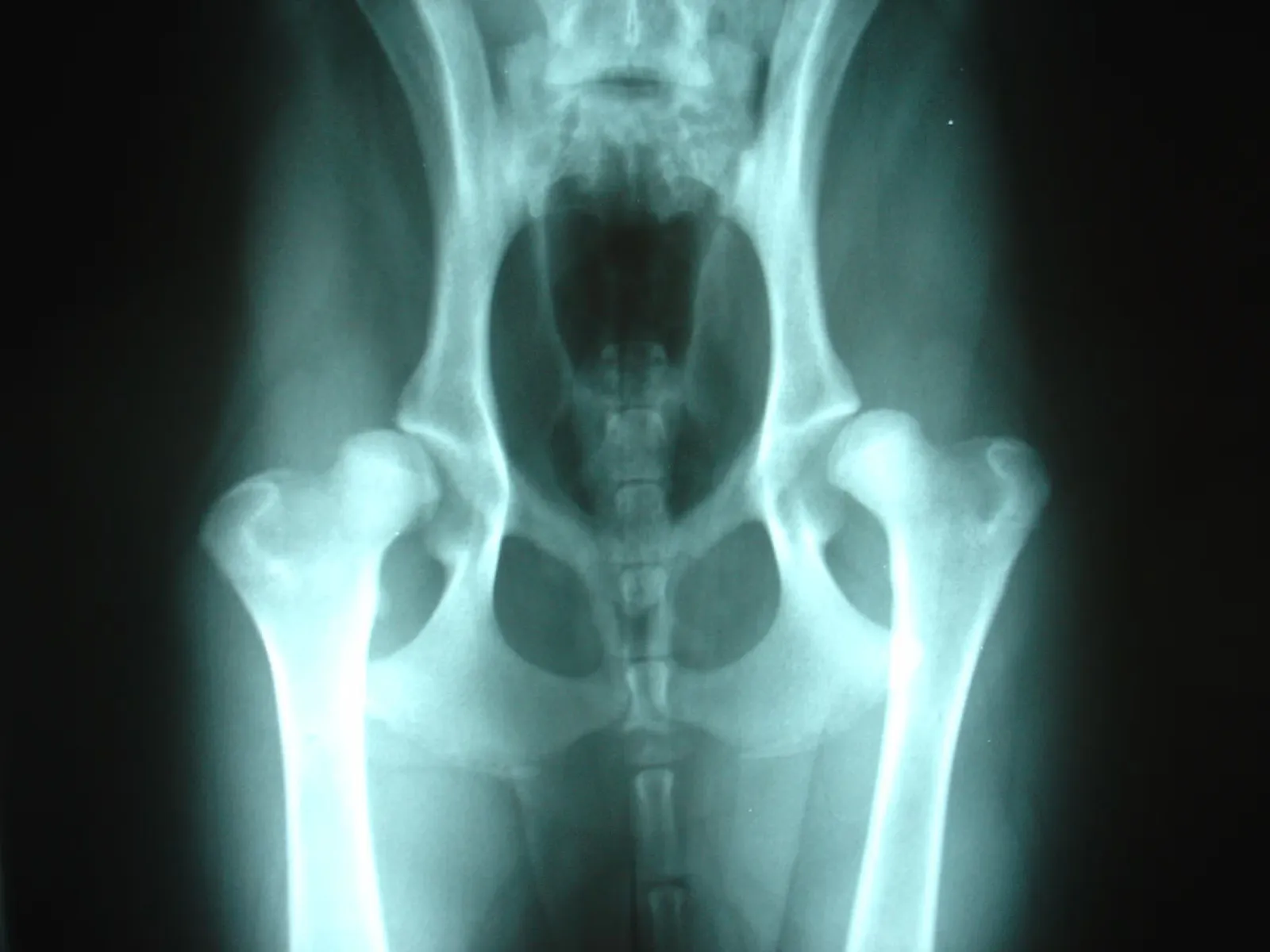
Bilateral hip dysplasia in a dog
Joelmills, CC BY-SA 3.0, Wikimedia Commons
Common Health Problems in Bulldog Breeds
In addition to elbow dysplasia, skin allergies, and dietary allergies, these are some of the most common health issues in bulldog breeds:
Canine Hip Dysplasia
Hip dysplasia is the abnormal formation of the hip socket in dogs. In severe cases, it can lead to lameness and arthritis. It is a genetically inherited trait that may be worsened by breed type, weight, activity or inactivity, and trauma and/or associated muscular atrophy.
In canine hip dysplasia, the spherical ball of the femur does not fit properly into the socket of the pelvis; it is either too shallow or loose. The body tries to repair the area by forming cartilage over the site, which leads to inflammation and future abnormalities, including degenerative osteoarthritis.
The Orthopedic Foundation for Animals (OFA) oversees hip screenings and classification, as does the Penn Hip Improvement Program (PennHIP). Both programs monitor and analyze data collected on the condition via diagnostic radiographic techniques (OFA and PennHIP shots) and a hip grading system. Controlled exercise and rehabilitation, drugs, and surgery are commonly recommended for hip dysplasia, depending on case severity.
Bloat or Gastric Dilatation Volvulus (GDV)
Bloat or gastric dilatation and volvulus (GDV) is a medical emergency. This condition occurs acutely in big dogs, whereupon the stomach twists (torsion), occludes major vessels and fills with gas. This condition puts pressure on the diaphragm and cuts off blood flow to the heart; surrounding tissue may die or rupture. Bloat is a medical emergency and occurs in deep-chested and large-breed dogs, especially after heavy exercise or eating.
Brachycephalic Airway Syndrome
Brachycephalic airway syndrome may be mild in Olde English Bulldogges but severe in French Bulldogs and English Bulldogs. The term brachycephalic literally refers to the shortened head or muzzle of these breeds. These dogs have a smaller upper jaw and redundant soft tissue in the skull which leads to an overcrowding of teeth, stenotic nares, an elongated soft palate, saccule issues, heat stroke susceptibility, and exercise intolerance. These breeds are also challenging candidates for surgery and anesthesia.
Cherry Eye
Cherry eye is a condition of the nictitating membrane (or third eyelid) and is characterized by protrusion of or prolapsed soft tissue of the eye. Surgical intervention or topical anti-inflammatory drugs are often recommended. There are no methods of prevention.
Choosing the Right Dog for Your Lifestyle
Before bringing home a new canine companion, it's important to know what breed you want and what kind of lifestyle you want to live with your pet. If you're looking for a puppy to go on long runs with, the Olde English Bulldogge is not for you. While they are healthy, active, and agile, their body type is just not conducive to long runs. They are a dog you can take to the park and have fun with outdoors in mild weather—not extreme temperatures. They are also great for lounging around the house with.
I hope this article has given you a better idea of the Olde English Bulldogge and whether or not it's the right breed for you!
© 2012 jgetsmoneyy