Getting to Know the Lacy Dog: A Texas Original
Sage Bennett
Fundamentals of the Lacy Dog
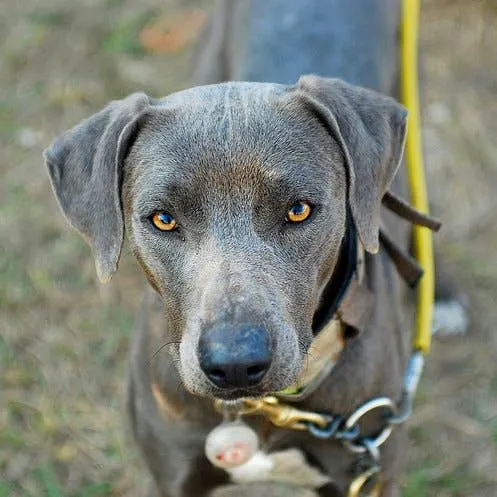
The Lacy Dog possesses a fascinating background along with a distinctive look and character.
Original Function
In 1858, when the Lacy brothers settled in Marble Falls, Texas, they required a dog suited to unfamiliar tasks. The shepherds, hounds, and collies they had were not up to the challenge of the aggressive feral hogs they had to gather and drive to meat markets in Austin. The precise combination of breeds they used remains uncertain, but possibilities that have been suggested include English Shepherd, scenthound, Greyhound, and wolf. Through linebreeding, they eventually produced a dog with the intelligence, swiftness, and physique needed to handle wild boars. Over time, the Lacy breed has evolved into a versatile working dog for ranchers, hunters, cowboys, and trappers.
Physical Characteristics
- Height: 18 to 21 inches
- Weight: 30 to 50 pounds
- Build: Muscular but lithe, compact and balanced
- Coat: Short and sleek
- Coloring: Blue, Red or Tri with minimal white markings and yellow to brown eyes
The Lacy is available in just three color varieties: Blue, Red, and Tri (which is blue with distinctive red tips). Some individuals have started calling the whole breed Blue Lacys, but similar to how Black Labs are actually black Labrador Retrievers, Blue Lacys are Blue Lacy Dogs. The correct name is Lacy Dog, as used by the Lacy family and found in historical records.
Disposition
- The Lacy is a working dog with a working attitude.
- They have endless heart and drive.
- Lacy Dogs are very intelligent and can pick up tasks quickly, but owners often say they are too smart for their own good.
- They have endless energy and need daily exercise along with a challenging job.
- Lacys tend to be very pack-oriented dogs and need a strong leader that sets clear boundaries.
- In the wrong home, they may develop serious behavior issues such as aggression or anxiety.
- When they have a real job to do, a Lacy Dog will be the best working companion anyone could ask for.
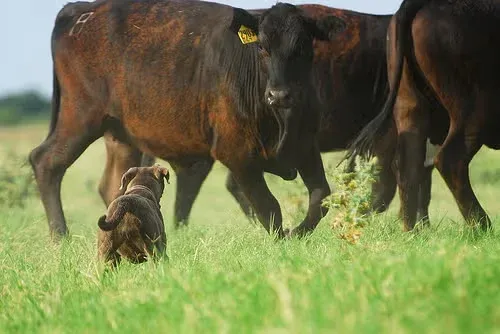
A Lacy Dog works cattle on a hot summer day in Texas. Photo by Julie Neumann, all rights reserved.
Work Suited to Lacy Dogs
Lacys were developed as working dogs in the Texas Hill Country. Initially bred to handle feral hogs and range cattle, they are gritty and tough with boundless energy. The Lacy’s compact, lithe build makes it agile and fast, enabling it to work in dense brush and evade dangerous quarry. These are real dogs for real jobs, not pets.
Some of the jobs Lacy Dogs excel at today include:
- Hog Hunting: Strike and bay dogs with short to medium range and plenty of grit.
- Herding: Heading dogs that are tough enough for ornery cattle.
- Blood Trailing: Popular among Texas trophy hunters for recovering wounded game.
- Running Trap Lines: Efficient at tracking and baying varmints in drag traps.
- And More: Treeing squirrels, retrieving birds, flyball, agility, and any job that is challenging both mentally and physically.
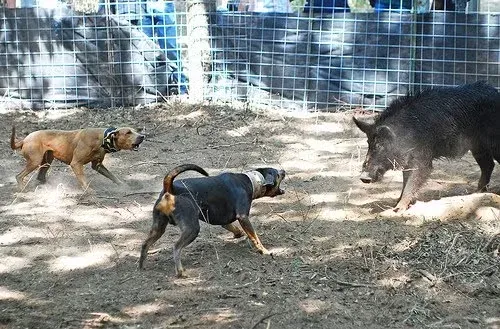
A Red Lacy and a Tri Lacy baying a feral hog. In addition to blue, Lacys can also be red and tri-colored. Photo by Julie Neumann, all rights reserved.
Lacy Dogs in a Pet Home
Lacy Dogs make great working companions. They do not make great pets. There are many dog breeds—entire categories of dog breeds—created by man to be a pet. They include many beautiful breeds that come in blue that would be perfectly content being a couch potato. The Lacy Dog is not one of them. They were developed to handle tough jobs, and the skills and instincts that make them such amazing hog dogs and cow dogs, and blood trailers do not blend in well with suburbia.
The type of person who should own a Lacy:
- Has real work for these real dogs to do. If you have to make up a job to justify a Lacy, this is not the breed for you.
- Is extremely active and loves the outdoors. We don’t mean hiking on the weekends; we mean cowboys, ranchers, hunters, and trappers.
- Lives on land in the country. Lacys do a great job of protecting large properties and thrive in a rural environment.
- Has experience with cur breeds. These dogs are very driven and very pack-oriented, which can be very unnerving for first-time owners.
- Will find great rewards in life with a challenging dog. Lacys pick up on training quickly, but if you give them an inch, they’ll take ten miles.
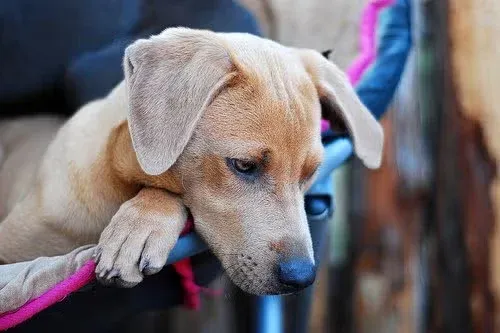
A Red Lacy puppy at Bayed Blue Kennels. Photo by Julie Neumann, all rights reserved.
Official State Dog of Texas
It is believed that Lacys are the only dog breed developed in Texas. In addition to calling the Hill Country their home, Lacys have the big attitude and independent spirit of a Lone Star State original. In 2005, the Blue Lacy was officially declared the State Dog of Texas.
Though the Lacy Dog certainly deserved this honor, the recognition has created several problems for the breed. Lacys were bred for over a century to be driven by hunting and herding dogs. They were never meant to live in suburbia, stuck indoors or in small yards. Despite their compact size, they have huge personalities and endless amounts of energy. Lacys need a real job, not just daily walks, to be happy and healthy.
Their unique appearance and status as the State Dog are not good reasons to get a Lacy puppy. In the wrong environment, Lacys can become aggressive, anxious, neurotic, and depressed. But when given a challenging job and room to run, these dogs can’t be beaten.
Additional Resources on Lacy Dogs
- National Lacy Dog Association Lacy Dog history, standards, personality, jobs and more. The NLDA is working to maintain Lacys as a working breed.
- Working Lacy Blog News and information on working Lacy Dogs. Official blog of the NLDA.
Sources
- Getting to Know the Lacy Dog: A Texas Original — pethelpful