American Alsatian: A Wolf-Like Canine With a Gentle Disposition
Reese Mitchell
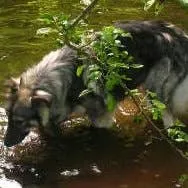
Introducing the American Alsatian: A Modern Breed With a Prehistoric Look
If you're seeking a dog with a long, storied lineage, this breed might not be for you. But if you want a companion that draws attention on walks and impresses others at the dog park, the American Alsatian could be a contender. The first litter of American Alsatian puppies arrived in 1988, and the breed has been shaped to look like the prehistoric Dire Wolf, which is now extinct.
Similar to the Silken Windhound, the American Alsatian is a recent development. Unlike the Labradoodle, Mauzer, or Cockapoo, it is being bred as a purebred rather than a crossbred "designer" dog. The breed was formerly called the Alsatian Shepalute, but breeders changed the name to highlight its status as a new breed, as the old name seemed to imply a crossbreed.
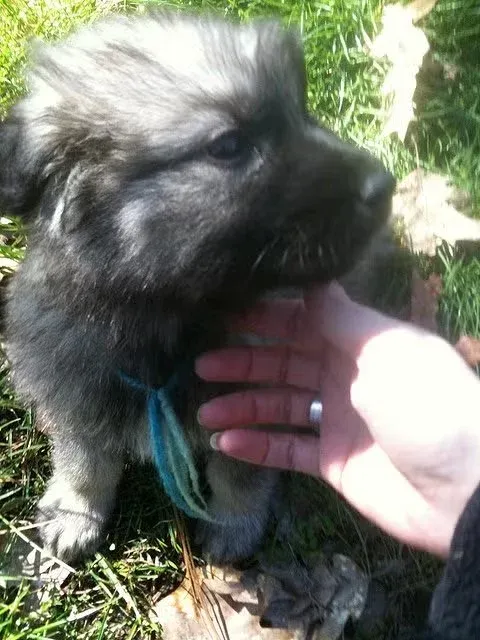
An American Alsatian puppy
cc-by semaphoria 4416038106
Defining the American Alsatian
This breed was created by mixing purebred Alaskan Malamutes, German Shepherds, English Mastiffs, Anatolian Shepherds, and Great Pyrenees. The goal was to achieve the look of a Dire Wolf and a large size. Indeed, males must stand at least 26 inches tall and weigh no less than 90 pounds, though they are often chosen to be even bigger.
Physical Characteristics
They possess heavy bones, elongated bodies, a massive head, and a large dark muzzle with teeth that meet in a scissor bite. Their ears are tall and stand erect, similar to those of wolves.
The breed standard calls for dark skin, thick and coarse undercoats, and coats that enhance their wolf-like appearance—gold, silver sable, or timber wolf gray. Their feet should be large and substantial, chests broad, and necks muscular and strong. The nose of an American Alsatian is always black.
Temperament and Behavior
Temperament is a key component of the breed standard and has been central to breeding decisions. These dogs should be fearless yet not aggressive, reserved but not fearful or shy. Breeders favor dogs that bark infrequently, remain calm and non-aggressive, have a low working drive, and are easy to train. Breeders also claim that these dogs are so placid that they are unbothered by fireworks and thunderstorms.

A replica of the prehistoric Dire Wolf at the La Brea tar pits.
cc-by afagen 7815813254
Health and Longevity
Although all the breeds used to create the American Alsatian are prone to hip dysplasia, the breed club asserts that it is not a concern for these dogs. There are no published hip rating statistics (PennHip scores) available, but they may emerge as the breed gains popularity. Breeders also report that no cases of panosteitis have occurred since 2004, and elbow dysplasia and arthritis are nearly absent.
No eye or ear issues have been reported. Although some seizures have been observed, only a very small fraction of dogs are affected (0.5%). If these figures hold true, this would be an excellent dog to own.
Expected Lifespan
According to American Alsatian breeders, the average lifespan is 12 to 14 years, and they hope it may be even longer. That is a respectable lifespan, especially given the breeds involved in its development. However, not enough time has passed to confirm this accurately.
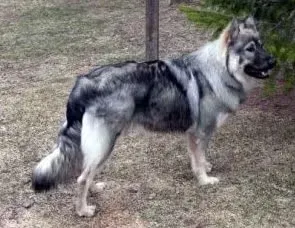
An adult American Alsatian
Are They Ideal Companion Dogs?
The breed description sounds ideal but may not be entirely accurate. Since the breed was not established as separate until around 2000, and since Great Pyrenees and Anatolian Shepherds were only added in 2004, too few dogs have been evaluated to determine health, behavior, or longevity. Anyone claiming to know longevity statistics for this breed is likely trying to promote it.
Is This a Working Breed?
The breed's Wikipedia page appears biased and seems to have been written by an American Alsatian breed club. They claim that only certain puppies were selected so that the dogs would not exhibit working breed traits—such as being hyperactive or needing extensive exercise. They also state that the breed's developer, Lois Denny of Oxnard, California, was able to produce a large breed composed of working dogs but without a working dog personality.
In my view, it is impossible for a breed to shed these characteristics in under 20 years. Breeds like the Doberman and Dogo Argentino were developed by individuals, but their breed traits were not firmly established until much later.
Should You Consider an American Alsatian?
If you are thinking about buying an American Alsatian puppy, note that they are still rare and costly, starting at $1000 or more. There is also likely to be a lengthy waiting list. If you are interested, you should be prepared for a serious commitment.
Finding a Breeder
You can look for breeders near you by searching the breed name and your location online, but often the puppies will only be available far from where you live. I do not recommend purchasing any puppy from a distant breeder. If you must have one of these puppies and the breeder is not close enough to visit, you should make time to fly or drive to the location and see the puppies in person before deciding if one is right for you.
Do Your Research Before Choosing Any Breed
American Alsatians are not recognized by any kennel club, nor do they need to be. I think they look as impressive as the Caucasian Shepherd, but they should not have the aggression issues seen in that livestock guardian breed.
Still, there are many wonderful dog breeds available. Are you considering an American Alsatian simply because you want a dog that looks like it belongs in a Dungeons & Dragons game?
Additional Resources on Dog Breeds
- Five Dog Breeds That Like Cats Are you looking for a new dog to add to your cat-friendly home? Here are five breeds that almost always get along with cats!
- Five Dog Breeds For People That Like to Be Alone In search of a solitary life? Consider one of these breeds. They are large, they like to guard, and yes, you have to admit it, they are ugly. Want a breed that will really guard your home, even from the meter reader?
- Five Great Dog Breeds That Don’t Shed, Much This article lists five breeds that do not shed much. Not all are cheap to maintain, and not all will lounge around waiting to be groomed—but each of these dogs makes a great pet.
- Five Dog Breeds that Don’t Bark, Much Almost any dog will bark, but this is a list of dogs that bark less. If your dog is barking a lot, choose one of these breeds, read articles to decrease barking, or discuss the problem with a good dog trainer.
© 2012 Mark dos Anjos, DVM