Tracking Your Golden Retriever's Growth: A Comprehensive Weight Guide
Morgan Brooks

Golden Retriever Growth and Weight Tracking
Golden Retrievers are one of the most popular dog breeds, valued for their adaptability. Their friendly nature makes them excellent family companions, and they also excel in hunting and show rings.
Puppy growth can seem erratic, leading owners to worry. Generally, there's no cause for concern: growth is not linear for any breed but happens in bursts over the first two years.
Still, monitoring your puppy during this critical period is important, and understanding the typical growth pattern can be both enjoyable and informative.
What's Covered
- Weight chart for female Golden Retriever puppies
- Weight chart for male Golden Retriever puppies
- Growth milestones in the first year
- Nutrition and risks of rapid growth
Female Golden Retriever Puppy Weight Chart
| Age | Smallest | Largest | Average |
|---|---|---|---|
| 7 weeks | 5 lb | 17 lb | 9 lb |
| 8 weeks | 5 lb | 17 lb | 10 lb |
| 9 weeks | 8 lb | 17 lb | 12 lb |
| 10 weeks | 13 lb | 22 lb | 15 lb |
| 11 weeks | 12 lb | 22 lb | 17 lb |
| 3 months | 16 lb | 43 lb | 22 lb |
| 4 months | 25 lb | 44 lb | 30 lb |
| 5 months | 25 lb | 57 lb | 40 lb |
| 6 months | 27 lb | 72 lb | 44 lb |
| 7 months | 27 lb | 67 lb | 45 lb |
| 8 months | 40 lb | 67 lb | 52 lb |
| 9 months | 44 lb | 68 lb | 52 lb |
| 10 months | 50 lb | 68 lb | 60 lb |
| 11 months | 52 lb | 80 lb | 65 lb |
| 1 year | 55 lb | 90 lb | 70 lb |
| 2 years | 55 lb | 90 lb | 70 lb |
Data from the author and Genuine Goldens
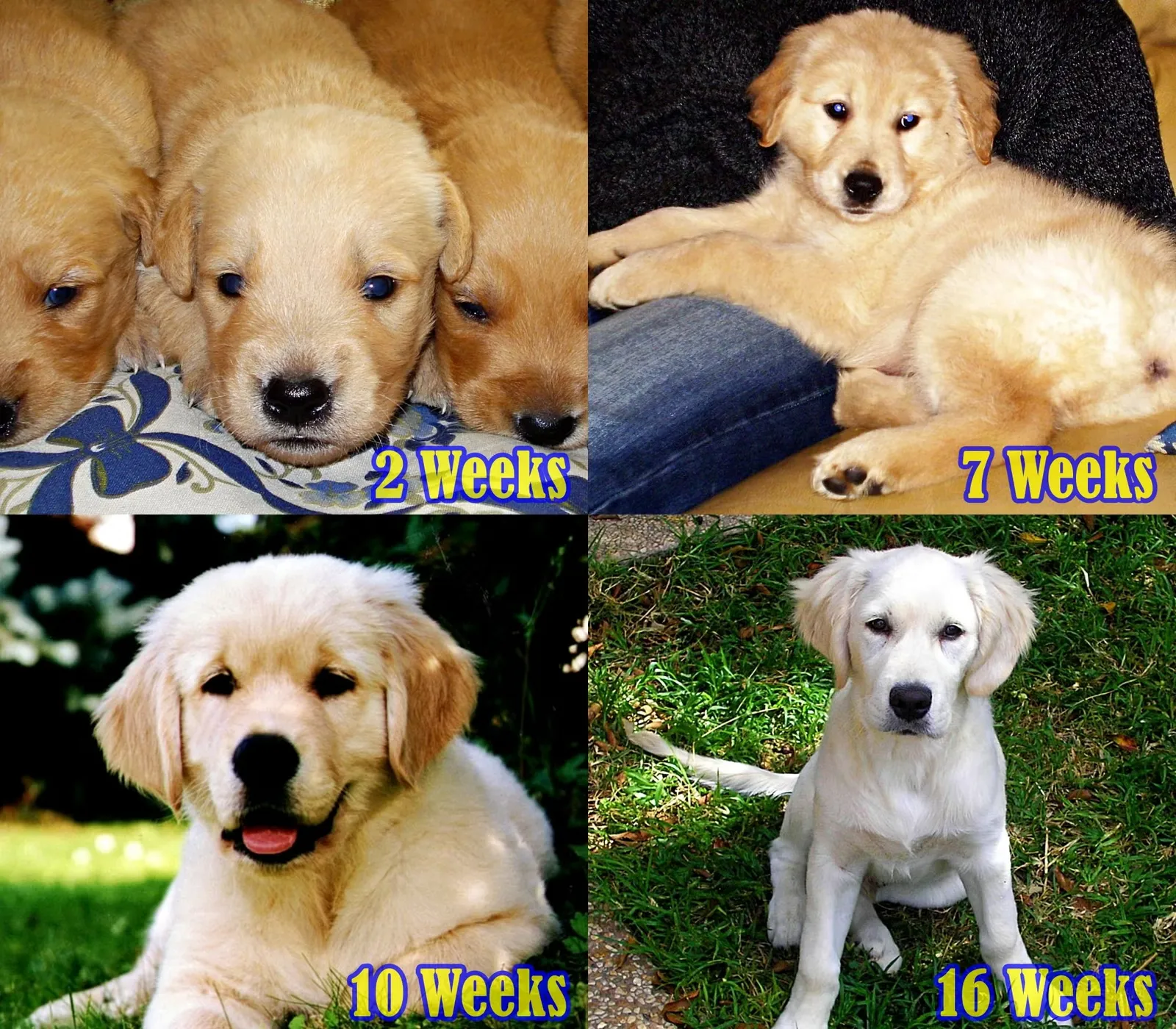
This collage shows a Golden Retriever from birth to 4 months old.
Images from Wikimedia Commons; collage made with PhotoScape
Male Golden Retriever Puppy Weight Chart
| Age | Smallest | Largest | Average |
|---|---|---|---|
| 7 weeks | 3 lb | 25 lb | 9 lb |
| 8 weeks | 3 lb | 27 lb | 11 lb |
| 9 weeks | 7 lb | 27 lb | 13 lb |
| 10 weeks | 10 lb | 28 lb | 17 lb |
| 11 weeks | 6 lb | 24 lb | 17 lb |
| 3 months | 9 lb | 34 lb | 23 lb |
| 4 months | 15 lb | 55 lb | 33 lb |
| 5 months | 20 lb | 67 lb | 42 lb |
| 6 months | 38 lb | 75 lb | 52 lb |
| 7 months | 35 lb | 75 lb | 59 lb |
| 8 months | 40 lb | 77 lb | 61 lb |
| 9 months | 45 lb | 77 lb | 61 lb |
| 10 months | 50 lb | 77 lb | 63 lb |
| 11 months | 55 lb | 77 lb | 66 lb |
| 1 year | 65 lb | 77 lb | 68 lb |
| 2 years | 65 lb | 80 lb | 73 lb |
Data from the author and Genuine Goldens
Growth in the First Year
The first five months are the most formative for a puppy. This is when you can really shape your puppy's personality.
First 7 Weeks
In the first seven weeks, the puppy will have trouble walking, often staggering and falling. A few weeks after birth, the puppy will become steady on its feet. It's crucial for the puppy to stay with its mother and littermates during this time because they teach necessary behaviors.
During this period, the mother instills obedience and affection. Socialize the young dog carefully without separating it from the litter to get it used to human contact.
Third Month
The third month is an ideal time to introduce the puppy to its permanent human family. Spend plenty of time socializing the new puppy. However, be cautious during the transition—around eight weeks or slightly later, the puppy enters its first fear-impact period.
At this time, any frightening experience can have a lasting impact. Try to prevent such experiences, and if they occur, immediately remove the puppy from the source of fear.
Four to Six Months
During the fourth, fifth, and sometimes sixth months, the puppy will really start acting like a puppy—full of energy and teething. Establish good habits by enforcing consistent rules. Watch for the second fear-impact period, which generally occurs around the fifth month or later.
Six Months to One Year
By four or five months, the puppy has become a furry young dog. At this stage, the tail and legs of the Golden Retriever puppy appear very long; in fact, they seem disproportionate to its torso, which can look funny.
Also during this period, the nose and ears of this breed grow out (don't worry, the rest of the body will catch up, and it will soon be an adorable ball of fur). You might even notice that at some point, the front legs appear shorter than the hind legs. But this will normalize soon, and uneven growth is normal.
Golden Retrievers grow very quickly during their second six months. During this time, the puppy's joints and bones are vulnerable. Avoid activities that put excessive pressure on the joints, such as long walks, sudden stops while running, and bounding down stairs. If the dog must go down stairs, assist it with a leash.
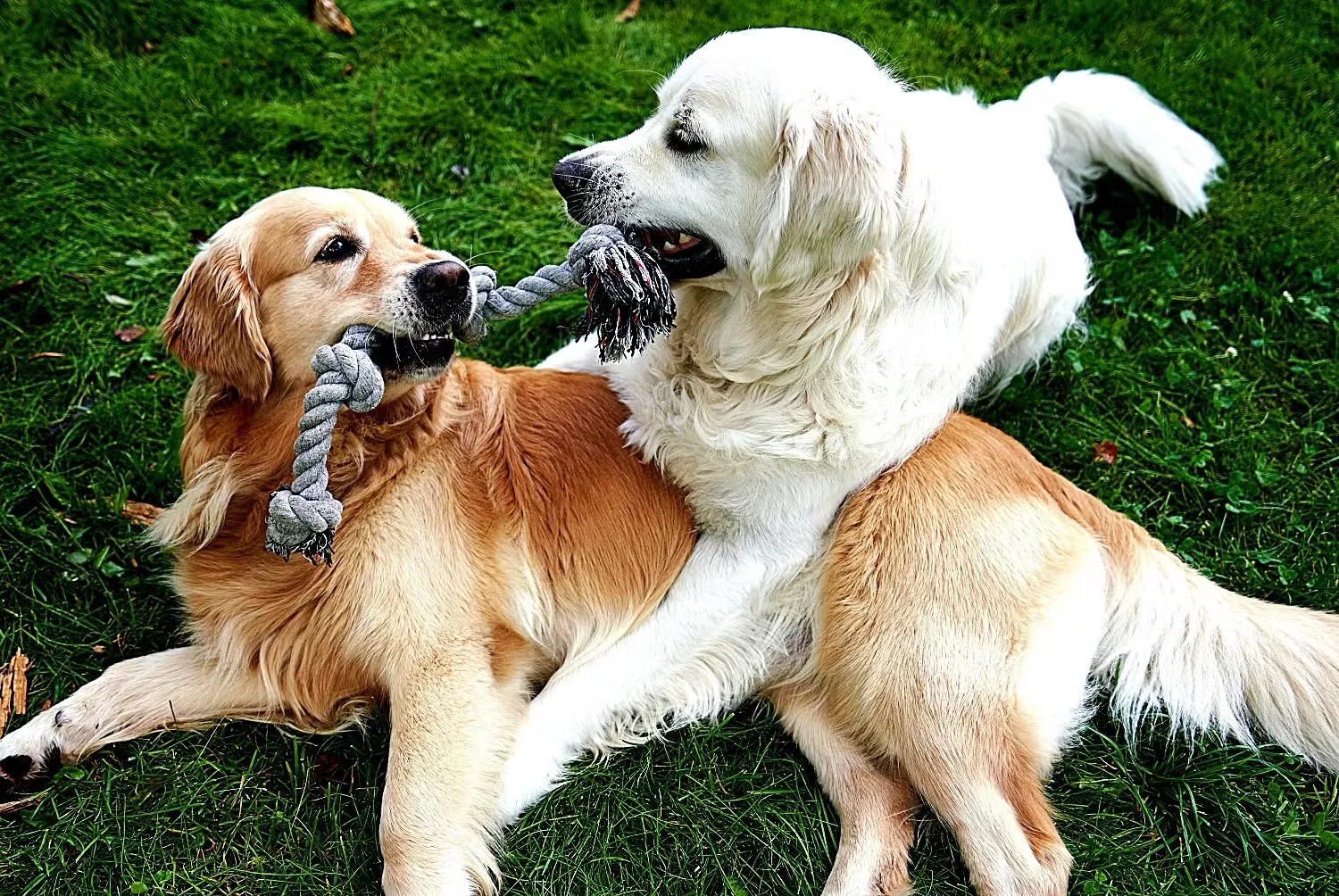
It takes a few months for Golden Retrievers to outgrow their awkward stage, but once they do, they are always ready for a play fight!
Photo by Barnabas Davoti on Pexels/PhotoScape
When Do Golden Retrievers Stop Growing?
Growth occurs in spurts and varies by individual—no dog will exactly match the averages in the charts above. However, generally, you want to see slow growth. Rapid growth carries risks, including bone disease and arthritis, which are more common in large breeds like Golden Retrievers.
Overfeeding and low-quality food cause rapid growth. When reading your puppy's food ingredients, the first ingredient should be some type of animal protein. If your puppy appears to be gaining fat, reduce the food.
The smallest and largest weights in the charts illustrate the wide range of Golden Retriever sizes. However, bigger is not always better! Aim to keep your dog looking healthy and fit.
This article is accurate and true to the best of the author's knowledge. It is not meant to substitute for diagnosis, prognosis, treatment, prescription, or formal and individualized advice from a veterinary medical professional. Animals exhibiting signs and symptoms of distress should be seen by a veterinarian immediately.