Complete Guide to Tapeworm Infections in Cats: Identification, Treatment, and Prevention
Hayden Scott

From my extensive experience rescuing cats, tapeworms stand out as the most frequently encountered intestinal parasite. These unpleasant organisms can harm your cat, with effects ranging from mild discomfort to severe health risks depending on the parasite burden.
This guide will walk you through recognizing a tapeworm infection in your cat, aided by several informative photos, and provide recommendations for treatment, prevention, and more.
Related: My Cats Won’t Eat Their Deworming Medicine—What Can I Do?
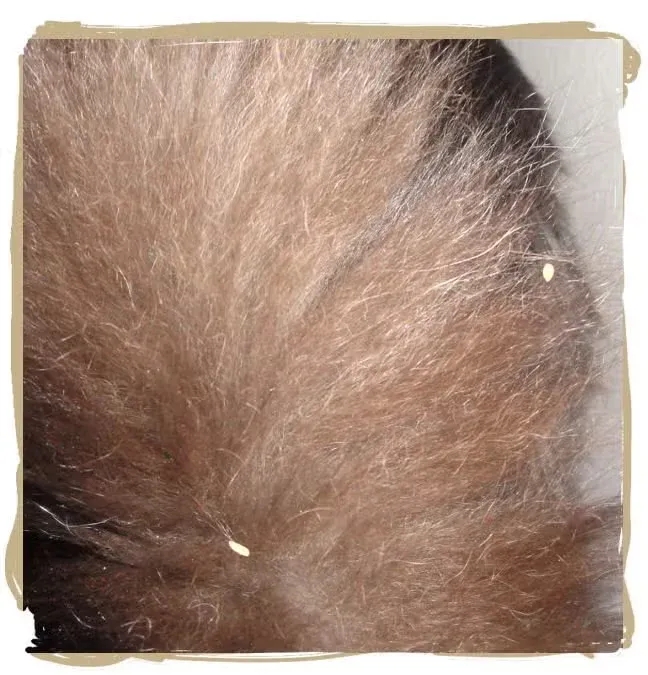
Tapeworm segments in cat tail fur
Signs of Tapeworm Infection
While the most direct way to identify tapeworms is by seeing them—covered later—other indicators of an infestation include:
- Loose stools
- Vomiting
- Dragging the rear on surfaces
- Excessive licking around the anus
- Reduced appetite (uncommon)
- Weight loss (uncommon)
How to Recognize Tapeworms in Cats
Tapeworms get their name from their long, flat bodies that resemble ribbons or strips of tape.
- You might notice small, yellow, sesame seed-like objects clinging to the fur around your cat's rear end. These are dried tapeworm segments.
- Live tapeworms can also be visible in the fur near the hindquarters.
- The worms move by contracting and extending their bodies, changing length from roughly 1/8 inch to 1/2 inch.
The first image above shows a worm in the fur near a cat's hind end. In the second image below, tapeworm segments are visible on a cat's tail and stuck to the fur, giving you a sense of their small size.
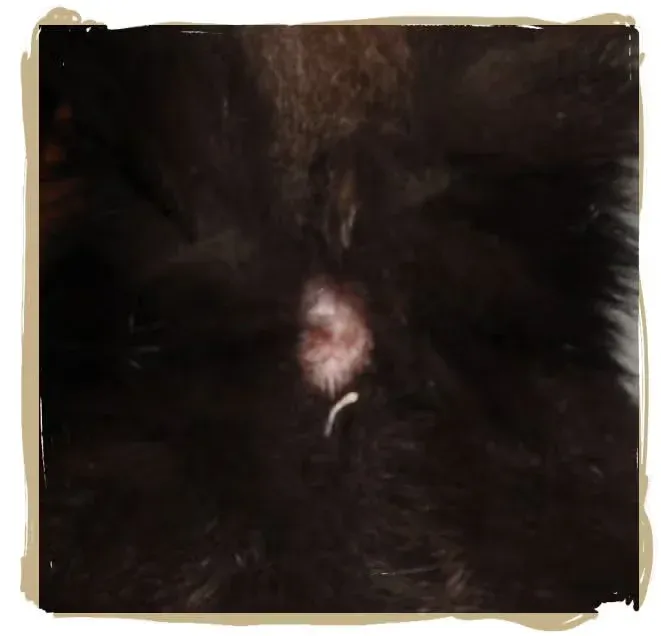
Tapeworm near kitty’s behind
Spotting Tapeworm Segments in Cat Feces
Examining your cat's stool is not a pleasant task, and the sight of tapeworms is hardly appealing. Nevertheless, checking the feces can help you determine if your cat has tapeworms.
Tapeworms are often easy to detect in feces. Look for small, white worms that contrast with the stool.
Detailed Views of Cat Tapeworms
Below is a photo of a tapeworm segment taken from feces and placed on toilet paper. This worm is fully extended. The litter next to it is wheat-based, providing a size reference.
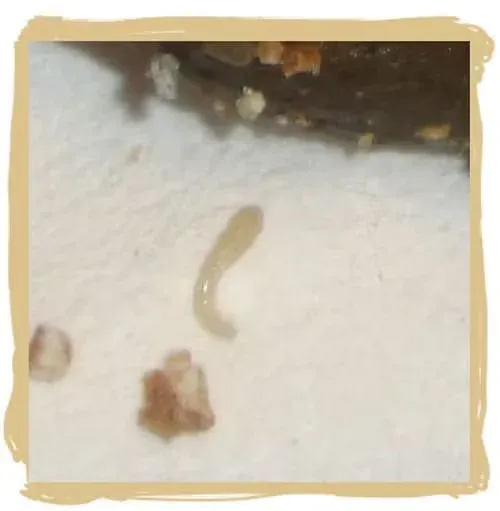
Intestinal worms
Examining Stool for Tapeworms
After a cat uses the litter box, tapeworms can be difficult to spot on the feces. The worms are tiny and blend in with litter unless you inspect closely.
One approach is to scoop out the feces before the cat covers it, trying to avoid adding extra litter. Place the sample on a paper towel for a closer look.
Additional Close-Ups of Tapeworms
The next two photos provide close-ups of the tapeworms from the previous image, now separated and adhering to litter.
As you can see, the tapeworms are off-white and shiny. If you watch for about 30 seconds, you might observe movement, confirming they are tapeworms.
Related: Can Cats Get Heartworms From Fleas?
Featured Gallery
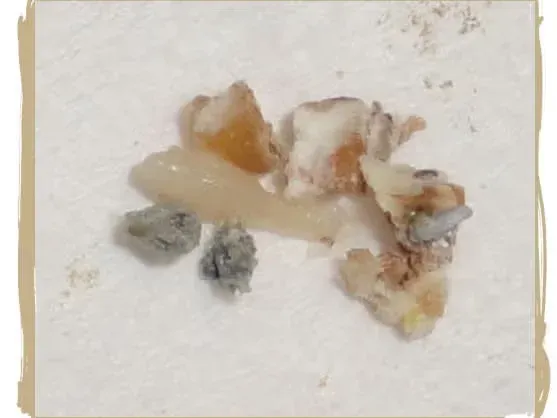
Tapeworm in kitty litter
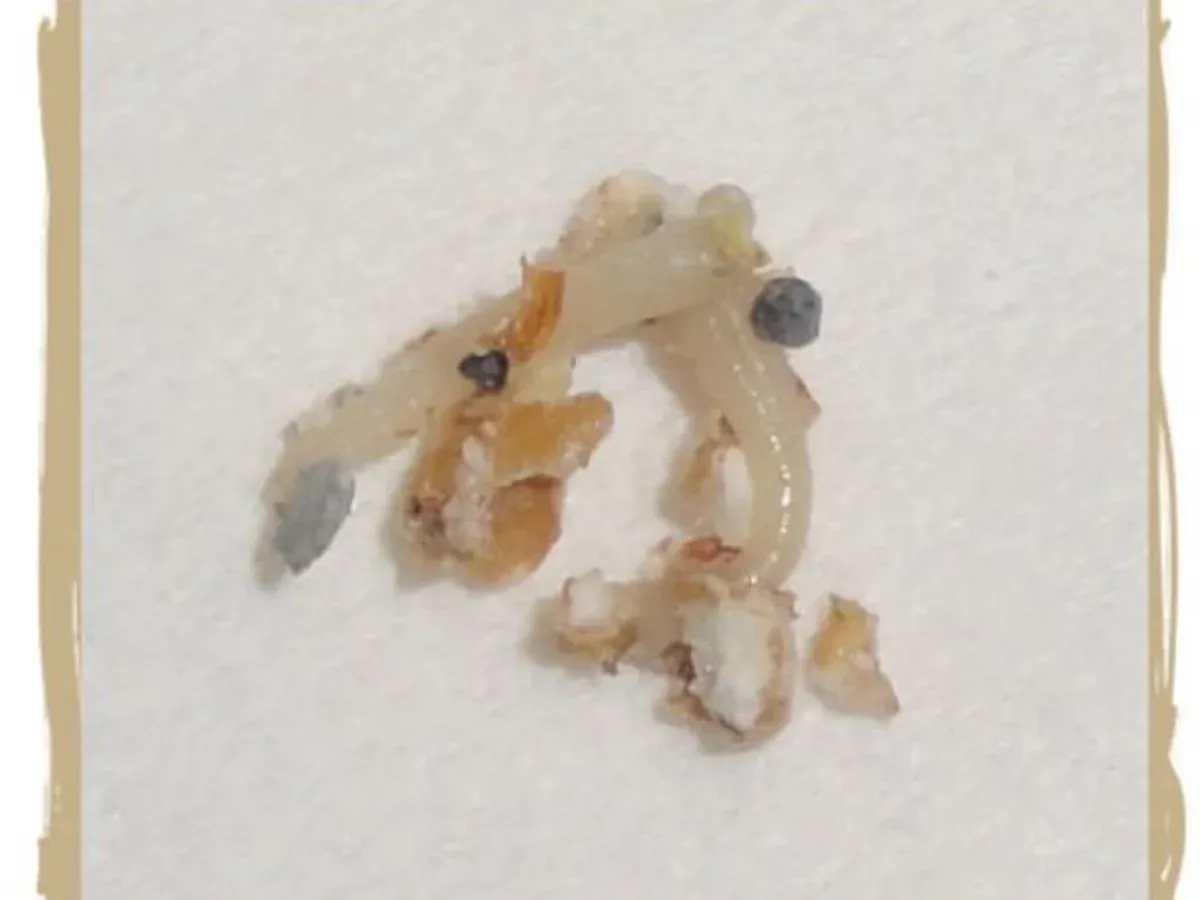
Two tapeworms amongst litter
Tapeworm Segments
In the photo below, the tapeworm segment on the left has contracted. The one on the right is nearly fully extended, just over 1/4 inch.
Note: The camera flash washed out some detail—apologies! Still, the photo illustrates the various shapes a tapeworm segment can take.
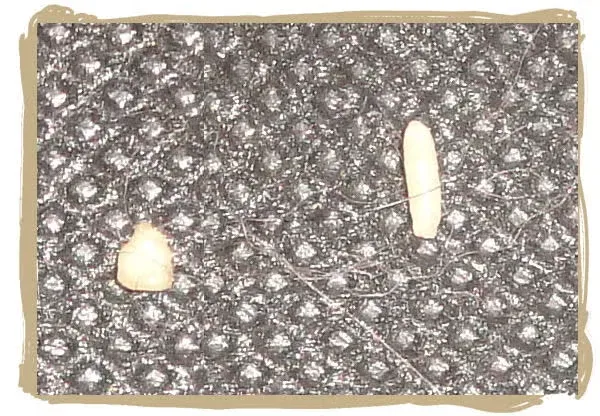
Tapeworm segments close-up
What Leads to Tapeworms?
Tapeworms typically result from a cat ingesting flea eggs. How does that occur?
Cats are fastidious groomers, frequently licking their fur. If fleas are present, the cat may swallow infected fleas and their eggs during grooming, leading to tapeworms.
Alternatively, a cat can become infected by killing and eating part of an infected rodent.
Treatment Options
Our rescue favors Drontol, a broad-spectrum dewormer effective against roundworms, tapeworms, whipworms, and hookworms. This medication requires a prescription and is worth a vet visit.
We have also tried over-the-counter tapeworm remedies and found them ineffective, so we stick with the prescription option.
Drontol is given as one or two doses, two weeks apart, with the dosage depending on the type prescribed. Always consult your vet before treating your pet.
Related: 8 Hidden Signs Your Cat Is in Pain (That Most Owners Miss) and What to Do
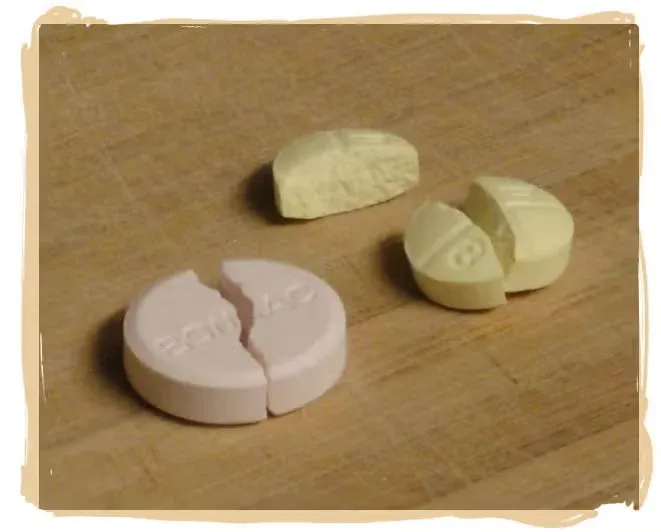
Cat tapeworm medication
Prevention Strategies
After clearing tapeworms, the key to keeping your cat parasite-free is maintaining a flea-free environment.
The simplest method is to eliminate existing fleas and keep your cat indoors. Flea treatment involves two applications 30 days apart to break the flea life cycle and kill eggs.
Our rescue prefers Advantage—Advantage Plus has been reliable for years; however, recently, fleas appear to be developing resistance to some treatments.
Always consult your veterinarian before administering any medication or flea treatment.
Alternative Flea Treatments
Our vet recommends Frontline and notes that many owners who find Advantage ineffective switch to Frontline with good results. Revolution is another popular brand favored by one of our cat boarders.
I personally use Advantage Multi on my cats and fosters. Besides fleas, it also treats roundworms, hookworms, and ear mites.
Caution: Low-Quality Flea Products …
We have witnessed severe side effects from over-the-counter flea treatments. Before buying any, research the brand online for reports of seizures or death.
We assisted in a case where 10 cats received an OTC flea treatment; all had seizures and needed emergency vet care. The bill was exorbitant, far exceeding the cost of Advantage.
Tragically, some cats did not survive. Please be cautious with any medication for your pet.
… And Watch for Expired Medications
After treatment, monitor your pet for about 10 minutes for adverse reactions. Once, I treated a foster cat who developed mild seizures (drooling and back muscle spasms). I immediately washed the area with soap and water.
That resolved the issue, and the cat recovered. I later discovered the Advantage had expired. So, always check expiration dates on medications and treatments!
Related: 8 Main Reasons Why Your Cat Is Bloated (And What to Do About It)
Resources and Further Reading
- Tapeworms in Cats | PetMD If your cats go outside, tapeworms may become an issue. Dr. Jennifer Coates explains symptoms, causes, and treatment.
- Tapeworm Infection in Cats | VCA Animal Hospitals Learn about tapeworm infection in cats. VCA offers professional guidance for your pet's health.
This article is accurate and true to the best of the author’s knowledge. It is not meant to substitute for diagnosis, prognosis, treatment, prescription, or formal and individualized advice from a veterinary medical professional. Animals exhibiting signs and symptoms of distress should be seen by a veterinarian immediately.
© 2011 Amber Killinger