Proud Donkey Mom Parades Her Newborn Foal for All to See
Jamie Evans
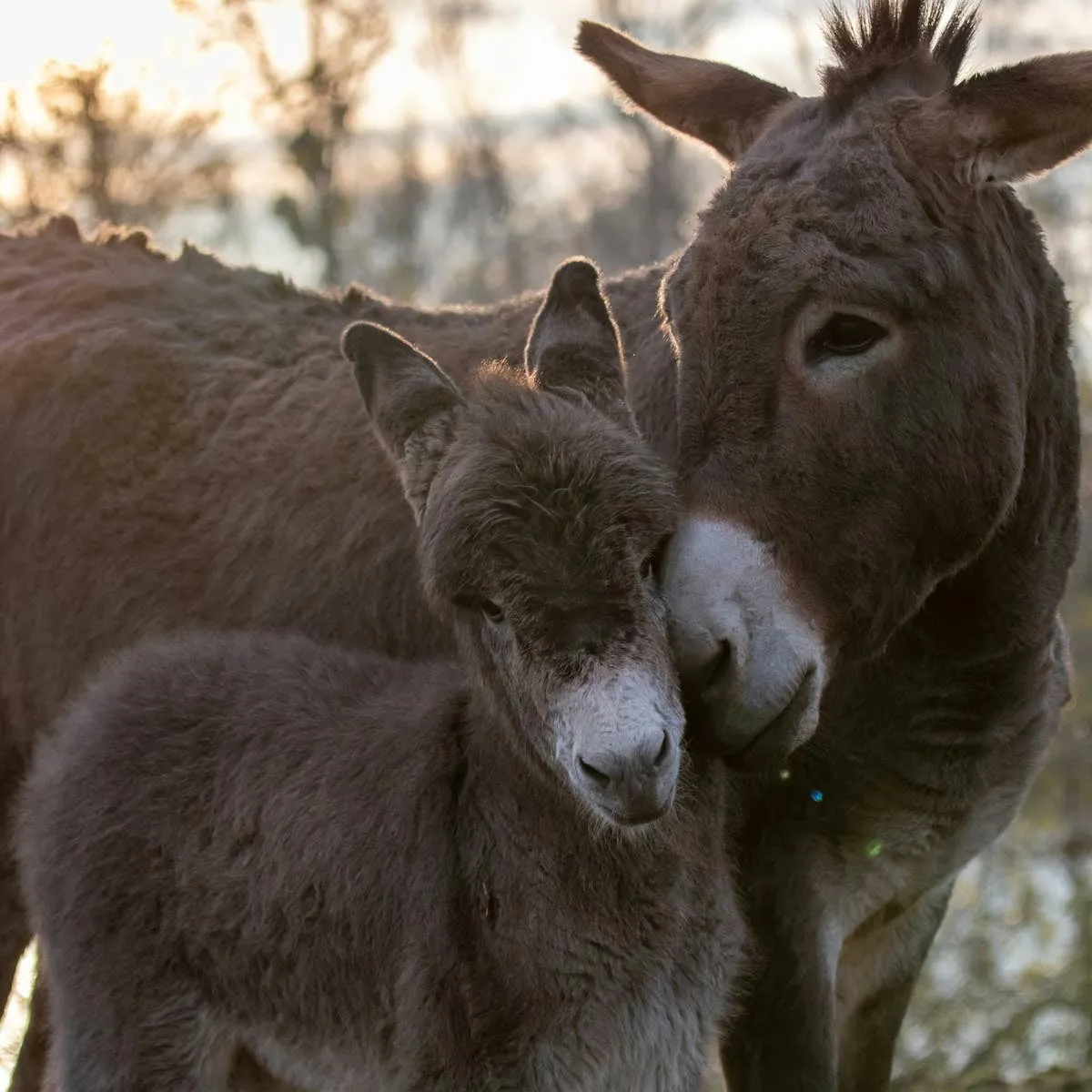
There's a new arrival at Hideaway Farm, and the mother donkey is clearly eager for the world to meet her. Since she can't physically carry her small foal from place to place, she'll have to make do with becoming a TikTok sensation instead.
In the footage, we meet the farm's newest resident — an exceptionally cute baby donkey. "Is that your baby?" the human mom asks. The mother donkey responds by nodding, as if confirming that yes, this little one is hers. "She's so beautiful," the human mom adds. The sweetness of this donkey duo is hard to dispute.
Commenters were in agreement that both mother and foal are flawless. @Rosiegirl wrote, "Wow, mama is beautiful, too!!" @excause_my_shyness.01 added, "Aww, such a proud mama. Like, 'Yes, that's my baby. Do you love them?'" The answer, of course, is yes.
The standout remark came from @Nowaita second: "Looks like Mama is a printer, call her Xerox." The creator replied, "She copy and pasted." The two look remarkably alike.
Donkey Mother-Foal Relationships
Donkeys, much like other farm animals, build close ties with one another. These connections can appear as friendships between adults, often expressed through shared meals and following one another around the pasture.
As with most mammals, donkeys also develop bonds with their offspring. A mother donkey usually begins grooming her newborn right after birth, which cleans the foal and starts the process of forming a connection. Like most ungulates, donkeys are on their feet shortly after being born. Within a few hours, they will begin nursing. Nursing is the primary bonding activity between mother and new foal, who will keep drinking milk for as long as a year.
Given how strong this relationship is, raising an orphaned donkey is challenging. The Donkey Sanctuary advises locating an adoptive mother when one is available, since hand-rearing the animal demands considerable effort from a human and may lead to the foal picking up undesirable behaviors. If no adoptive mother can be found, you'll need to take over and bottle-feed the foal with a milk replacer. Young donkeys also need regular exercise, contact with their own species, and a warm shelter during their first few weeks.
In an ideal world, every donkey born would have a mother as proud as this one.