Pit Bulls: How Human Exploitation Shaped Their Reputation and Why They Deserve Better
Robin Morgan
Why Do Pit Bulls Have a Bad Reputation?
Around the world, breed-specific legislation (BSL) is a common approach that restricts or outright bans certain dog breeds, particularly those grouped under the pit bull label. I am not an expert on pit bulls, BSL, or the statistics often cited to support such policies. In those areas, my factual knowledge is limited. Still, I can share what I do know in a thoughtful way.
The modern pit bull descends from the original English bull-baiting dog, which was bred for sport between the 17th and 19th centuries to bite and hold bulls, bears, and other large animals by the face and head. From the start, humans have cultivated and exploited this genetic trait of strong, locking jaws. That genetic predisposition is one reason many countries, US states, and cities have placed restrictions or bans on the breed.
When large-animal baiting was outlawed in the late 1800s, humans again took advantage of the pit bull ancestors' powerful jaws. They bred the English bull-baiting dog with smaller, more agile terriers to create dogs for fighting.
These mixed-breed dogs were trained to attack other dogs, not humans. Preparing a dog for fights required extensive human handling. Any dog that showed aggression toward humans was removed from the breeding pool to avoid passing on that trait.
Since the earliest days of the pit bull's ancestral history, humans have played a part in amplifying the breed's undesirable traits for cruel purposes. Today's pit bulls must live with the leftover stigma and lingering negativity.
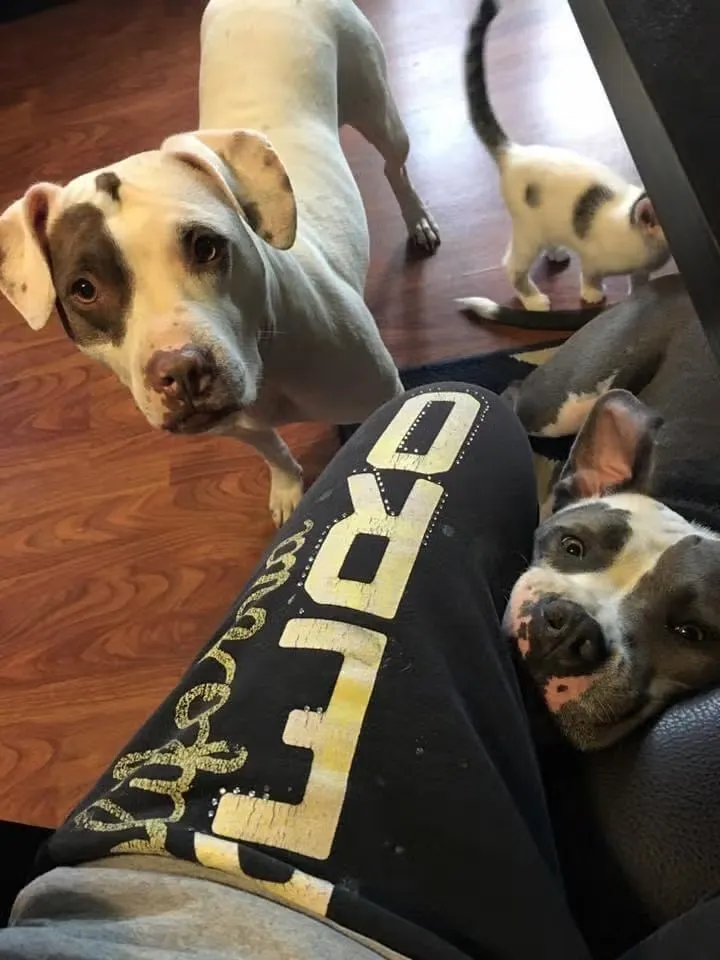
Reba and Dually with their Momma, probably begging for some of her food

Cousins: Reba and Bruiser playing at Grammy and Grandpa's
Today's Pit Bull
The term "pit bull" goes back to the fighting dog of the 1800s. Today, however, "pit bull" describes a type of dog, not a breed.
This type comes from four main breeds: the American Pit Bull Terrier, American Staffordshire Terrier, Staffordshire Bull Terrier, and American Bully. So a "pit bull" is actually a mixed-breed dog. Even stranger, genetic mixing over time has produced a curious anomaly: dogs that are often visually identified as pit bulls may show no genetic trace of any of these breeds.
Most of today's pit bulls are bred without any specific intention. This random breeding has created a population with a wide range of behavioral tendencies. Genetics from the past do play a role in behavior, but a growing number of people believe the environment matters more.
Veterinarians and breed specialists point to many environmental factors that shape a dog's personality. Some of these factors, such as temperature in the womb and the mother's stress levels during pregnancy, occur before birth. Early nutrition, early medical care, and housing conditions also have an influence.
Most experts in the field, however, agree that socialization is the key factor in reducing aggression in dogs. Socialization works in two ways: with humans and with other dogs. From an early age, dogs need humane, proper training in basic commands and etiquette so they can live alongside people. Likewise, young dogs must be socialized with other dogs so they become friendly rather than fearful or aggressive.
Sadly, some people still breed pit bulls for harmful purposes today, which muddies the gene pool and keeps the stigma alive.

Mom, Dad, and Reba on the day they finally made Dually an official member of the family
The Fate of the Pit Bull
Through no fault of their own, pit bulls and their ancestors have been targets of human exploitation from the beginning. Today's pit bull is often portrayed as a fighting dog, even though dogfighting is banned.
This image stirs fear, mistrust, and misunderstanding, which often lead to bans and restrictions. Because of breed-specific legislation, many well-socialized, calm, and loving pit bull pets end up in shelters. Most pit bull mixes today are far removed from the atrocities of their ancestors, but their reputation is hard to shake.
The pit bull and its close relatives have also been called the "nanny dog" for their loving loyalty to children. It is hard to believe that behavioral traits can vary so widely within one type of dog. Yet it is precisely this wide range that keeps the public wary of pit bulls.
As with other types of dogs, people must see each one as an individual with a genetic history and a unique environmental upbringing. Also, as with different types of dogs, some will be gentle and loving, and some will be the opposite. One thing is certain, however: in all cases, humans have played a role in the pit bull's reputation since the beginning.
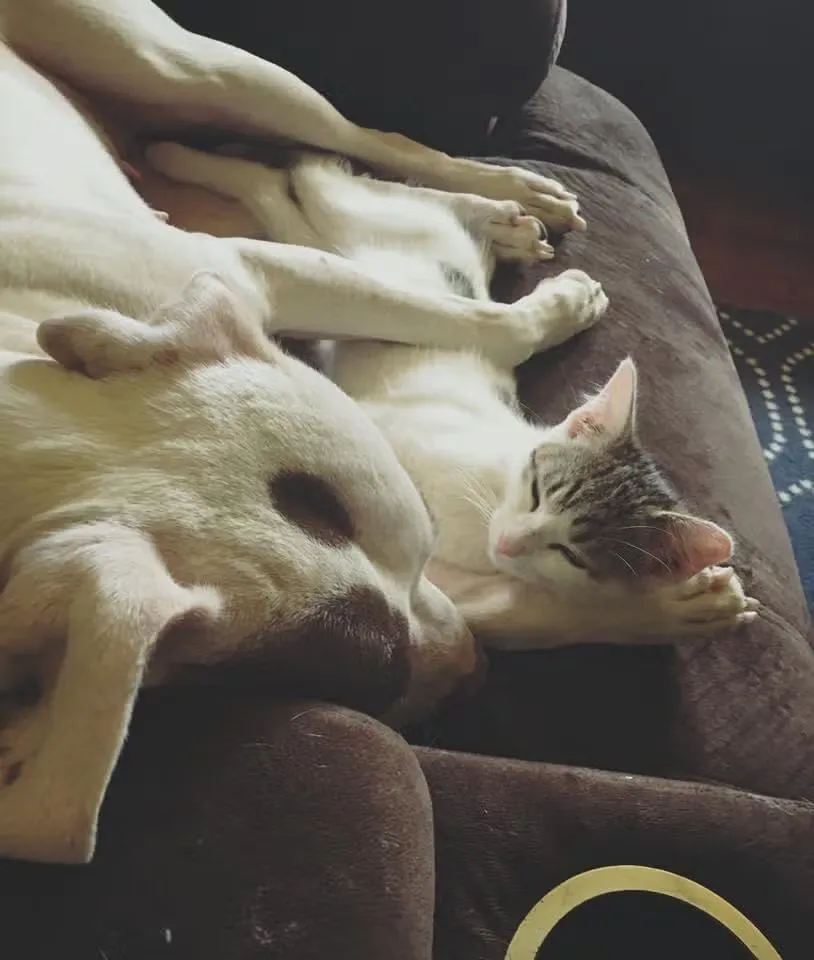
Reba and feline friend Sasha take a cat-nap.
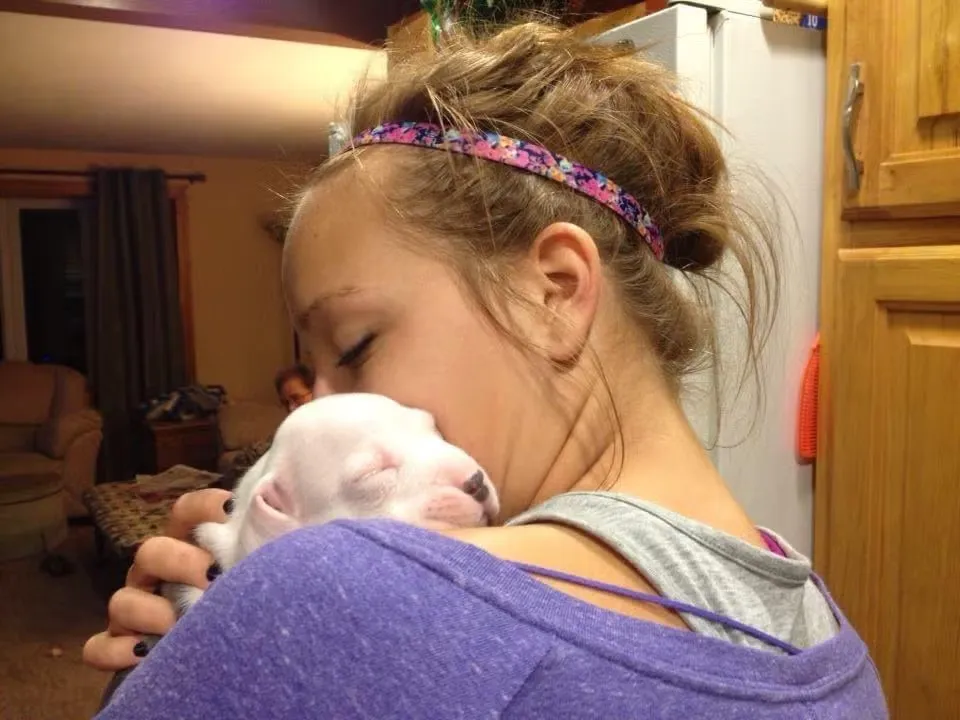
Baby Bruiser and Aunt Abby
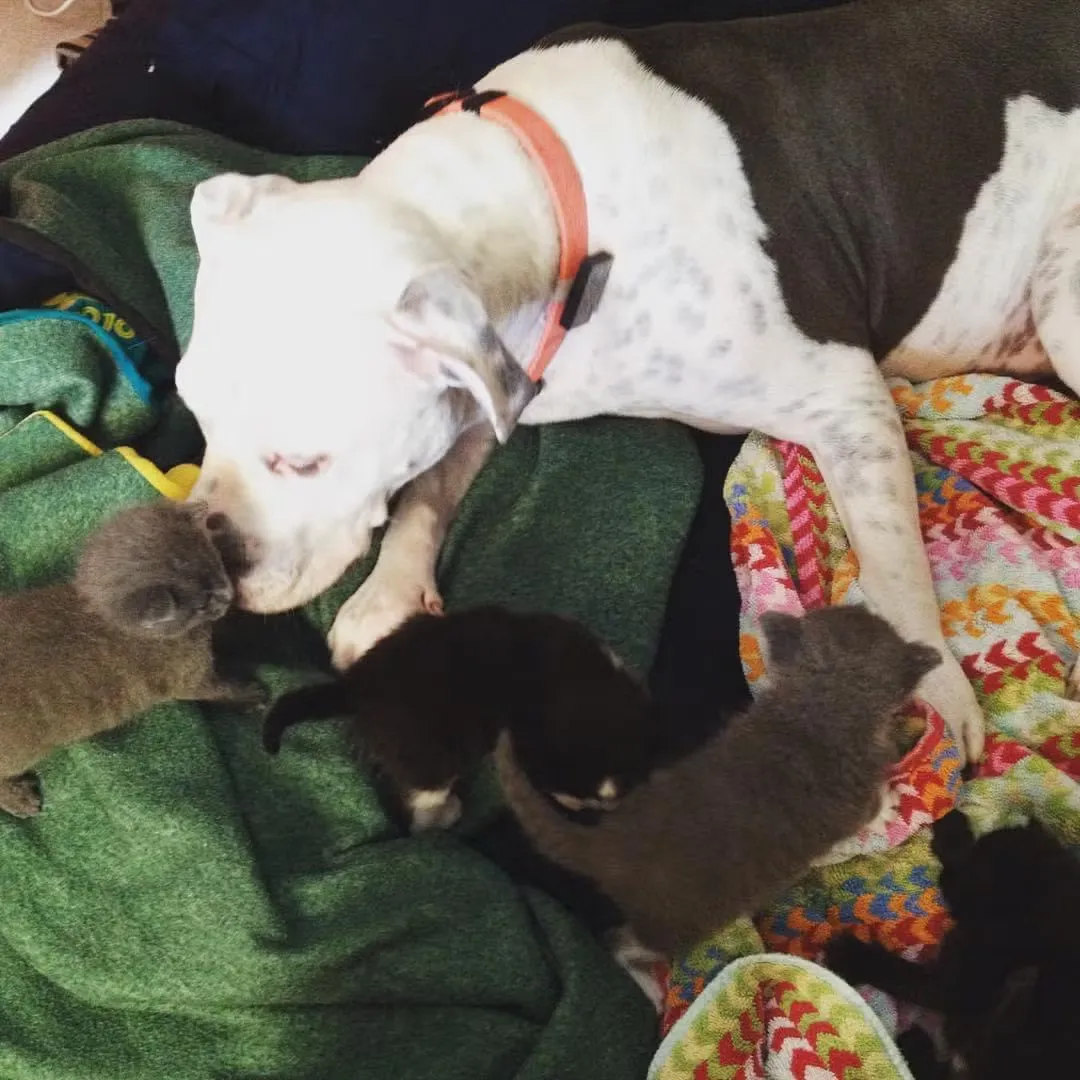
Here's Bruiser making sure the kittens all stay on the bed.
What Fuels My Passion
Honestly, before my daughters had pit bulls as pets, I knew very little about them. When my oldest daughter and her husband rescued a pit puppy from a "shady" situation, I was skeptical; at that time, I was a victim of the misconceptions surrounding the type. Yet Molly was the sweetest, gentlest dog, and she soon won my heart. From that first experience with a pitty, I was hooked.
Since Molly, my daughter and her husband have rescued two other pit bulls from shelters. They are also mild-mannered, loving dogs. I have never witnessed a single act of aggression with either one. My daughter and her husband do not have children, but many of their friends do.
Reba and Dually are well-behaved, protective caretakers of every child who has ever stepped foot on their farm. For these reasons, I have a difficult time understanding the controversy and restrictions surrounding these gentle beasts.
Likewise, my other daughter, Andrea, has raised an orphaned pit since he was two days old. Bruiser is even more of a lover than the other two. Yet Bruiser and my daughter have faced some harsh scrutiny.
When Andrea graduated from college and first got Bruiser, she was also looking for a place to live. After several rejections due to his "breed," we ended up having to buy a house and charge her rent to live there. Likewise, recently she found herself looking for an apartment, and Bruiser was again a tough sell for most landlords. Similarly, her insurance agent advised her to list him as a "terrier mix" for apparent reasons. And all the time she is having so much difficulty, anyone who knows Bruiser will testify that he would not, could not, hurt a fly.
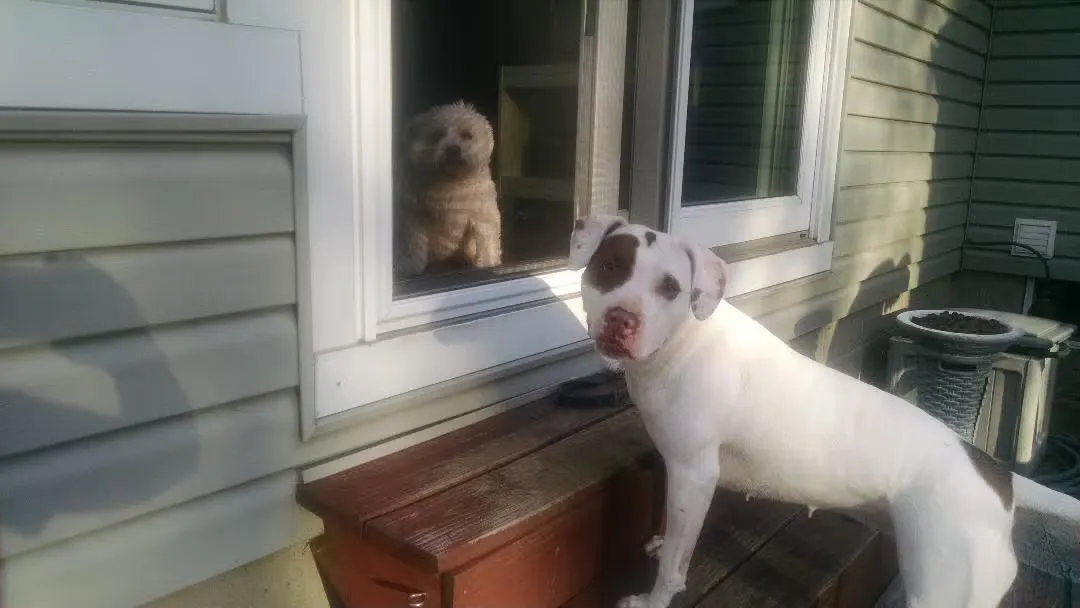
Reba says, "Can Sadie come out and play?"
My Purpose
What I want people to understand about pit bulls is simple: They cannot help the fact that humankind has exploited their physical characteristics throughout time. They cannot escape the stigma humanity has created for them.
Each dog is a different soul with a genetic make-up that cannot be erased. However, with better understanding and proper socialization, pit bulls can become loving and loyal pets.
People must treat every dog, not just a pit bull, as an individual. And lastly, don't judge them by their breed; judge them by their character.
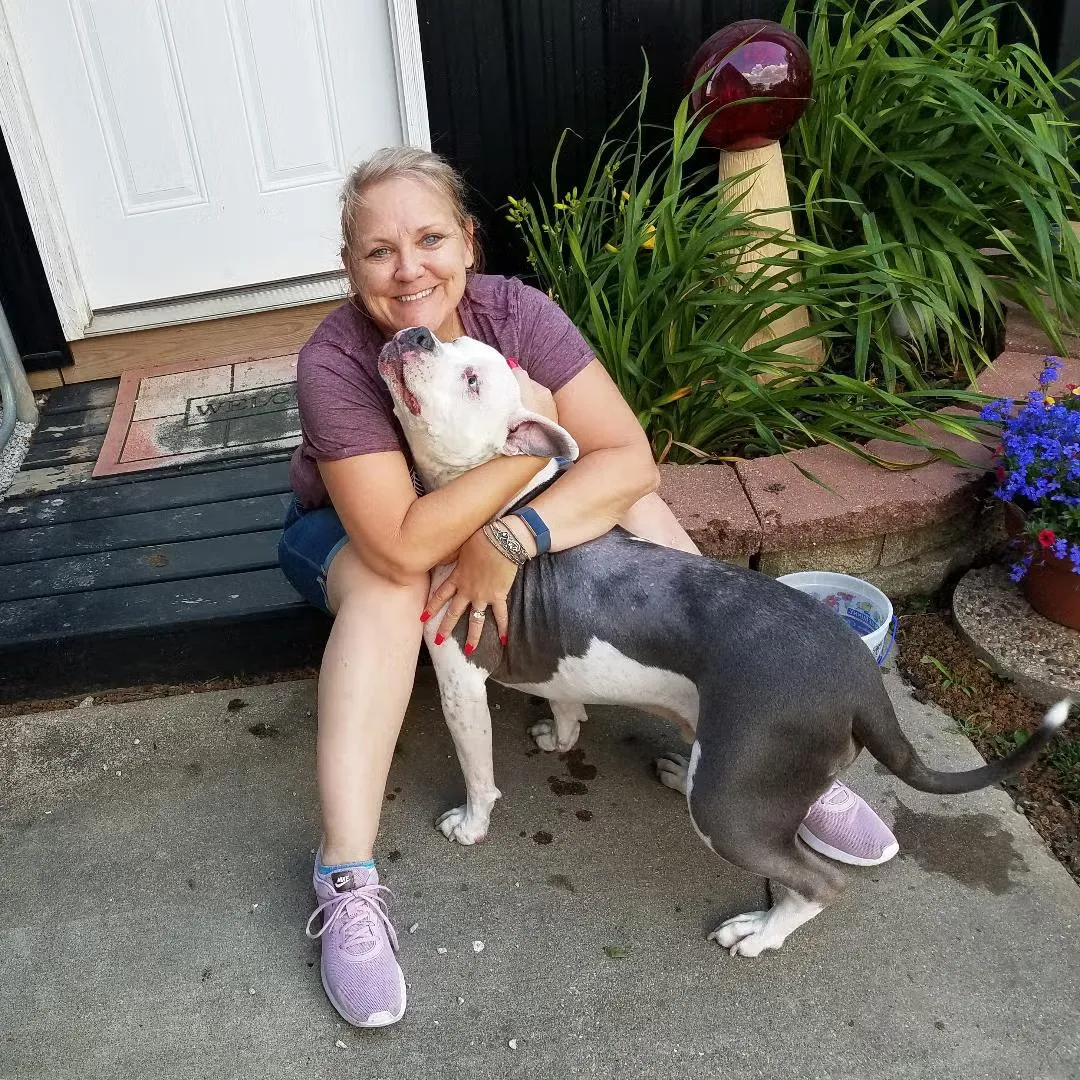
It's Bruiser and Grammy time!
This article is accurate and true to the best of the author's knowledge. Content is for informational or entertainment purposes only and does not substitute for personal counsel or professional advice in business, financial, legal, or technical matters.