Canine Lymphoma: 7 Non-Chemo Options to Consider
Charlie Mitchell
“My 12-year-old dog Oliver has been diagnosed with lymphoma. Naturally, the vet has referred me to an oncology vet. I do not want to put the dog through chemo, and I asked the vet if he would treat him with ivermectin to try. He refused.
Do you have any recommendations?”
A: For certain cancers, chemotherapy can extend survival, but it also tends to reduce quality of life. While it might add some time for Oliver, I can see why you are hesitant.
Universities are investigating many alternative therapies that practicing vets cannot yet access. Seeing a veterinary oncologist would allow you to express your concerns about chemotherapy and learn about any experimental options in your area. Your regular vet might not know all of them, but an oncologist will be up to date on what is available in your state or region.
If you decide against consulting an oncologist, here are some alternatives you could explore.
Related: How Much Prednisone Can I Give My Dog With Lymphoma?

Putting your dog on a keto diet may help fight cancer by starving it of glucose.
Photo by veronikadvorakovaphotos, Canva
1. Ketogenic Diet
Cancer cells depend on glucose for energy. A ketogenic diet gives normal cells an alternative fuel source while depriving cancer cells that rely solely on glucose. This approach leads to mostly ketone production for energy. Dogs can thrive on ketones, but cancer cells cannot. While well-documented in human cancer patients, there is little published research in dogs.
For details on preparing a ketogenic diet for your dog, see my article on the topic. This is not a dry dog food you can buy; you will need to make it at home. So if you do consult a veterinary oncologist, they are more likely to recommend a processed cancer diet.
2. Ivermectin
Evidence that this drug works against cancer is mostly in vitro and anecdotal. It has not been proven effective against all cancer cell types, and because it is known as an antiparasitic, some veterinarians refuse to use it as an alternative (similar to how some human physicians declined to prescribe it as an antiviral during the COVID pandemic).
If your vet will not prescribe ivermectin but you still want to try it, you can get it without a prescription from Amazon or a local feed store and dose your dog using the information in this article: “Dosing and Using Ivermectin to Treat My Dog’s Cancer (Current Research).”
I want to stress that there is no proof it will be effective against lymphoma.
3. Fenbendazole
This has been used experimentally in humans and dogs with cancer, but the evidence remains anecdotal. A study on mice with lymphoma found that fenbendazole did not work on that type of cancer. Most veterinary oncologists will not recommend this alternative, but you can find information and dosages.
4. Mushrooms
There is evidence that mushroom therapy is useful in humans and in one type of cancer in dogs, hemangiosarcoma. It was found to increase survival time by a few months.
There are few proven contraindications, but anecdotal reports mention nausea, diarrhea, and skin rashes. The biggest problem with this alternative is cost, as it can be quite expensive for a large dog.
Since most alternative cancer treatments are not closely regulated, there are questions about the doses in some brands. The brand I’m-Yunity is more expensive than some, but most of the successful research has used the levels found in it. The levels of polysaccharopeptides that can help your dog vary from brand to brand, despite what the label says.
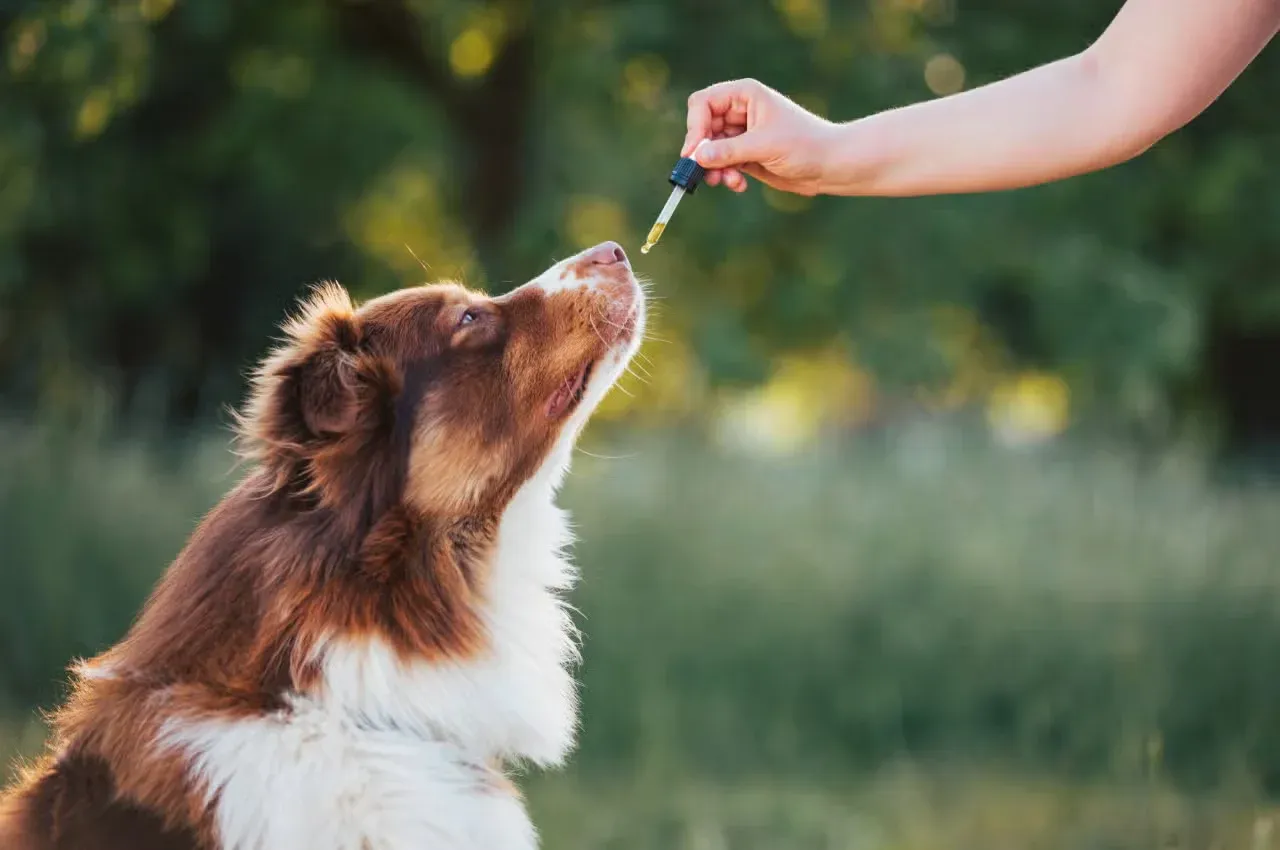
CBD oil may hinder cancer cell proliferation and decrease pain.
Photo by 24K-Production, Canva
5. CBD Oil
There is no evidence that CBD oil will shrink tumors, but in studies with and without chemotherapy, it has been found to help. CBD is effective at hindering cancer cell proliferation and also causes some cancer cells to die more rapidly (1).
Anecdotal evidence shows it also helps decrease cancer-related pain, which can be significant. Many families report that their dogs feel much better with CBD treatment and start acting normal, even when they are less healthy than before.
The problem with this alternative is that it is still illegal in some areas, and the companies that ship it do not have the same quality control as pharmaceutical companies. It is possible to get a bottle that contains a very different amount than what is listed on the label.
6. Herbal Remedies
Numerous herbal compounds may help, but unfortunately, there is little research to support their use. Many, like astragalus and cat’s claw, are used to strengthen the dog’s immune system so the pet is more likely to recognize cancer cells. Unfortunately, herbal remedies are poorly regulated, and a capsule that says “100mg per capsule” may contain less or a lot more.
7. Homeopathic Remedies
None of the homeopathic remedies sold in pet stores to treat dogs with cancer will help your dog (2). Fortunately, they will not harm your dog either, as by the time they have been diluted 64 times, they are just water. The placebo effect, which is why these types of therapies sometimes work in humans, does not work with dogs.
If you want to waste your money, you can use them, but since you should not expect any results, it is best to try one of the other alternatives.
Try a Holistic Vet
If your regular veterinarian is not willing to use ivermectin or one of the other alternatives, my suggestion would be to try a holistic veterinarian. I am not suggesting Oliver is going to have a longer survival time with an alternative, as the average survival time even with chemotherapy is only 6 months to less than 2 years, depending on the stage when the cancer was discovered (3). It may be the same with an alternative or even less.
The researchers in that study on survival time with chemotherapy also point out that alternative approaches to treating lymphoma, not just the chemotherapy that veterinary oncologists are using at this time, will be required to improve outcomes.
Sources
- Henry JG, Shoemaker G, Prieto JM, Hannon MB, Wakshlag JJ. The effect of cannabidiol on canine neoplastic cell proliferation and mitogen-activated protein kinase activation during autophagy and apoptosis. Vet Comp Oncol. 2021 Jun;19(2):253-265. doi: 10.1111/vco.12669. Epub 2021 Jan 14. PMID: 33247539. i.nlm.nih.gov/33247539/
- Ernst E. Homeopathy for cancer? Curr Oncol. 2007 Aug;14(4):128-30. doi: 10.3747/co.2007.128. PMID: 17710204; PMCID: PMC1948867. i.nlm.nih.gov/articles/PMC1948867/
- Bennett P, Williamson P, Taylor R. Review of Canine Lymphoma Treated with Chemotherapy-Outcomes and Prognostic Factors. Vet Sci. 2023 May 11;10(5):342. doi: 10.3390/vetsci10050342. PMID: 37235425; PMCID: PMC10224423. i.nlm.nih.gov/articles/PMC10224423/
Sources
- Canine Lymphoma: 7 Non-Chemo Options to Consider — pethelpful