Bruce the Kea: How a Missing Upper Beak Became a Leadership Edge
Elliot Miller
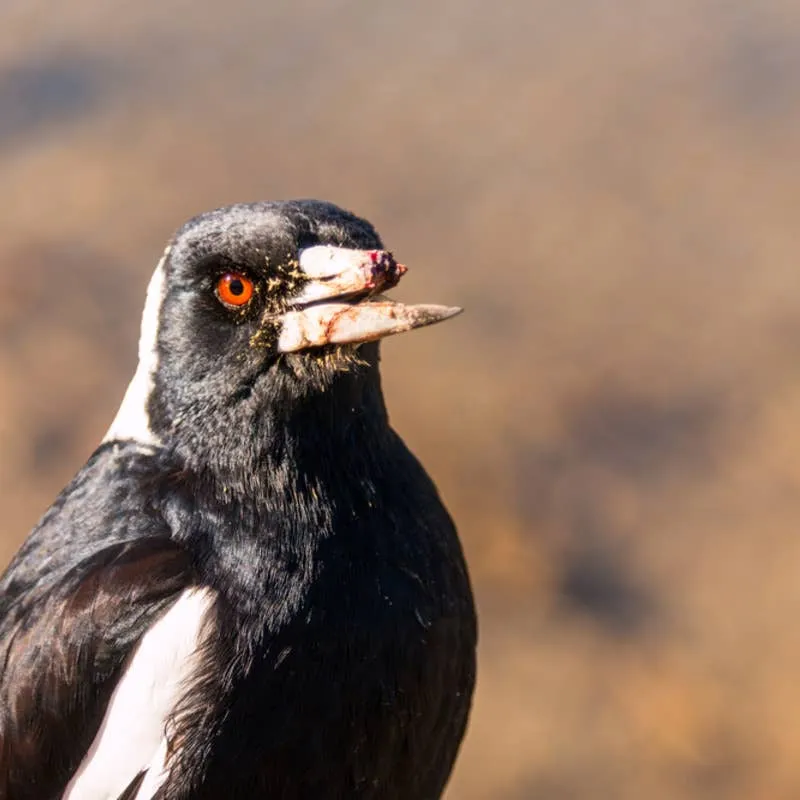
Keas, the parrots native to New Zealand, are known for their prominent, curved upper bills. According to reporting first published by New Scientist, a bird named Bruce sustained an injury early in life that cost him the upper half of his beak—yet he went on to head the group he belongs to, known as a circus, as shown in the accompanying video.
MEDIA_XXXX
With only part of his bill intact, Bruce had to find alternative methods for routine activities such as feeding, preening, and foraging. Survival was not the limit of his adaptation, however: he learned to deploy his lower beak as a weapon and prevailed in every aggressive encounter with other males, converting his impairment into a decisive edge and eventually taking the alpha position over the whole circus.
As the video's caption notes, his rise did not rest on aggression or physical power. It came entirely from a behavioral innovation, and he is the first seriously injured animal documented to reach alpha status through such means.
Adapting Where Others Rely on Their Bills
Bruce worked out ways to handle situations in which other kea depend on their beaks. Ximena Nelson, an animal behavior professor at the University of Canterbury in New Zealand, explained in a New Zealand Geographic article that kea use their upper bills to investigate objects.
"Parrots have a small patch of skin covered in tiny hairs at the top of their beaks—it's called a cere—which they use to sense what's around them," she said. "To find out what something is, they touch it with their beak, the way we might reach out a fingertip. After that, they grab it."
In a Scientific American piece, Nelson attributed Bruce's alpha status to his learned use of the beak as a weapon. "Because of his disability, he has had to innovate behaviors. He's found a way to make himself more dangerous," she said.
Researchers describe his characteristic maneuver as a jousting motion: when threatened, he lowers himself, builds momentum with a short run, then launches at other birds with his chin thrust forward, targeting their wings, legs, and sometimes their faces.
They are careful to say Bruce is no bully. His leadership is characterized as "more 'aloof' than anything," and observers have seen him intervene to stop fights among lower-ranking males.
Another finding: Bruce showed the lowest stress hormone levels among the group's males—a strong sign that he not only leads the circus but does well in the role.
Commenter @TheBrightFeed_ noted, "Low stress hormones in the dominant individual usually signal a stable, accepted hierarchy rather than a contested one. The group didn't just tolerate Bruce, they seem to have genuinely deferred to him. That's a different kind of leadership entirely."
Kea numbers in the wild now stand below 7,000. The species is classified as Endangered on the IUCN Red List and as Nationally Endangered within New Zealand.