Tula the Baby Elephant Reacts with Caution When a Relative Approaches
Riley Morgan
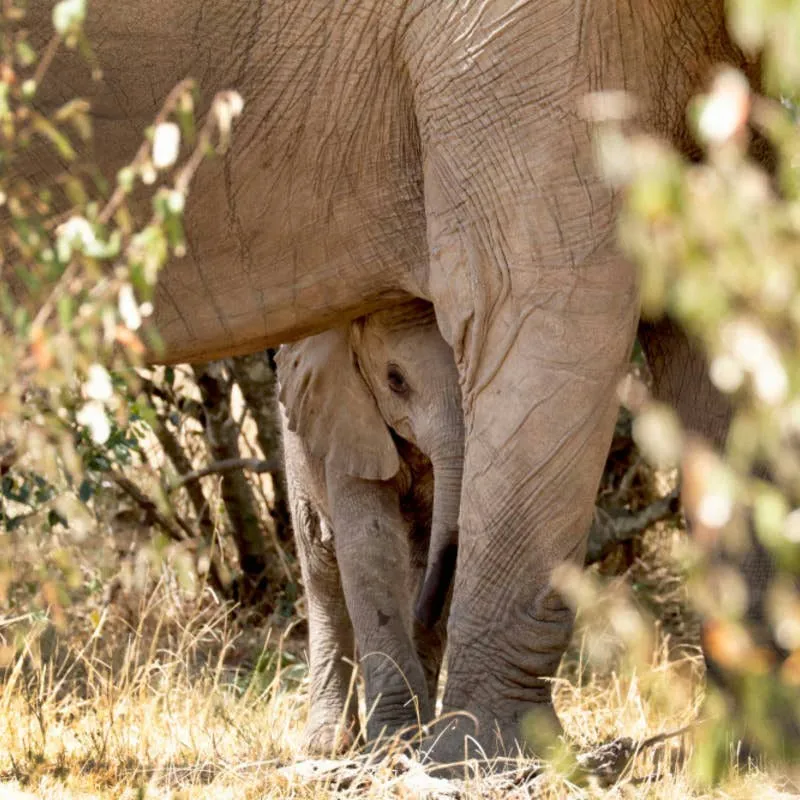
Young animals, much like human children, can show hesitation around those they don't know well—even if they're related. That's what Animal Diaries captured in a recent video at the Oregon Zoo.
In the footage, baby elephant Tula is busy playing with a piece of bamboo when another elephant on the far side of the barrier notices her and extends her trunk in greeting. Uncertain about the unfamiliar elephant, Tula scurries back to her mother for safety, mirroring the classic stranger-danger response seen in kids.
Animal Diaries calls Tula "The funniest, the wobbliest, the cutest, the most playful!" and noted in the caption, "I love watching Tula grow. She is a year old now," though she remains a baby at heart.
Viewers React to Tula's Cautious Dash
Many commenters had thoughts about Tula's wary behavior. Some insisted, "I don't think that's an Auntie…" to which Animal Diaries responded multiple times, "Uncle, auntie… either way, Tula said 'stranger danger activated' LOL!"
@Sandi wrote, "Running to mama. MAMA…. So cute!!!!" and Animal Diaries answered, "I love how she runs!"
Another user, @ChahtaNatki, remarked, "Aww not her little skidaddle lol!" Animal Diaries laughed and replied, "Her little legs can barely keep up with her worry lmao!"
A common question among viewers was why the elephants are kept apart instead of living as a herd.
According to available information, the Oregon Zoo separates its elephants as part of the Species Survival Plan, a breeding management program. This separation also helps prevent aggression among adults and addresses social incompatibility.
The Zoo explains on its website: "A species coordinator is responsible for managing the SSP day-to-day activities (The curator/assistant director of the Oregon Zoo, Mike Keele, is the North American SSP coordinator for Asian and African elephants.). Management committees, composed of various experts, assist the coordinator with population management, research, education, and reintroduction issues. In addition, each institution participating in an SSP has a representative who attends national meetings and coordinates activities at their institution."