Senior Dog with Mammary Lumps: When Surgery Isn't an Option
Jordan Hall
Seeking Advice for an Older Beagle with Mammary Growths
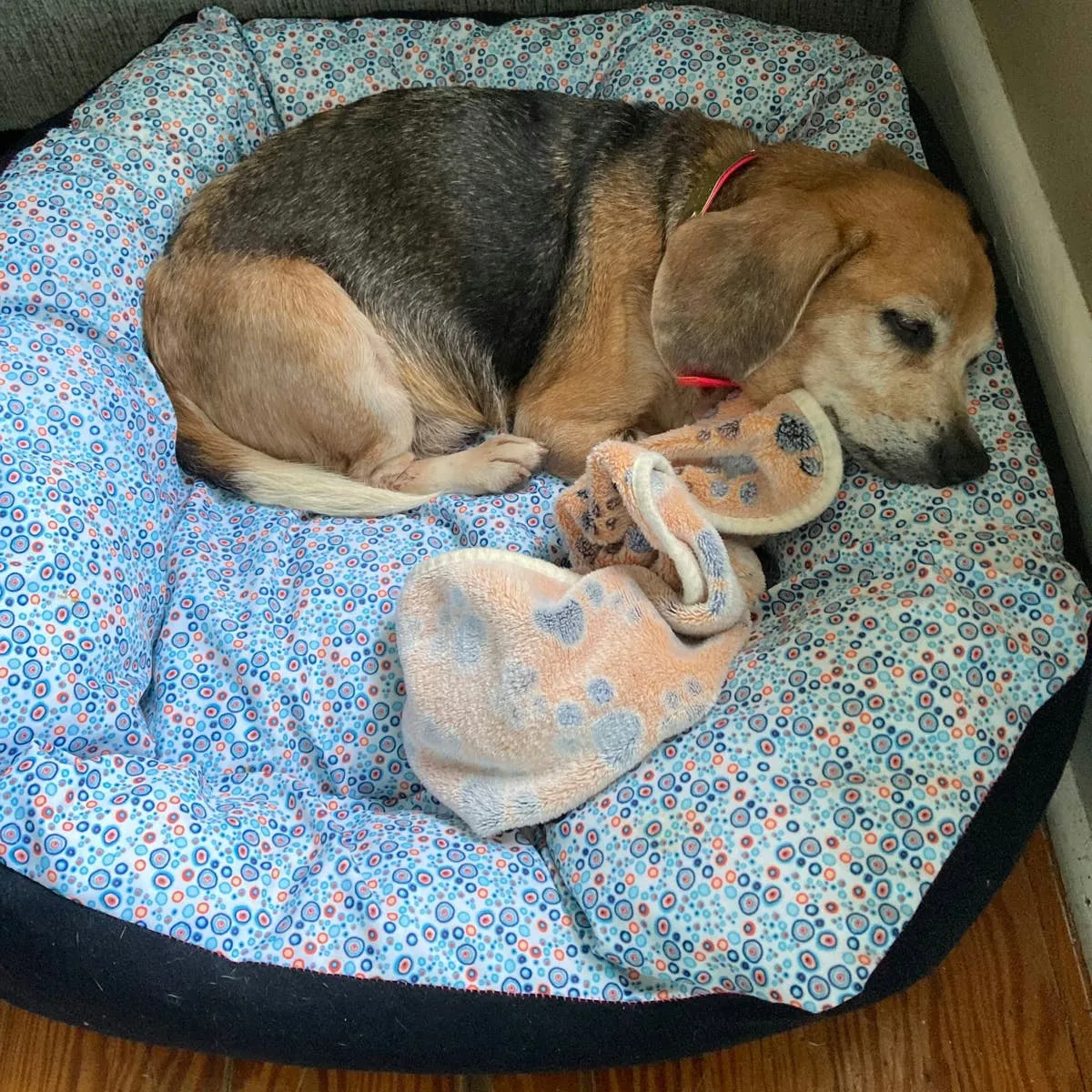
Patricia wrote in about her 14-year-old, 13-inch female Beagle. The dog is not spayed and has never had puppies. She has two hard gland-like masses by her two back nipples—one quite large and the other smaller.
According to Patricia, the dog acts normally: she eats as usual and does not seem bothered when the lumps are pressed or handled. Because the dog is short and overweight, one of the masses sits close to the ground. She scratches her belly on grass and carpets, which suggests the lumps are not causing her pain.
A few months ago, her veterinarian identified the growths as some type of tumor but chose not to operate because of the dog's age and the fact that surgery would require removing all of her nipples. Patricia is looking for a second opinion. She describes the dog as family—a gift she received at six weeks old, 14 years ago, when Patricia was diagnosed with lung cancer. The dog has been by her side throughout, and now Patricia wants to do the same for her.
Understanding Mammary Tumors in Dogs
In dogs of this size that were never spayed, mammary tumors—breast cancer—are common. Roughly half of these tumors are malignant. (1) Based on the description, the masses may be benign, but only a biopsy can confirm that with certainty.
Weighing the Benefits and Risks of Surgery
At this dog's age, the key question is how much time she has left, with or without surgery. If a dog with malignant cancer has tumors removed, they might live around another 14 months, more or less. (2) If the tumors are benign and removed, the dog could live several more years.
However, Beagles typically live less than 15 years, so this dog may only have about a year left regardless of treatment choices.
The veterinarian who examined her recognized the condition but concluded she was not a good surgical candidate due to her age and body condition. Since she continues to eat and behave normally, that assessment seems reasonable. If the tumors enlarge and rupture, becoming infected, then the decision about surgery may need to be revisited.
If Patricia decides to spend the money to improve her dog's quality of life in this final year, that is a valid choice. Pre-surgical bloodwork and general anesthesia would be required first.
Healing may be slower because of her age. If the tumors remain stable, the focus should be on enjoying the time they have together.
Sources
(1) Salas Y, Márquez A, Diaz D, Romero L. Epidemiological Study of Mammary Tumors in Female Dogs Diagnosed during the Period 2002-2012: A Growing Animal Health Problem. PLoS One. 2015 May 18;10(5):e0127381. i.nlm.nih.gov/pmc/articles/PMC4436381/
(2) Philibert JC, Snyder PW, Glickman N, Glickman LT, Knapp DW, Waters DJ. Influence of host factors on survival in dogs with malignant mammary gland tumors. J Vet Intern Med. 2003 Jan-Feb;17(1):102-6. i.nlm.nih.gov/12564734/
This article is not meant to substitute for diagnosis, prognosis, treatment, prescription, or formal and individualized advice from your veterinarian. Animals exhibiting signs and symptoms of distress should be seen by a veterinarian immediately.
© 2022 Mark dos Anjos, DVM