Managing High Liver Values in an Older Labrador: Is Lisybin Enough?
Emerson Watson
Can Lisybin Alone Manage a Senior Dog's Raised Liver Enzymes?
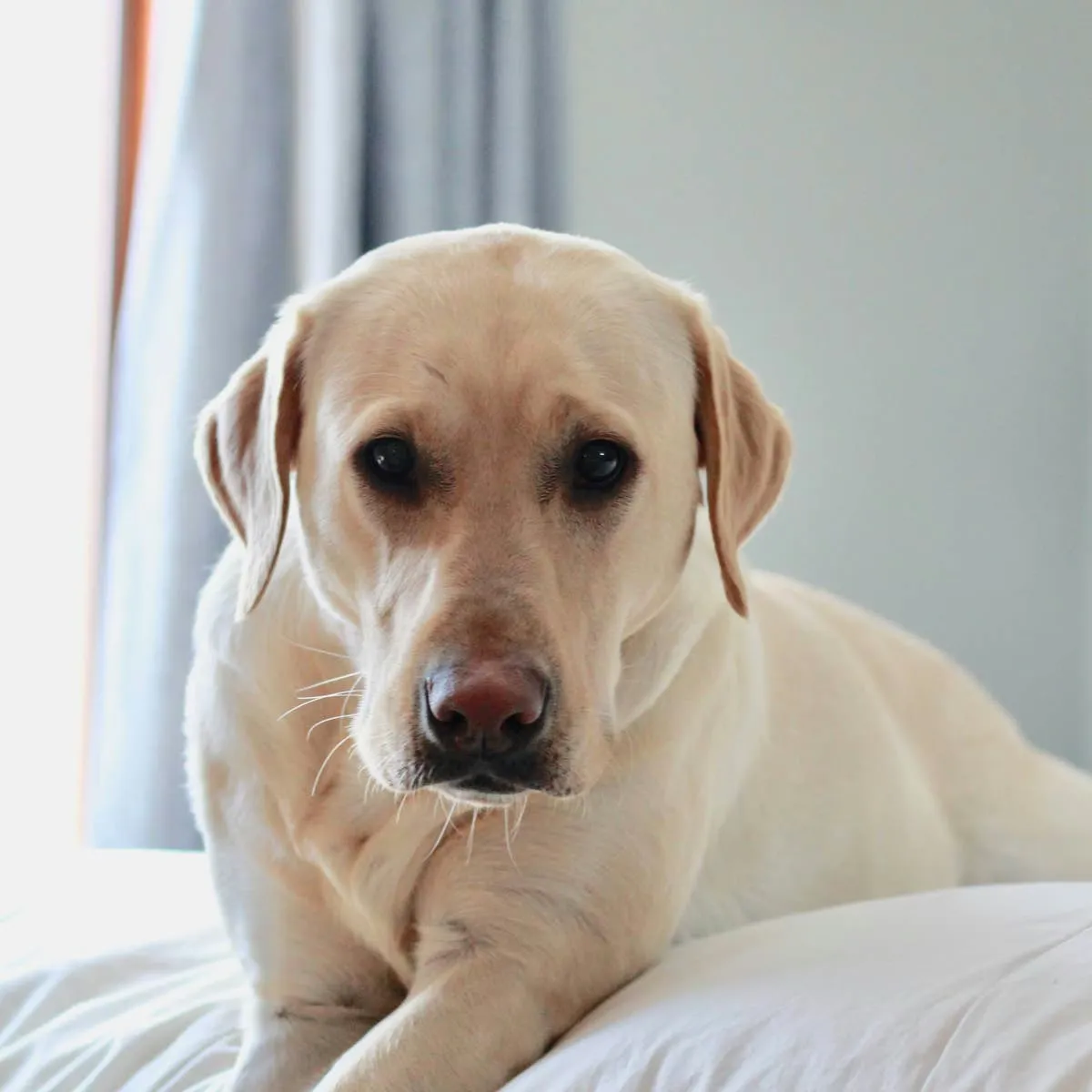
Shwetadri wrote in with a question about her 10-year-old Labrador, Mixy, whose liver function test recently showed markedly elevated liver enzymes. She asked whether anything in the LFT, KFT and CBC results looked worrisome, and whether the current medication — Lisybin, described as S-Adenosylmethionine and Silybin A+B Tablets — would be sufficient to keep Mixy well.
Featured Gallery
1 / 1
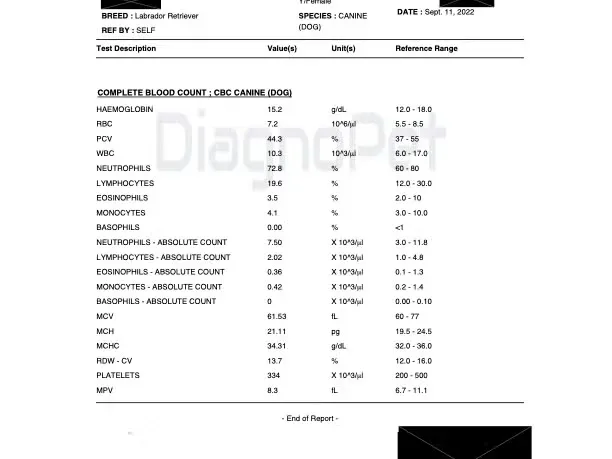
Complete Blood Count (CBC) Canine
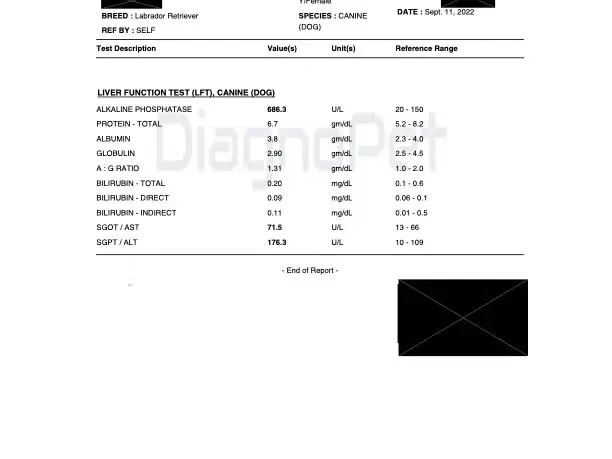
Liver Function Test (LFT) Canine
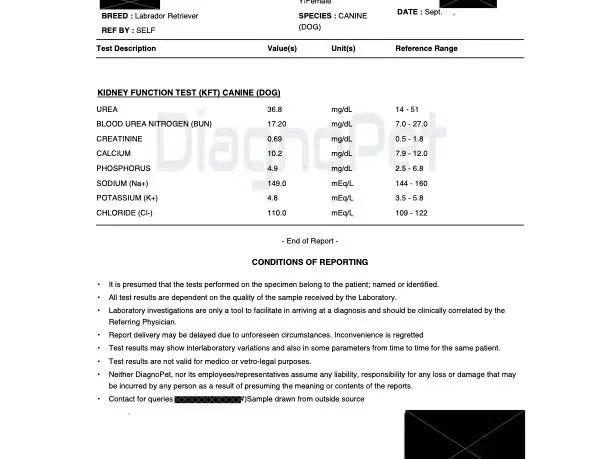
Kidney Function Test (KFT) Canine
What High Liver Enzymes Typically Mean in Older Dogs
For many senior dogs, raised liver values without accompanying clinical signs do not lead to treatment. Research involving apparently healthy older dogs found that elevated liver enzymes without symptoms occurred frequently — alkaline phosphatase (ALP), for instance, was elevated in roughly 27% of those dogs. (1)
In Mixy's case, the values are elevated but not a cause for alarm. Her bilirubin and albumin remain within normal limits, and she shows no jaundice or other indications of liver disease. Should jaundice or additional symptoms appear, a liver biopsy would be warranted to determine whether further steps are needed. As things stand, the medication being given is suitable and will not cause her harm.
If jaundice does emerge in spite of the medication, other options exist. For now, continuing Lisybin at the dose recommended by her regular veterinarian is acceptable.
Source
(1) Willems A, Paepe D, Marynissen S, Smets P, Van de Maele I, Picavet P, Duchateau L, Daminet S. Results of Screening of Apparently Healthy Senior and Geriatric Dogs. J Vet Intern Med. 2017 Jan;31(1):81-92. i.nlm.nih.gov/pmc/articles/PMC5259637/
This article is not meant to substitute for diagnosis, prognosis, treatment, prescription, or formal and individualized advice from your veterinarian. Animals exhibiting signs and symptoms of distress should be seen by a veterinarian immediately.
© 2022 Mark dos Anjos, DVM