What Causes Generalized Redness on a Dog's Skin?
Charlie Evans
Evaluating a Dog with Red Skin
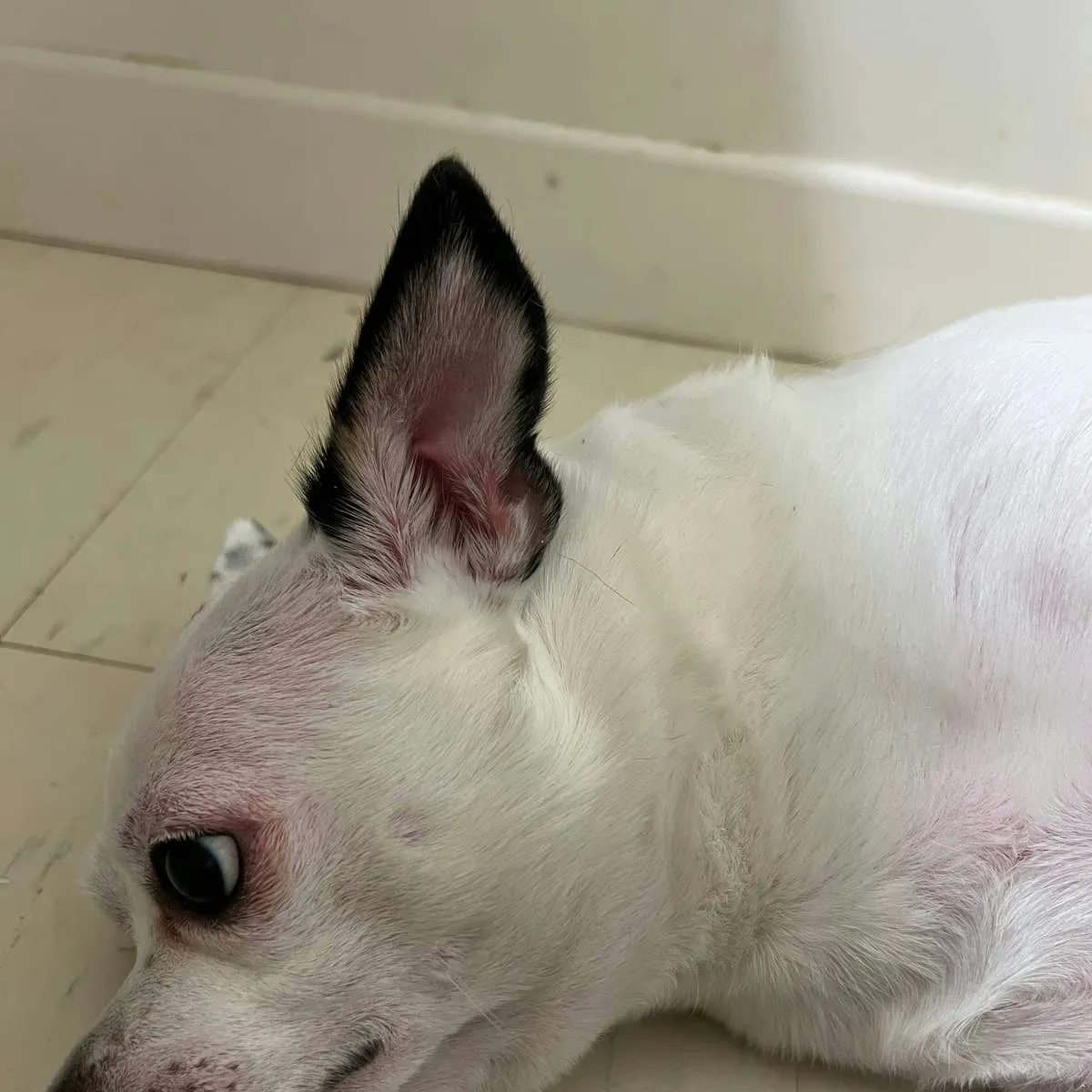
"My white female chihuahua has red ears, red eyelids, and red private parts including anus and tummy. I took her temperature and it reads 101˚F, so no fever. Her skin isn’t bumpy at all just red VERY RED. She doesn’t seem itchy and eating and drinking normally.
Any answers to what could the issue be?" —Rhonda
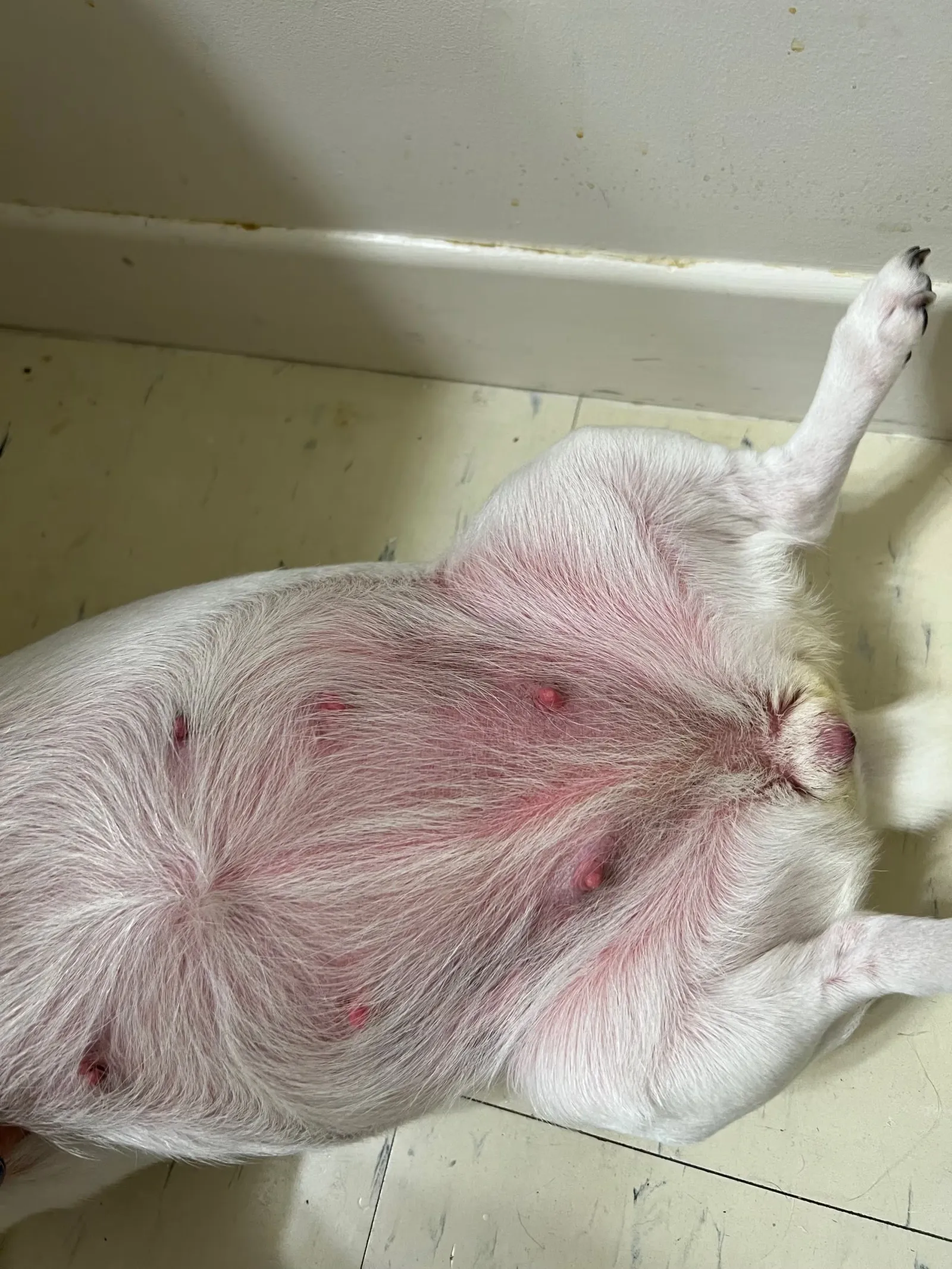
Generalized infections may cause a dog’s skin to become inflamed and should be treated as a serious medical issue.
Potential Causes of Red Skin in Dogs
A variety of factors can lead to red skin in dogs, such as:
- inhalant allergies
- food allergies
- erythema
- adverse medication reaction (usually antibiotics like penicillins and sulfas)
- other toxins, topical or systemic
- adverse flea dip reaction
- autoimmune disease
- viral infection
- bacterial infection (blood poisoning)
Inhalant allergies are the most frequent reason for red skin in dogs, but because you mentioned she is not itchy, the problem could be more serious.
Dogs can develop a condition called erythema, which causes red skin, but it typically appears as red spots and is not generalized. Red skin may also result from an adverse reaction to medication (though you did not say she is on any meds), certain flea dips, or a viral or bacterial infection. Some foods and autoimmune diseases can trigger this reaction as well.
Blood Poisoning in Dogs
Given that the redness is generalized and you did not mention flea dips or other toxin exposures, a bacterial infection in her blood would be my main concern. It is good that she does not have a fever yet, but as the condition progresses, she may develop a more severe skin infection.
Seek Veterinary Care Without Delay
You should take her to a local veterinarian as soon as possible for a CBC to check whether a generalized infection is making her skin appear inflamed.
If no infection is found, the vet can administer a corticosteroid injection to bring down the inflammation. In some cases, a cooling bath and a topical corticosteroid are sufficient. The exam will reveal how much support she needs.
Managing Skin Irritation Over Time
Depending on how she responds to the injection or bathing, your vet will try to identify what is causing the red skin, but the cause remains undetermined in about 20% of dogs (1).
If the trigger is found, the best long-term management can be planned; if not, you will need to give a colloidal oatmeal bath whenever the skin becomes inflamed to cool it down.
If you have not given a medicated bath before, here is a step-by-step guide.
I hope this resolves soon. If she is still having problems with this in a week or two, be sure to send us an update.
Questions?
If you have any questions about this article or your dog has other skin problems you can contact me at my Ask a Vet column.
Source
(1) Boehm TMSA, Klinger CJ, Udraite L, Mueller RS. Die Haut als Zielscheibe – Erythema multiforme bei Hund und Katze [Targeting the skin – erythema multiforme in dogs and cats]. Tierarztl Prax Ausg K Kleintiere Heimtiere. 2017 Oct 17;45(5):352-356. German. i.nlm.nih.gov/28933509/
This article is not meant to substitute for diagnosis, prognosis, treatment, prescription, or formal and individualized advice from your veterinarian. Animals exhibiting signs and symptoms of distress should be seen by a veterinarian immediately.
© 2023 Mark dos Anjos, DVM
Sources
- What Causes Generalized Redness on a Dog's Skin? — pethelpful